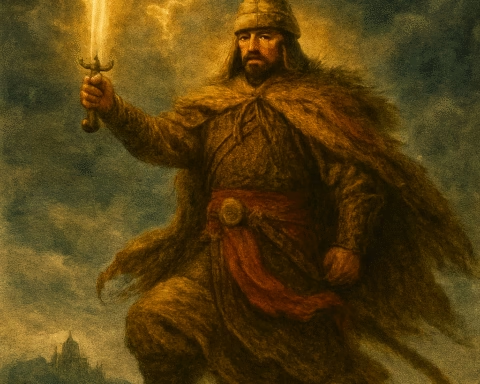
Before the cities were ringed with walls and before kingship anchored itself in Uruk’s proud stones, the gods looked down upon the earth and saw imbalance. Gilgamesh, two-thirds divine and one-third mortal, had risen as a king of unmatched brilliance and unmatched arrogance. His strength bowed warriors; his command shaped destinies. Yet the people trembled beneath his unrestrained will. And so the gods spoke: Let there be one who matches him, one who tempers him, one who reminds him of the law that binds even kings, let Enkidu rise.
Thus, out of the red clay of the steppe, the goddess Aruru shaped a being of wild might. Her fingers pressed ancient mud, her breath stirred life into the stillness, and her command summoned the essence of untamed earth. Enkidu rose, mane like desert thistles, limbs broad as mountain roots, eyes bright with the innocence of creatures who know nothing of cities. He ran with gazelles, drank at the watering holes of beasts, and protected the fields from hunters not out of malice, but as a creature of the world as it had been before walls and crowns.
News of him reached Gilgamesh, who felt in his blood the whisper that a rival had come, one not born of human lineage but shaped by divine necessity. Yet Gilgamesh did not fear; instead he burned with a desire to confront this wild mirror of himself. To lure him from the wilderness, the king sent Shamhat, the sacred woman of the temple, whose words and presence carried the fragrance of civilization. She approached Enkidu gently, teaching him what it meant to be human, what it meant to feel compassion, hunger for companionship, and the pull of purpose beyond instinct.
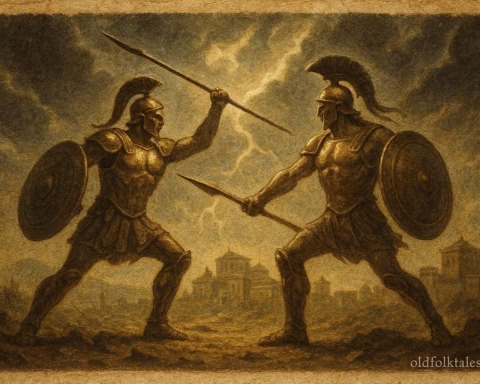
When Enkidu entered Uruk, the people watched in awe. He strode like a storm given flesh. Gilgamesh, sensing him, moved to face him in the city’s great street. Their clash was a quake that echoed through walls, two titans grappling not in hatred but in divine design. Dust rose; stones cracked; the world seemed to hold its breath. And though Gilgamesh finally pressed Enkidu down, the king saw in him not a defeated foe but a brother equal in power and fierce in spirit.
From that moment, their fates intertwined.
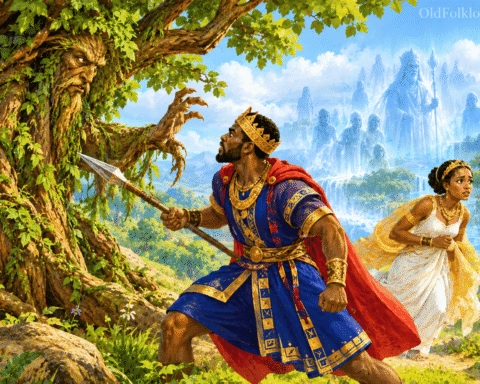
Together they journeyed to the Cedar Forest, home of Humbaba, the monstrous guardian appointed by Enlil. Gilgamesh sought glory; Enkidu sought meaning, to prove he was more than a creature assembled by divine hands. Yet as they approached the towering cedars whose shadows stretched like omens, Enkidu’s heart trembled. He knew the forest, knew its sacredness, and knew the wrath of the gods could follow rash deeds. Still, he stood beside Gilgamesh, for loyalty had become his compass.
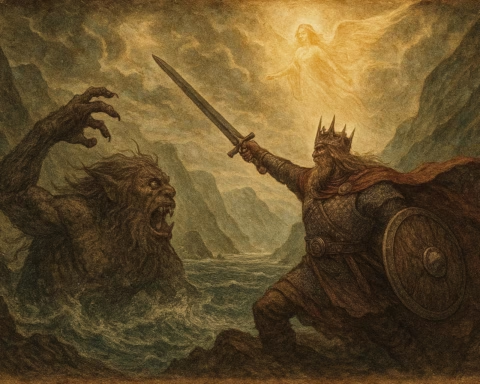
The battle with Humbaba shook the forest canopy. The guardian’s roar twisted the air, and his breath carried death. Enkidu’s courage steadied Gilgamesh; Gilgamesh’s strength emboldened Enkidu. With divine favor, and mortal resolve, they struck down Humbaba, but in doing so wove a thread of doom into Enkidu’s destiny.
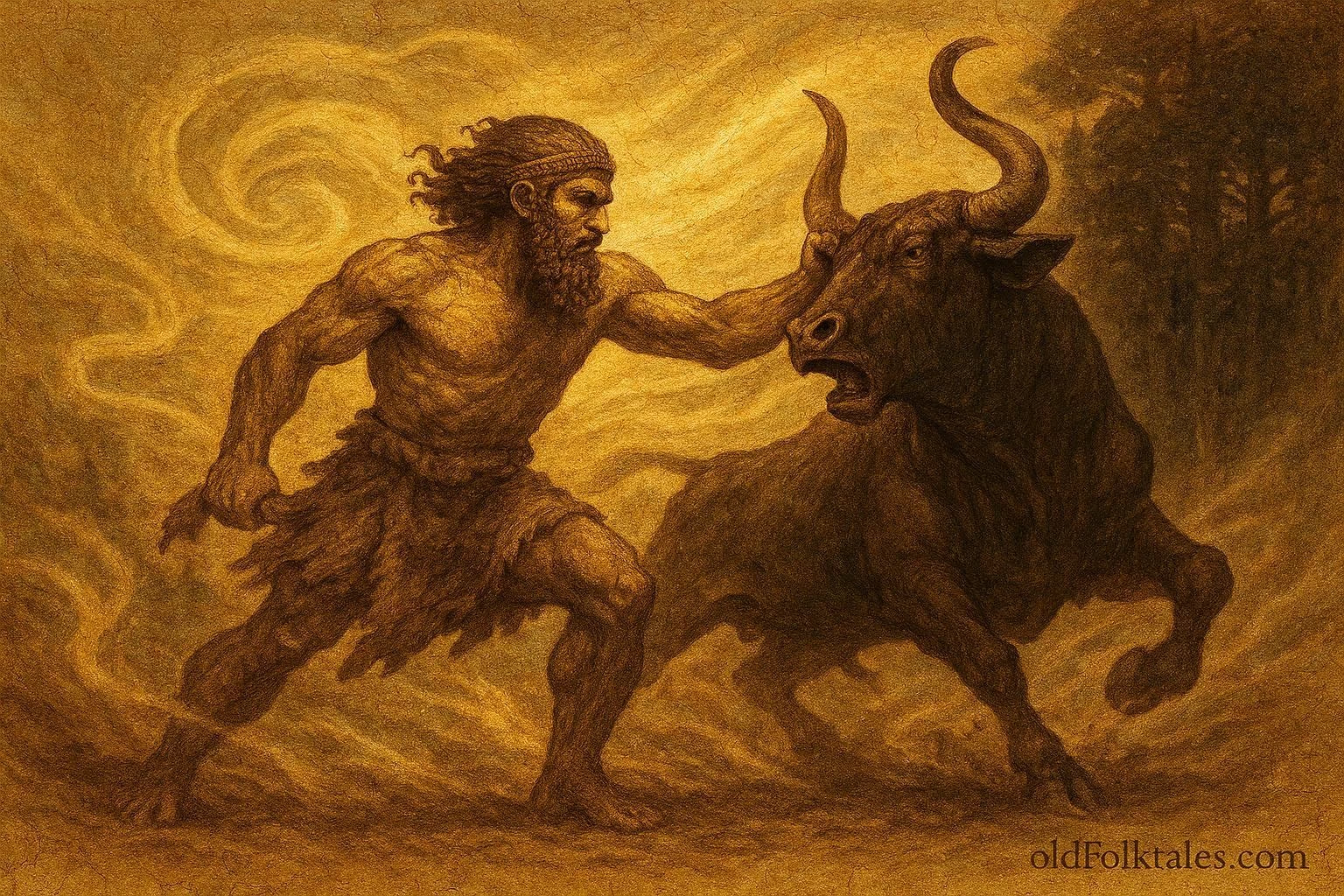
Victory led only to greater challenges. When Ishtar, goddess of love and war, demanded Gilgamesh as her consort and was refused, she sent the Bull of Heaven to punish Uruk. Its hooves split the earth, its breath withered fields. Once more, Enkidu stood beside his companion. Together they fought the celestial beast, and it was Enkidu who delivered the blow that toppled it.
Yet the gods had watched enough. The slaying of Humbaba, the defiance of Ishtar, the killing of a divine bull, these acts unbalanced the scales between mortals and heavens. A price was required. And so the immortal council decreed that Enkidu, not Gilgamesh, would pay the burden of their shared triumph.
Enkidu’s final days were filled with visions, glimpses of the Underworld’s dust-laden halls, the wings of silent spirits, the cold certainty of mortality. He spoke with sorrow, not for his death, but for the pain it brought his friend. Gilgamesh held him, the king’s pride shattered by grief. In Enkidu’s passing, the wild man who once ran with antelope became the moral mirror that awakened Gilgamesh to the truth: even heroes shaped by gods must bow before the final boundary.
Enkidu returned to the clay from which he was crafted, yet his impact endured. Through his friendship, Gilgamesh learned compassion. Through his death, Gilgamesh sought wisdom. And through his memory, the world came to know that even the wild and the civilized, once bound by purpose, can reshape destiny.
Author’s Note
Enkidu’s legacy is one of transformation. Created to counterbalance a king, he instead awakened the humanity within Gilgamesh and became the emotional center of the world’s oldest heroic epic. His journey symbolizes the eternal tension between wilderness and civilization, instinct and duty, freedom and fate. Through his life and death, Mesopotamian culture expressed profound truths about mortality, companionship, and the limits of human ambition.
Knowledge Check (6 Questions)
-
Why did the gods create Enkidu?
-
How did Enkidu transition from wild creature to human companion?
-
What was the significance of Enkidu and Gilgamesh’s first battle?
-
Why did Enkidu fear the journey to the Cedar Forest?
-
Which actions led the gods to decree Enkidu’s death?
-
What lasting impact did Enkidu have on Gilgamesh?
Cultural Origin: Ancient Mesopotamia – Sumerian and Akkadian traditions.
Source: Andrew George (trans.), The Epic of Gilgamesh (1999).