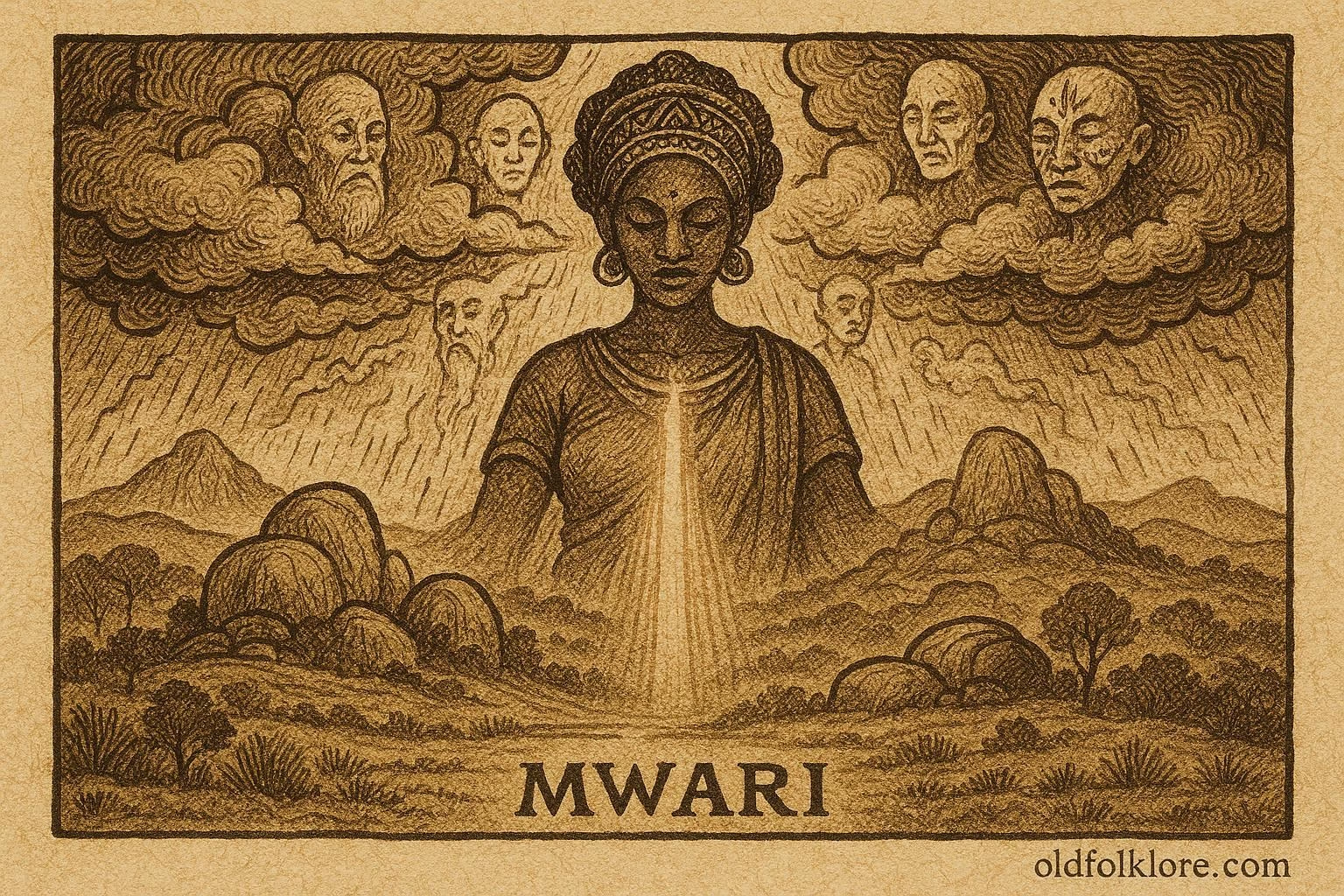
Mwari, also known as Musikavanhu (“Maker of People”) or Nyadenga (“The One Above”), is the supreme creator god of the Shona people of Zimbabwe. He is the architect of creation, the giver of rain, the guardian of morality, and the unseen force who governs harmony between the living, the ancestors, and the land. Though remote and transcendent, Mwari communicates through intermediaries: svikiro (spirit mediums) and mhondoro (ancestral lion spirits). Through these channels, he delivers judgments, blessings, warnings, and the life-giving rains upon which survival depends.
Mwari is sometimes described as male, sometimes female, and sometimes both, an all-encompassing power beyond human boundaries. His presence is associated with thunder in the Matobo Hills, sacred groves, rain shrines, and seasonal rituals that tie communities to ancestral authority. Farmers appeal to him for fertile soil; chiefs seek his guidance for justice; families pray for birth, protection, and balance. In all matters of life, he is the ultimate source of order.
Mythic Story: How Mwari Sent Rain to the Fields
The year had grown thin. The earth cracked beneath the sun’s relentless heat, and dust rose with every footfall like a tired spirit trying to escape. Rivers shrank into winding scars across the land, and the maize fields stood still as if holding their breath. Cattle grew gaunt, children restless, and elders quiet with worry. It was said that Mwari, the High One, had turned his face away.
In the village of Domboshava, people gathered beneath a large fig tree to speak of what must be done. “We have waited,” said Old Mother Nyembe. “We have prayed. But Mwari hears through the ancestors. We must call a svikiro.” The elders murmured in agreement, for drought was not merely a failure of clouds, it was a sign that moral order had slipped, that humans had forgotten the balance Mwari decreed.
A messenger was sent to summon Nyamavi, a respected svikiro whose body carried the pathways of ancestral spirits. When she arrived, her face was calm though the villagers’ eyes were filled with fear. She knelt in the dust and listened as the elders described the shriveled fields, the dying river reeds, and the restless whispers heard at night.
Nyamavi nodded. “If Mwari withholds the rain, a fault lies among the living,” she said. “But the ancestors will reveal the cause.”
As twilight descended, the villagers prepared the sacred space. Drums formed a circle. Calabashes of millet beer were set aside. Elders sprinkled snuff upon the earth, calling the names of their lineage one by one. When the moon rose, the ceremony began.
Nyamavi stepped into the circle, her body swaying as drums slowly quickened. The air thickened, as if the invisible world leaned close to listen. Her breathing changed; her eyes rolled upward; her voice lowered into a tone that was not her own. An mhondoro spirit, an ancestral guardian, had arrived.
Through her, the spirit spoke: “There is discord among you. A quarrel unconfessed… a broken agreement… a failure to honor kin.” The villagers looked at one another with unease. The mhondoro continued: “Before Mwari sends rain, the people must restore truth among themselves.”
Silence fell. Then a young man, Tawanda, stood trembling. He confessed that he had seized irrigation water meant for the communal fields. “I feared my crops would die,” he said, “so I opened the gate at night. I thought no one saw.” His voice cracked. “I am ashamed.”
The mhondoro’s voice softened. “Balance must be restored. The one who wronged must repair the wrong.” Tawanda lowered his head. “I will do whatever is required.”
At dawn, the elders gathered him beside the dry fields. He was instructed to offer a calabash of water he had save, not enough to revive the crops, but enough to symbolize his repentance. He poured it into the dust, and the ground drank it eagerly. The elders nodded. Harmony had begun its return.
But the village still needed rain.
So Nyamavi prepared for the second rite, the one meant for Mwari himself. She traveled to a hilltop shrine overlooking the parched valley. There, she carried white cloth, snuff, a clay pot, and sacred herbs. As she climbed, thunder rumbled faintly in the distance, though no clouds marked the sky. The people believed such thunder meant Mwari was listening.
At the summit, Nyamavi knelt and began the ancient chant. She called upon the ancestors, upon the spirits of rain, upon the breath that moves between worlds. The chant rose and fell like wind through tall grass. Her voice trembled with its weight, yet she did not falter.
Then, as if in answer, a cool breeze swept across the hillside. The leaves trembled. Shadows shifted. The clay pot in her hands grew cold. Nyamavi whispered: “Mwari, send the water of life. Restore your people, for they have restored their truth.”
For a long moment, nothing happened.
Then the sky darkened.
First slowly, like a curtain being drawn, then quickly, with purpose. Clouds gathered from horizons where none had been. The wind surged. A scent of wet earth drifted into the air, the promise before the blessing.
A single drop touched Nyamavi’s hand.
She lifted her face.
The heavens opened.
Rain descended in sheets, drumming upon the fields, the huts, the cracked riverbeds. Children shrieked with joy. Elders wept openly. Women spread their arms to greet the sky. Tawanda fell to his knees, tears mixing with the downpour. The land drank deeply, and life stirred again beneath the soil.
Across the valley, thunder rolled, not with anger, but with finality. Mwari had spoken.
Balance was restored.
Discover the gods, goddesses, and divine spirits who ruled the heavens and shaped human fate
Author’s Note
The story of Mwari’s rain reminds us that drought in Shona belief is not only environmental, but also spiritual. Harmony between people, ancestors, and land is intertwined. When that harmony is repaired, the world itself responds. Mwari’s lesson is simple yet profound: balance sustains life.
Knowledge Check
Q1: What is Mwari’s primary role in Shona mythology?
A: He is the supreme creator and giver of rain, fertility, and moral order.
Q2: Through whom does Mwari communicate with humans?
A: Through svikiro (spirit mediums) and mhondoro (ancestral spirits).
Q3: What caused the drought in the myth?
A: A moral imbalance caused by a villager’s secret wrongdoing.
Q4: What restored balance before rain could fall?
A: A confession, symbolic restitution, and ancestral guidance.
Q5: Where did Nyamavi perform the final rite to call for rain?
A: At a hilltop shrine overlooking the village.
Q6: What sign first showed that Mwari was responding?
A: A cool wind and a single drop of rain.
Source: Shona Religion and Oral Tradition, Zimbabwe.
Source Origin: Shona, Zimbabwe