Unkulunkulu, “The Great-Old-One” and the first ancestor of all humanity, is the primeval creator in Zulu cosmology. He is said to have risen from a vast reed bed (isihlahla), or in some traditions, from a rock or mound, before shaping humans, animals, and the earliest forms of life. His hands molded the world’s first people, giving them breath, language, laws, and the cultural rhythms that define Zulu society.
Unkulunkulu established the foundations of marriage, kinship, farming practices, cattle-keeping, and social order. Though he is the first being and the original teacher, the Zulu describe him as withdrawn, a creator who completed his work and stepped back, leaving the ancestors (amadlozi) and the living to preserve harmony. Unlike later ancestor spirits who remain closely involved in daily life, Unkulunkulu is distant, ancient, and remembered more for the beginning of things than for ongoing intervention.
His symbols include reeds, clay, and the tools of early life: digging sticks, the hearth, and the cattle pen. In ritual memory, he is invoked when speaking of origins, lineage, and the earliest laws that keep society upright.
Mythic Story: Unkulunkulu Creates the First Humans
In the beginning, before grass bent in the wind and before cattle lowed across the plains, there was only silence. The world lay unshaped, waiting for a voice to call it into motion. And within a great forest of towering reeds, green, thick, and whispering in windless stillness—something stirred.
From this reed bed, a figure slowly emerged, as if waking from a long dream. His name was Unkulunkulu, the Great-Old-One, the first ancestor. He stepped onto the untouched earth, his feet sinking softly into wet soil. The world greeted him like a newborn child waiting to be taught its first breath.
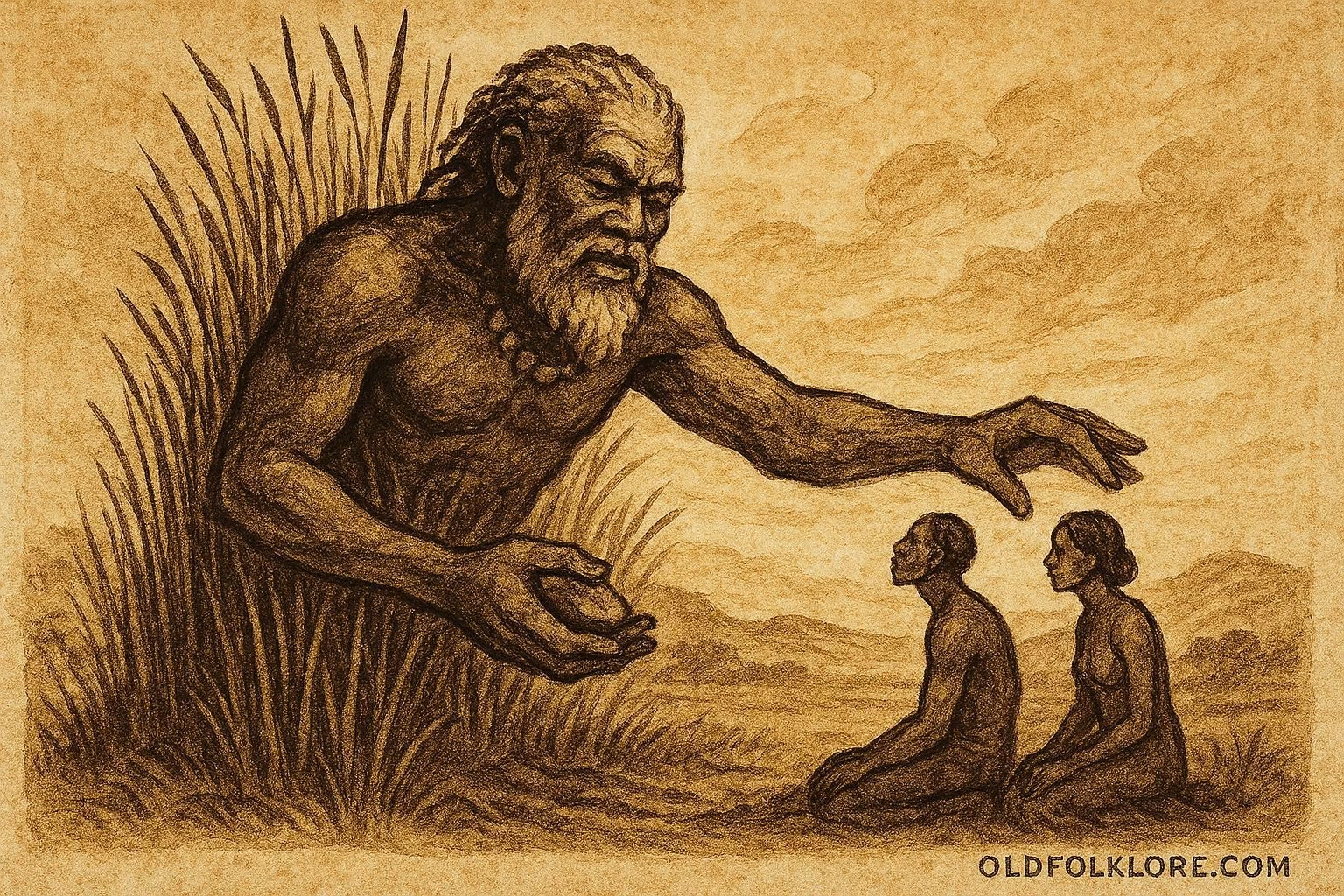
Unkulunkulu looked around and saw that nothing had yet taken form. There were no people, no animals, no paths, and no customs. So he reached down, scooped clay from the riverbank, and held it in his hands. The clay was cool and heavy, and he shaped it with patient intention. From the clay he formed the first man and the first woman, smoothing their limbs, molding their faces, and pressing the essence of life into their silent bodies.
When he finished, he blew gently upon them. They opened their eyes.
The man rose first, startled by the vastness around him. The woman followed, her gaze resting on Unkulunkulu with curiosity and awe. They stood beside their maker, the first humans upon the earth.
Unkulunkulu taught them how to move their limbs, how to walk, how to speak. He named them, for naming is the beginning of understanding. He led them to water and showed them how to cup their hands to drink. Then he took reeds from the place of his emergence and fashioned tools, baskets, mats, and shelters. He demonstrated how to build a hearth and how to tend to the fire that would warm their nights.
As the days passed, Unkulunkulu created more beings. He shaped cattle, their hides smooth and strong, and placed them in the care of the people. “These will be your wealth,” he said. “Treat them well, and they will feed you and clothe you.” He formed birds that leapt into the sky and beasts that ran across the plains. The world filled with movement.
But creation required more than bodies. It required law.
So Unkulunkulu gathered the people and sat with them under a tree whose branches spread wide like an elder’s embrace. “Listen,” he said, “for these are the ways that must guide your lives.” He taught them marriage customs, showing how families unite through respect and gift-giving. He taught them agriculture, how to prepare the soil and plant seeds in season. He taught them how to care for children, how to honor elders, and how to live in harmony with one another.
In this way, the world began to take shape, not just through matter, but through meaning. The first people imitated their creator, learning to build, organize, and instruct. Life became a tapestry of actions patterned after the Great-Old-One.
One morning, after many seasons, Unkulunkulu rose and looked at the world he had shaped. The fields were green, the cattle fat, the laughter of children rolled across the valleys. Humans tended their homesteads with skill. The earth no longer needed a creator to stand beside every fire and guide every hand.
Unkulunkulu understood then that his work was complete.
Without ceremony, without farewell, he turned his steps toward the distant horizon and withdrew from the world. Some say he ascended into the sky. Others say he vanished into the very reeds from which he came. Still others tell that he simply walked away, becoming part of the deep time before memory.
In his absence, humans looked to the amadlozi, the ancestors, who now stood as the bridge between the living and the divine. They remembered the lessons Unkulunkulu had taught. Every practice of cattle-keeping, every rite of marriage, every law of kinship, these were his enduring gifts. His voice faded into myth, but his order continued to shape every heartbeat of Zulu life.
And so it is said: before all things, before the world had shape, Unkulunkulu rose from the reeds and taught humanity how to live. His creation endures not only in the bodies of people and animals, but in the customs that root families, the language that binds communities, and the moral laws that hold the world steady.
To this day, when elders speak of beginnings, they invoke his name with reverence:
Unkulunkulu, the First Ancestor, the Great-Old-One, the maker of all.
Learn the ancient stories behind deities of light, storm, and shadow from cultures across the world
Author’s Note
The myth of Unkulunkulu reveals a worldview where creation is inseparable from moral order. Humanity is not merely shaped into existence, it is taught, guided, and entrusted with responsibility. The Zulu understanding of culture, kinship, and duty originates in this moment of divine instruction. Unkulunkulu’s withdrawal is not abandonment but fulfillment: a creator who trusts humanity to uphold the order he gave.
Knowledge Check
Q1: What does the name Unkulunkulu mean?
A: “The Great-Old-One” or “First Ancestor.”
Q2: From where does Unkulunkulu emerge in most versions of the myth?
A: From a reed bed (isihlahla).
Q3: What materials does Unkulunkulu use to create humans?
A: Clay gathered from the riverbank.
Q4: What important cultural skills did Unkulunkulu teach early humans?
A: Farming, cattle-keeping, social customs, marriage patterns, and language.
Q5: Why is Unkulunkulu considered a withdrawn deity?
A: He left the world after creation, entrusting ancestors and humans to maintain order.
Q6: In Zulu belief, who mediates between humanity and the spiritual realm after Unkulunkulu withdraws?
A: The amadlozi (ancestor spirits).
Source: Zulu Oral Tradition, South Africa.
Source Origin: Zulu, South Africa