The Vodyanoy, known in Russian as Водяной, in Czech as Vodník, and in Polish as Wodnik, is one of the most enduring supernatural beings of the Slavic world. He occupies a central place in the imaginations of rural communities who lived beside rivers, mill-ponds, lakes, and marshes. While his nature shifts from region to region, the core belief is consistent: the Vodyanoy is a powerful male water spirit, unpredictable and dangerous, whose domain is the boundary between life and death, safety and drowning.
Appearance
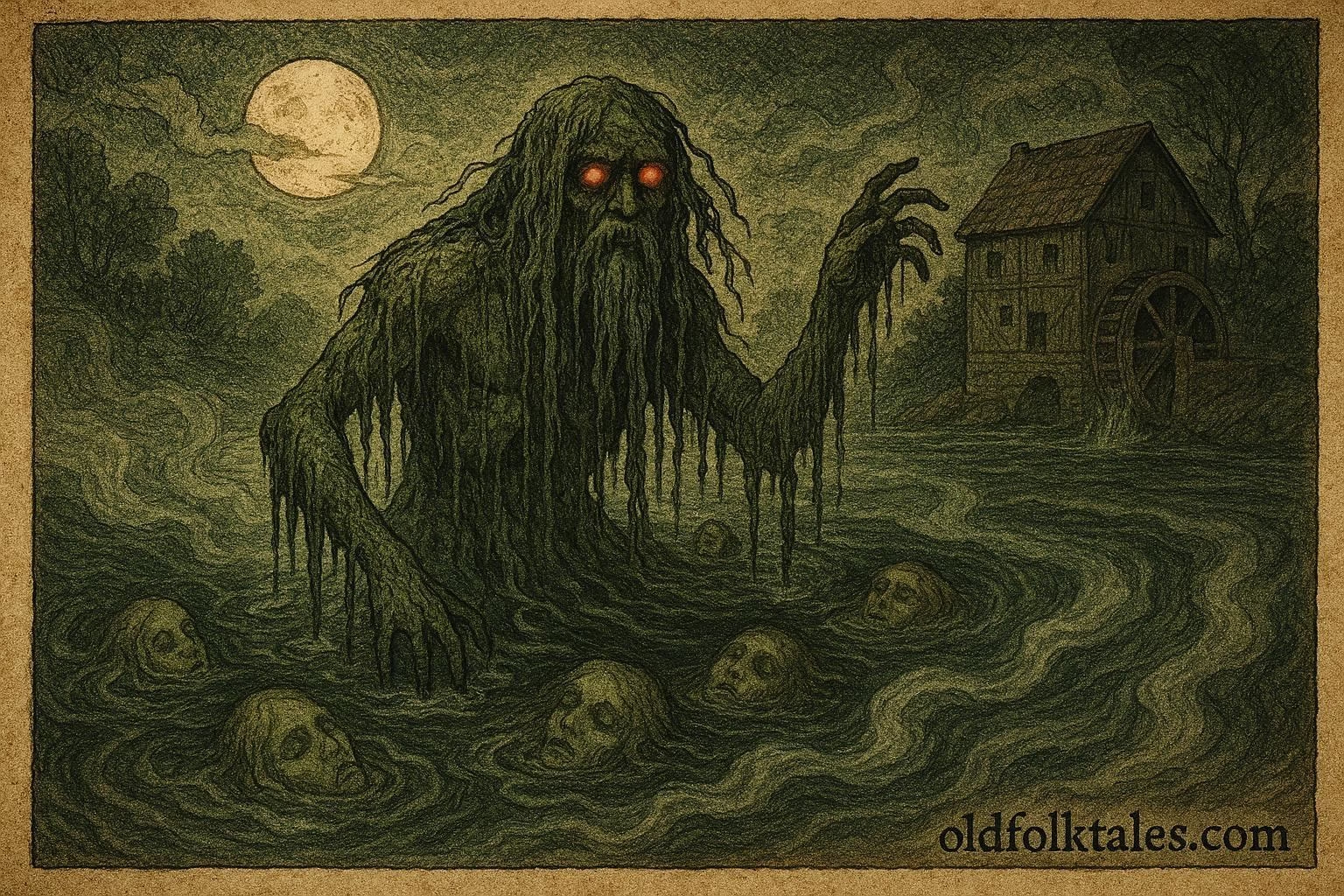
Descriptions vary widely, but older ethnographers (especially those recording northern and eastern Slavic beliefs) portray the Vodyanoy as a grotesque, hybrid creature composed partly of decaying water matter. He is typically imagined as:
- An elderly man with algae-green, drowned skin
- A bloated or swollen body, like that of a long-submerged corpse
- Long hair and beard made of river weed
- Eyes glowing red, fish-like, or lamp-bright under the surface
- Webbed hands, and sometimes frog-like feet
- A coat or cloak dripping continuously with water
Explore the shadows of world mythology, where demons test the soul and spirits watch over mankind
In Czech and Slovak tales, he is often greener and more amphibian-like, sometimes wearing a patched coat, a hat that drips endlessly, or carrying clay pipes. In some traditions, he can shapeshift into a log, a fish, a giant pike, or a floating patch of foam to lure victims.
Behavior & Powers
The Vodyanoy’s powers reflect the ancient belief that natural waters are alive and must be respected.
- Master of Drowning
He is best known for dragging humans, especially careless swimmers or those who insult the water, beneath the surface. Anyone who dies by drowning within his territory becomes:
- A servant spirit
- A ghostly underwater worker
- Or part of his court of the dead
- Keeper of Hidden Wealth
In many stories, sunken treasures, lost objects, and drowned valuables accumulate in his underwater palace. Millers, fishermen, and water-adjacent workers were believed to make offerings or pacts with him in exchange for luck or safe passage. - Controller of Water Forces
He can summon:
- Sudden whirlpools
- Floods
- Ice breakages
- Shifts in water current
He may reward respectful humans with calm waters or punish arrogance with destruction.
- Shapeshifting & Illusion
A powerful element of his lore is his ability to change form, often appearing as:
- A floating log
- A half-submerged cow or horse
- A giant fish
- A beautiful, drowned maiden (used as bait)
These illusions tempt the unwary closer to the water’s edge.
Myths & Key Beliefs
- The Drowned Servants
One of the most widespread beliefs is that anyone who drowns becomes bound to the Vodyanoy, serving him eternally. This belief was so culturally strong that some villages performed quiet river-bank rituals so the newly drowned could be “released.” - Relationship with Millers
In Slavic villages, water mills were dangerous places, quiet, isolated, and filled with sudden currents. Millers were often suspected of having pacts with the Vodyanoy. They left:
- Bread
- Black hens
- Small coins
- Pieces of cloth
These offerings were meant to keep the spirit calm so he would not sabotage the mill or drown workers.
- Dangerous Times & Places
The Vodyanoy was believed to be active during:
- Nightfall
- Stormy weather
- Spring thaw
- High holidays like Ivan Kupala, when water spirits were especially restless
Children were warned not to play near rivers on these nights.
- Variants Throughout Slavic Regions
- Russia & Ukraine: More malevolent; symbol of the unpredictable cruelty of nature.
- Czech Republic & Slovakia (Vodník): A trickster figure who stores drowned souls in porcelain jars; less demonic and more mischievous.
- Belarus & Poland: A mixture of dangerous and morally instructive traits.
Symbolism & Cultural Meaning
The Vodyanoy is not merely a monster. He represents several core ideas in Slavic cosmology:
- The Danger and Sanctity of Water
Water was simultaneously life-giving and deeply threatening. The Vodyanoy personified this duality: nurturing to those who respected nature, deadly to those who acted carelessly. - Boundaries Between Worlds
Like many Slavic spirits, he lives on the threshold between realms, here, the boundary between the human world and the watery underworld of the dead. - Moral Cautionary Symbol
He teaches:
- Avoid recklessness
- Respect natural forces
- Honor tradition
- Be cautious of liminal spaces
- Representation of Unpredictable Fortune
Just as water brings riches (fish, travel, trade) but can also take life unexpectedly, the Vodyanoy embodies the uncertainty of fate.
Cultural Role
The Vodyanoy served as:
- A warning figure for children and swimmers
- A ritual focus for water-adjacent professions
- A cosmological force explaining drownings and water accidents
- A liminal guardian separating the living from the drowned
In many villages, fear of the Vodyanoy maintained respect for rivers and preserved community taboos regarding water safety. In some regions, he became a folk antihero: an unpredictable but essential part of the local belief system.
Explore the mysterious creatures of legend, from guardians of the sacred to bringers of chaos
Author’s Note
The Vodyanoy is a window into how pre-modern communities understood natural hazards. Rather than seeing drowning as random, they imagined a personified force with moral agency, a spirit requiring negotiation, respect, and ritual. This worldview transformed nature into a living partner, demanding caution and humility.
Knowledge Check (Q&A)
- What natural phenomenon does the Vodyanoy most often symbolize?
The unpredictable danger of deep or moving water. - What happens to those who drown in his domain?
They become his servants or part of his underwater court. - Which profession was believed to make pacts with him?
Millers, who worked beside watermills. - What common appearance features are associated with him?
Green skin, waterweed hair, glowing eyes, and a soaked, bloated body. - How does the Czech Vodník differ from the Russian Vodyanoy?
He is more trickster-like and less malevolent. - What moral lesson is conveyed through his stories?
Respect natural forces and avoid reckless behavior near water.
Source: Traditional Slavic folklore; Afanasyev folktale collections; 19th-century ethnographic field notes
Origin: Eastern Slavic (Russian, Ukrainian, Belarusian) with Central European variants (Czech Vodník, Slovak Vodník)