Chhath Puja is rooted in the ancient solar traditions of northern India and Nepal. It is celebrated with deep devotion in Bihar, eastern Uttar Pradesh, Jharkhand, and Nepal’s Terai region. The practice blends Vedic reverence for the Sun (Sūrya) with the worship of Chhathi Maiyya, a protective mother-goddess linked to dawn, fertility, and well-being. Though the ritual has many regional expressions, its core elements, purity, fasting, and water-offerings, remain continuous across centuries.
Description
Chhath Puja unfolds across four purposeful days. Each day carries a clear rhythm, moving the devotee steadily from preparation toward communion with cosmic light. The festival begins with Nahay-Khay, a day of ritual bathing and strict dietary purity. Worshippers cleanse themselves in rivers or ponds, cook simple, uncontaminated meals, and ready their homes for the sacred discipline that follows.
The second day, Lohanda or Kharna, deepens the commitment. Devotees observe a day-long fast, breaking it only at night with a single offering of rice pudding prepared without salt or spices. The preparation must be absolutely pure, reflecting the worshipper’s desire to purify both body and intention. By the time the fast resumes, participants feel spiritually focused, humbled, and inwardly quiet.
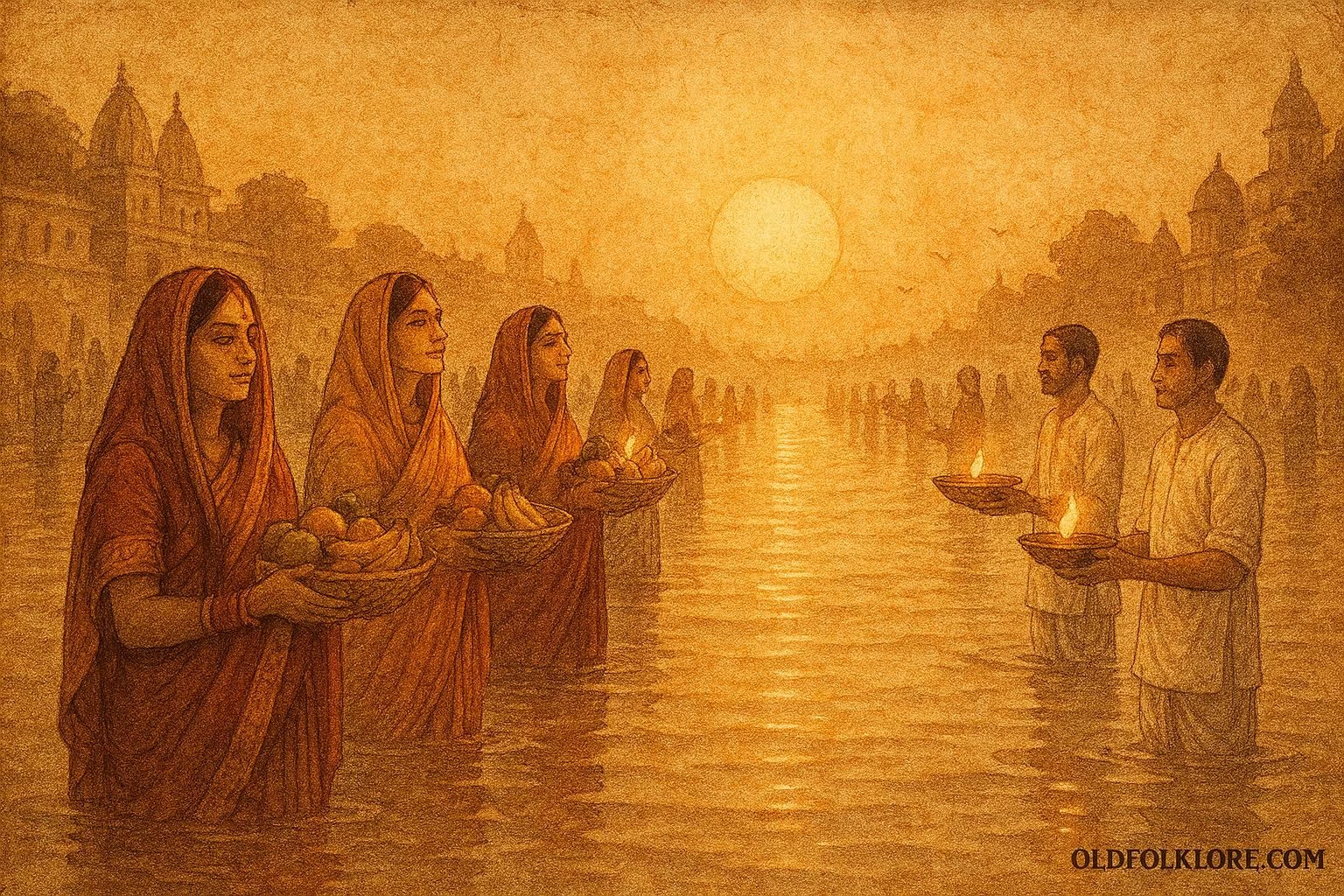
On the third day, families gather at riverbanks or reservoirs carrying baskets of fruits, thekua (a baked wheat sweet), sugarcane, and lamps. This is the day of the first arghya, the sacred water-offering made to the setting Sun. As the light dissolves into the horizon, devotees rise in the shallows, hands cupping water, bodies still and steady. The setting Sun symbolizes endurance, the strength to complete cycles, and the grace that allows life to ripen toward completion. The entire scene carries an atmosphere of reverence: soft chants, flickering lamps, and communities standing in silent devotion.
The dawn of the fourth day brings the second arghya, offered to the rising Sun. This moment, calm, bright, and filled with expectation, marks renewal. Worshippers stand again in the waters, greeting the Sun as witness, healer, and benefactor. Many pray for their children’s health, for the restoration of family bonds, or for harvest prosperity. The ritual concludes with blessings, shared food, and the lifting of the fast.
Chhath Puja is not only a religious act; it is a social renewal. Families reconcile differences before the ritual. Communities cooperate to clean riverbanks and arrange safe pathways for worshippers. The simplicity of the offering reinforces humility, while the public nature of the rite expresses unity. Every part of the festival reminds the community that humans depend upon cosmic forces, moral discipline, and one another.
Mythic Connection
Chhath Puja carries a mythic lineage that reaches into the most ancient layers of Hindu cosmology. In Vedic tradition, Sūrya is more than a celestial body; he is the ever-watchful witness, the one who illuminates truth and dispels moral darkness. By offering arghya, devotees acknowledge him as the sustainer of health, crops, and social order.
The presence of Chhathi Maiyya enriches the ritual with maternal symbolism. In many regions, she is linked with Usha, the goddess of the dawn. Usha represents awakening, protection, and the first light that breaks fear and confusion. Through her, Chhath becomes a festival of fertility, childbirth, and the intimate care offered by divine mothers. Women, though traditionally central, are not the only participants. Men also vow to perform Chhath Puja, especially when praying for a child, healing, or recovery from hardship.
The water element in the ritual connects participants to primordial creation myths. Many Hindu cosmologies describe life emerging from cosmic waters. Standing in the river becomes a symbolic return to origins: a gesture of rebirth, cleansing, and renewed alignment with the moral order of the world.
The act of fasting functions as a spiritual recalibration. It disciplines the senses, sharpens attention, and opens the devotee to inner clarity. In mythology, such discipline reflects the austerities practiced by sages who sought divine favor. Thus, Chhath becomes not only a festival of gratitude but also a reenactment of the cosmic journey toward harmony.
Author’s Note
Chhath Puja reveals how ancient solar worship remains alive in the daily rhythm of northern India and Nepal. Its sequence of fasting, purity, and river offerings expresses an intimate recognition of the Sun as life-giver. Through simple acts and communal discipline, the festival binds mythic tradition to lived experience, reminding participants that cosmic order and human well-being rise and fall together.
Knowledge Check
1. What is the central purpose of Chhath Puja?
Answer: To honor the Sun and seek blessings for health, fertility, and prosperity.
2. Why is the river central to the ritual?
Answer: It symbolizes purity, creation, and the cosmic waters from which life emerges.
3. Who is Chhathi Maiyya?
Answer: A protective mother-goddess associated with dawn, fertility, and children’s welfare.
4. What is arghya?
Answer: A ritual water-offering made to the setting and rising Sun.
5. Why is fasting important in Chhath Puja?
Answer: It purifies the devotee, strengthens discipline, and prepares the mind for worship.
6. When is the second arghya offered?
Answer: At sunrise on the final day of the festival.