Gion Matsuri originated in 869 CE during a deadly epidemic sweeping the Heian capital. Court officials ordered a ritual known as goryō-e, a ceremony designed to appease vengeful spirits believed to carry disease. Sixty-six halberds, one for each province of Japan, were erected as sacred offerings at Yasaka Shrine. Over time, this Shinto purification rite evolved into a grand community festival honoring Susanoo-no-Mikoto, the storm deity venerated at the shrine.
The Gion Matsuri Festival of Kyoto
For more than eleven centuries, Gion Matsuri has shaped Kyoto’s spiritual landscape. What began as a response to plague slowly developed into one of the world’s oldest continually observed festivals. Today, it fills the month of July with purification rites, float parades, sacred music, and communal devotion. Yet beneath its modern beauty lies an unbroken tradition tied to ancient cosmology, Shinto ritual, and the city’s collective memory.
A Festival Born from Calamity
The original 869 CE ritual was simple yet profound. The Heian court believed epidemics were caused by onryō, restless spirits of the dead. To pacify them, priests placed sixty-six halberds (hoko) in a ritual field and performed prayers for purification. The people later added portable shrines, or mikoshi, which carried the deity of Yasaka Shrine through the city to absorb impurities. This early structure created the core pattern still followed in Gion Matsuri today.
Yasaka Shrine and the Deity at the Festival’s Heart
Central to the festival is Susanoo-no-Mikoto, a major Shinto god associated with storms, sea winds, and protection against calamity. According to shrine tradition, Susanoo and his divine family, Kushiinadahime and Yahashira-no-Mikogami—are carried during processions to cleanse the city. Their presence affirms the old belief that divine movement restores spiritual harmony.
The Yamaboko Floats: Moving Mountains of Myth
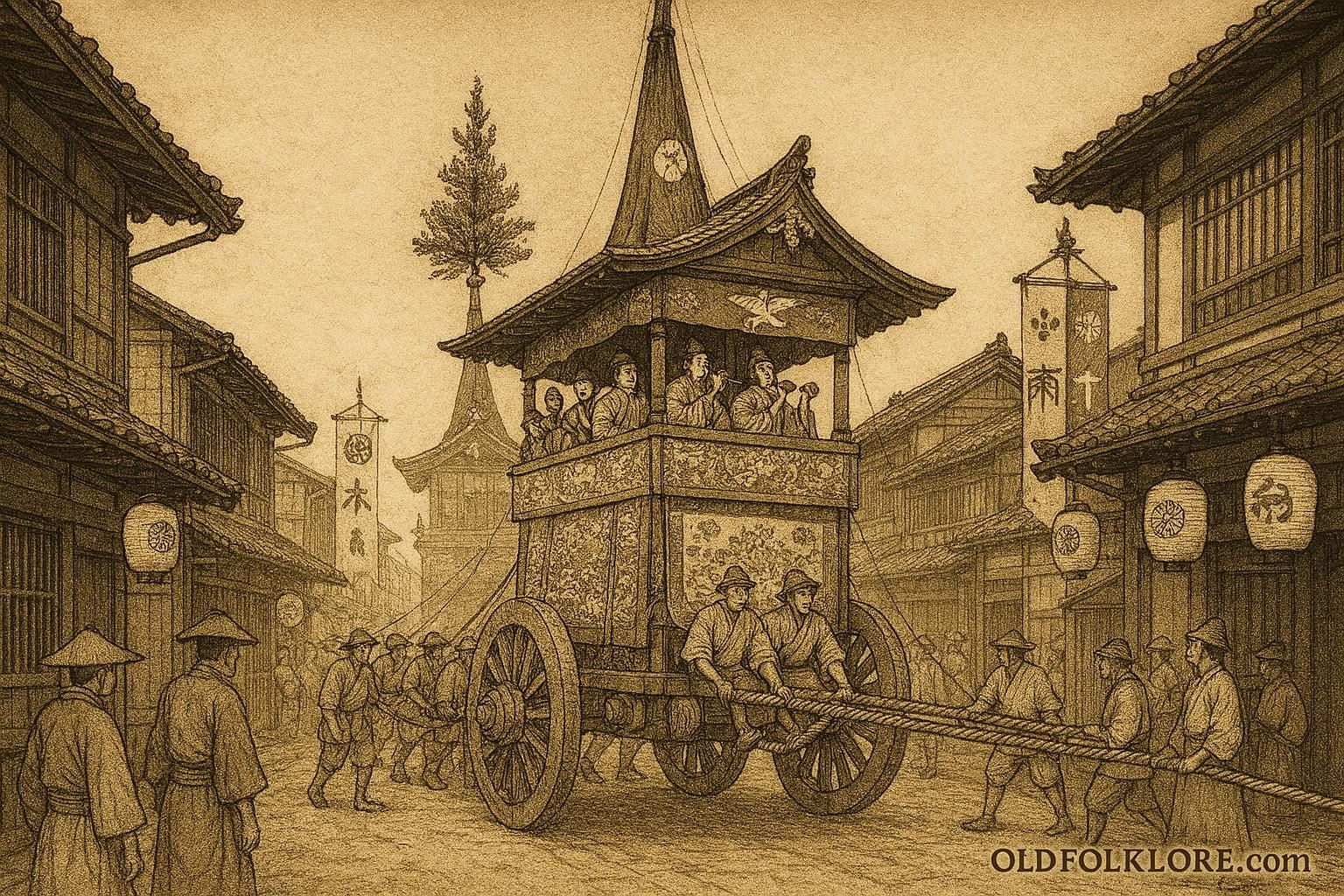
The festival is famous for its monumental floats called yamaboko, known as “moving museums.” These towering structures reach up to 25 meters, weigh several tons, and are pulled by teams of chanting men. They fall into two categories:
-
Hoko floats: Tall, spear-like structures symbolizing the original 66 halberds.
-
Yama floats: Smaller mountains adorned with sacred dolls or mythic tableaux.
Each float represents a specific myth, deity, legendary figure, or protective charm. Many are decorated with imported tapestries from Persia, China, and Europe, reflecting Kyoto’s history as a cosmopolitan cultural center.
The Grand Processions: Saki Matsuri and Ato Matsuri
The highlight of Gion Matsuri is the Yamaboko Junkō, a two-part procession occurring on July 17 (Saki Matsuri) and July 24 (Ato Matsuri). During these parades:
-
Teams pull the giant hoko through narrow streets
-
Court-style music from flutes and bells plays
-
Priests bless the path
-
Children serve as sacred attendants, representing purity
The moment a float turns a corner, achieved by placing bamboo planks beneath its giant wooden wheels, is considered one of the festival’s greatest spectacles.
Mikoshi Togyo: When the Deity Travels
On the evening of July 17, the deity of Yasaka Shrine is transferred into three mikoshi. Carried by powerful bearers, these sacred palanquins move through downtown Kyoto in a vigorous procession known as Mikoshi Togyo. The movement brings purification to every district visited and symbolizes the deity’s temporary dwelling among the people.
The Ritual of Returning: Kanka Sai
After a week of purifying the city, the deity is ceremonially returned to Yasaka Shrine during Kanka Sai. This solemn event closes the spiritual cycle of the festival and reaffirms the ancient belief in divine presence as a guardian of urban life.
Community, Craft, and Continuity
Gion Matsuri remains a community-driven festival. Each neighborhood responsible for a float maintains hereditary craft traditions: carpentry, weaving, metalwork, music, and dance. Float construction uses ancient joinery techniques, no nails, only interlocking wood, preserving methods passed down for centuries.
A Living Cultural Treasure
Today, Gion Matsuri is recognized as an Intangible Cultural Heritage by UNESCO and is considered one of Japan’s greatest seasonal rituals. Despite changes in technology and tourism, its spiritual core, purification, protection, and communal remembrance, remains intact. The festival continues to bridge Kyoto’s aristocratic past with its living neighborhoods, ensuring the ancient rite survives into the future.
Author’s Note
This article examines the historical development of Gion Matsuri from its origins in a ninth-century goryō-e purification ritual to its current form as a major Shinto festival in Kyoto. It outlines the festival’s cosmological purpose, the role of Susanoo-no-Mikoto, the evolution of yamaboko floats, and the significance of key processions such as the Yamaboko Junkō and Mikoshi Togyo. It also highlights the preservation of community craft traditions and the festival’s enduring function as an urban purification and cultural continuity rite.
Knowledge-Check Q&A
-
What crisis triggered the creation of Gion Matsuri in 869 CE?
A deadly epidemic in the Heian capital. -
Which deity is central to Yasaka Shrine and the festival?
Susanoo-no-Mikoto. -
What do the hoko floats symbolically represent?
The sixty-six halberds used in the original purification rite. -
What is the purpose of the Mikoshi Togyo procession?
To carry the deity through the city for purification. -
Why are children important in theFloat processions?
They symbolize purity in Shinto ritual tradition. -
What recognition highlights Gion Matsuri’s global cultural importance?
Its status as UNESCO Intangible Cultural Heritage.