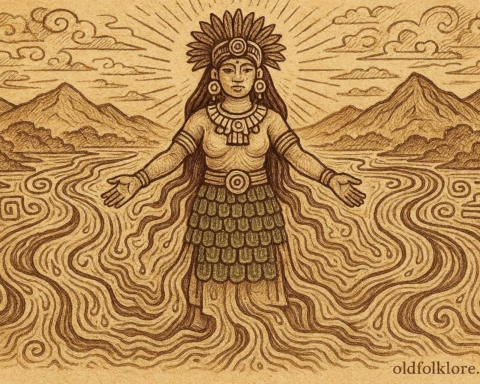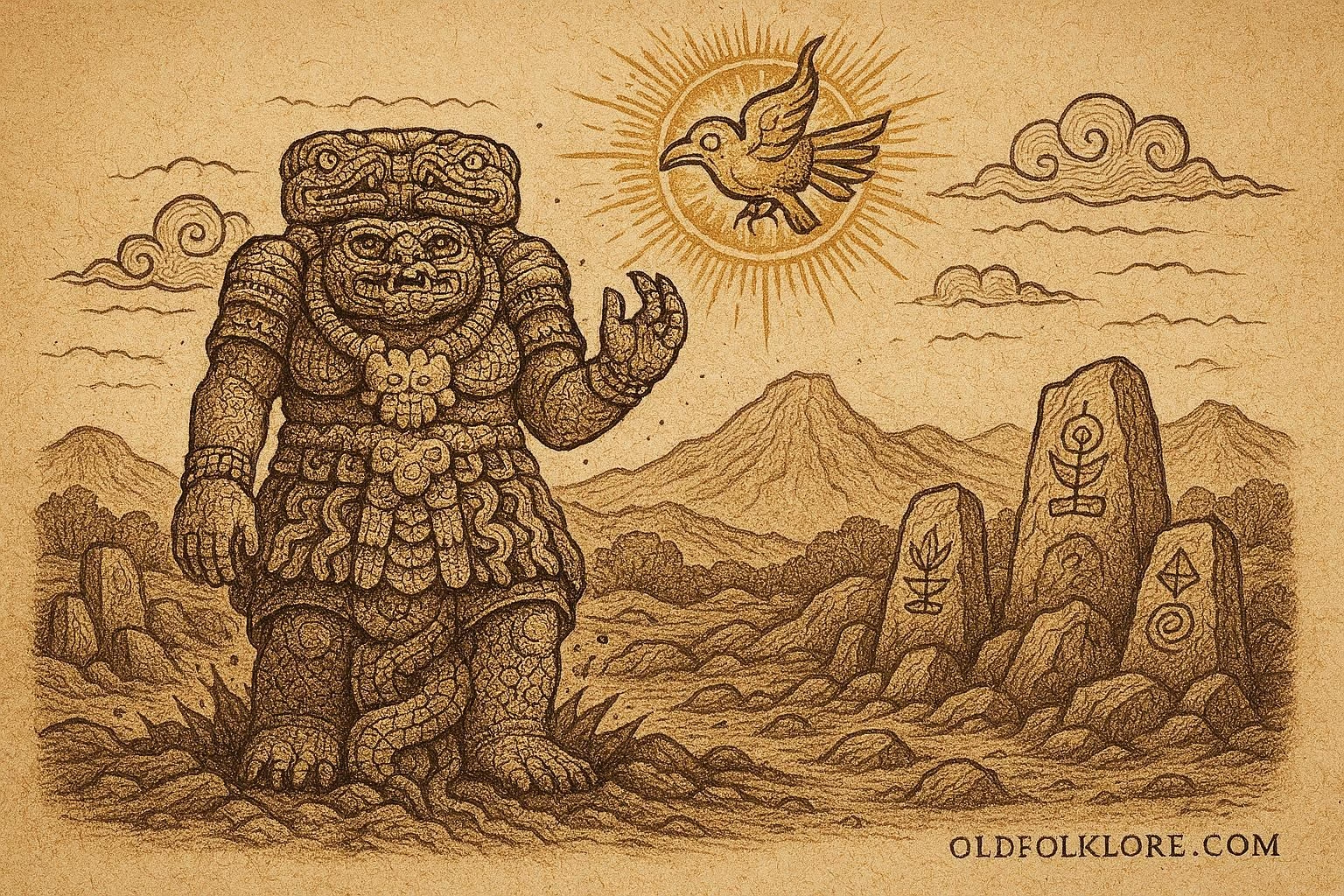
Coatlicue, whose name means “She of the Serpent Skirt,” is the fierce and awe-inspiring mother goddess of the Aztec pantheon. She embodies fertility, motherhood, the earth, and the cyclical power of life and death. Coatlicue is often depicted wearing a skirt of intertwined snakes and a necklace of human hearts, hands, and skulls, a vivid manifestation of the earth’s dual nature as giver and taker of life.
Central to her domain is the balance between creation and destruction. As the mother of the gods, she gave birth to Huitzilopochtli, the sun and war deity, and her influence permeates Aztec cosmology. She is honored in temples and through ritual offerings, with ceremonies marking fertility, agricultural cycles, and the protection of the community. Snakes, symbolizing both regeneration and danger, are sacred to her, while her iconography is intentionally terrifying, designed to remind humans of the power and unpredictability of the earth.
Mythic Story: Birth of Huitzilopochtli
Long ago, in the celestial heights above the Aztec lands, Coatlicue tended the temple on the sacred mountain. One day, a radiant ball of feathers descended from the sky, settling upon her as she gathered firewood. Though unknowing of its origin, she touched the feathers, and miraculously became pregnant.
Her children, Coyolxauhqui and the 400 Xochimilco brothers, were alarmed and enraged at the thought of their mother’s divine, mysterious pregnancy. Fearing disgrace and questioning the sacred order, they conspired to kill Coatlicue, believing the act necessary to maintain cosmic balance.
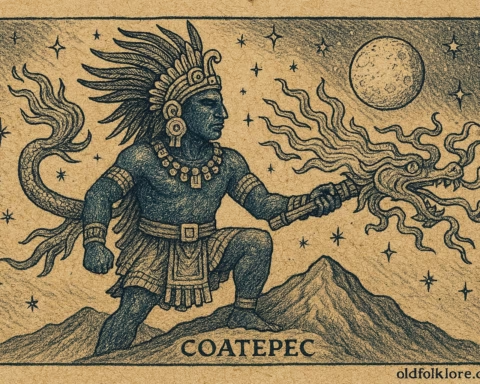
As they advanced upon her, the mountain trembled, and the earth groaned beneath the tension of impending violence. Yet within her womb, Huitzilopochtli stirred. Emerging fully armed, radiant with solar energy, and wielding the fire serpent Xiuhcoatl, he struck down his siblings with swift and merciless precision. Coyolxauhqui’s body was torn asunder, tumbling down the mountainside, a vivid reminder of the sun’s dominance over the moon and stars. The 400 brothers scattered, defeated, their rebellion crushed by divine might.
Through this act, Coatlicue’s maternal power was affirmed: she had protected life through the miraculous birth of her son, ensuring the continuation of the cosmic order. Her terrifying visage, snakes writhing across her skirt and hearts hanging from her chest, symbolizes the inseparable bond between creation and destruction, birth and death.
The Aztec people revered this story, honoring Coatlicue in rituals that mirrored the duality of her nature. Fertility ceremonies acknowledged her role as mother of gods and humans alike, while warriors invoked her to understand the fierce protection she offered. Temples built in her honor, including the massive stone statue unearthed in Tenochtitlan, served as perpetual reminders of the potent forces of life she embodied.
Discover the gods, goddesses, and divine spirits who ruled the heavens and shaped human fate
Author’s Note
Coatlicue’s myth illuminates the Aztec conception of the earth as both life-giver and formidable enforcer. Her narrative teaches that creation is inseparable from destruction, and that divine order often operates through acts of unimaginable power. The birth of Huitzilopochtli emphasizes maternal protection and cosmic balance, offering insight into the ways the Aztecs perceived nature, family, and divine authority. Her terrifying iconography is not meant to frighten but to instill respect for the forces of life that humans cannot fully control.
Knowledge Check
Q1: What culture worshipped Coatlicue?
A: The Aztec civilization in Central Mexico.
Q2: What domains does Coatlicue govern?
A: Earth, fertility, motherhood, life, and death.
Q3: How is Coatlicue typically depicted?
A: Wearing a skirt of snakes and a necklace of human hearts, hands, and skulls.
Q4: Who was Coatlicue’s most famous child?
A: Huitzilopochtli, the sun and war god.
Q5: Why did Coatlicue’s children attempt to harm her?
A: They feared disgrace and were angered by her miraculous pregnancy.
Q6: What does Coatlicue symbolize through her myth and iconography?
A: The inseparable connection between creation and destruction, life and death, and the protective power of motherhood.
Source: Florentine Codex and Codex Borgia, Mexico
Source Origin: Aztec (Central Mexico)