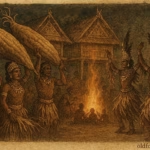
Kupala Night arises from pre-Christian Slavic cultures, especially in the regions of Poland, Ukraine, Belarus, Russia, and parts of the Balkans. These communities lived close to forests, rivers, and agricultural cycles, shaping a cosmology deeply tied to nature’s spirits. The summer solstice, the longest day of the year, marked a turning point when sunlight reached its peak, crops stood high, and the earth brimmed with fertility. Kupala Night emerged as a sacred celebration of this abundance, blending rites of fire and water to honor the powers that governed life, growth, and protection.
Description
Kupala Night, also known as Ivan Kupala, stands among the most enchanting rites of the Slavic world. Celebrated around the summer solstice, it opens at dusk when communities gather near rivers, meadows, and bonfires. The festival reflects a world where humans, spirits, and nature share a delicate balance.
Young women craft flower wreaths woven from wild herbs, each plant chosen for its protective or divinatory qualities. At twilight, they set the wreaths afloat on a river. The path of each wreath foretells the maiden’s romantic future: a steady drift promised marriage, a circling motion warned of delay, and a submerged wreath signaled misfortune. In some villages, young men waited downstream to catch the wreath of the woman they hoped to wed, turning divination into a courtship ritual.
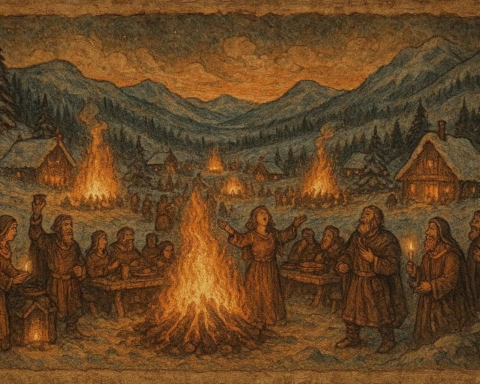
When night deepens, the community lights towering bonfires. Couples join hands and leap over the flames. To the Slavs, fire was never merely heat; it was a living guardian able to burn away misfortune, illness, or ill-starred fate. The leap symbolized purification and unity, and those who cleared the flames without breaking hands were believed destined for a harmonious life together.
Across the forests, another quest unfolds, the search for the mythical fern flower. Slavic lore teaches that ferns bloom only at midnight on Kupala Night. The flower glows like living ember, revealing hidden wisdom, granting blessings, and opening the paths to prosperity. Though the bloom is impossible in nature, the tale reflects humanity’s longing for the rare and divine. Searching for the fern flower became a ritual of courage, solitude, and spiritual yearning.
Water rites also define the night. Communities bathe in rivers or lakes to wash away impurities, believing the waters gained special healing power during the solstice. Others gather sacred herbs thought to reach peak potency under midsummer moonlight. Plants collected on this night served as charms, medicines, or household protections for the year to come.
Kupala Night blends joy, magic, and reverence. It celebrates life at its fullest moment, when the sun stands highest and the world feels most alive.
Mythic Connection
Kupala Night is rooted in the ancient tension and harmony between fire and water, two elements central to Slavic cosmology. Fire symbolized clarity, protection, and purification. Water represented fertility, renewal, and the realm of spirits. During the solstice, these forces reached peak strength. By leaping over fire, bathing in rivers, and floating wreaths upon water, celebrants reenacted a cosmic balance between heat and coolness, light and darkness, passion and calm.
This night was also considered liminal, a boundary moment when the natural and supernatural worlds touched. Spirits wandered freely, herbs awakened with power, and the hidden knowledge of the earth shimmered near the surface. The search for the fern flower captures this mythic threshold: a quest for revelation granted only to those brave enough to enter the heart of the night.
Kupala Night reveals a worldview where nature is sacred, seasons are divine cycles, and human destiny flows in harmony with elemental forces.
Author’s Note
This article summarizes Kupala Night as a pre-Christian Slavic midsummer celebration centered on fire, water, fertility, and divination. It highlights the ritual acts, wreath floating, fire leaping, bathing, herb gathering, and the symbolic fern-flower quest, and explains how these practices expressed Slavic beliefs about purification, protection, marriage fate, and the harmony of elemental forces. The festival’s mythic power lies in its portrayal of the solstice as a liminal moment when nature’s spirits are active and sacred balance is renewed.
Knowledge Check
1. What was the cultural purpose of Kupala Night?
It honored fertility, purification, and the solstice’s peak energy through fire-and-water rites.
2. Why did young women float wreaths on rivers?
To divine their marriage fate and invite symbolic guidance from water spirits.
3. What did leaping over bonfires represent?
Purification, protection, and the strengthening of romantic unity.
4. Why is the fern flower significant?
It symbolizes hidden wisdom and blessings believed to appear only at midnight.
5. How did Slavic communities use herbs collected on this night?
As protective charms, healing aids, and household blessings for the year.
6. What made the solstice night “liminal”?
It was believed to be a moment when nature’s spirits were active and magic was strongest.