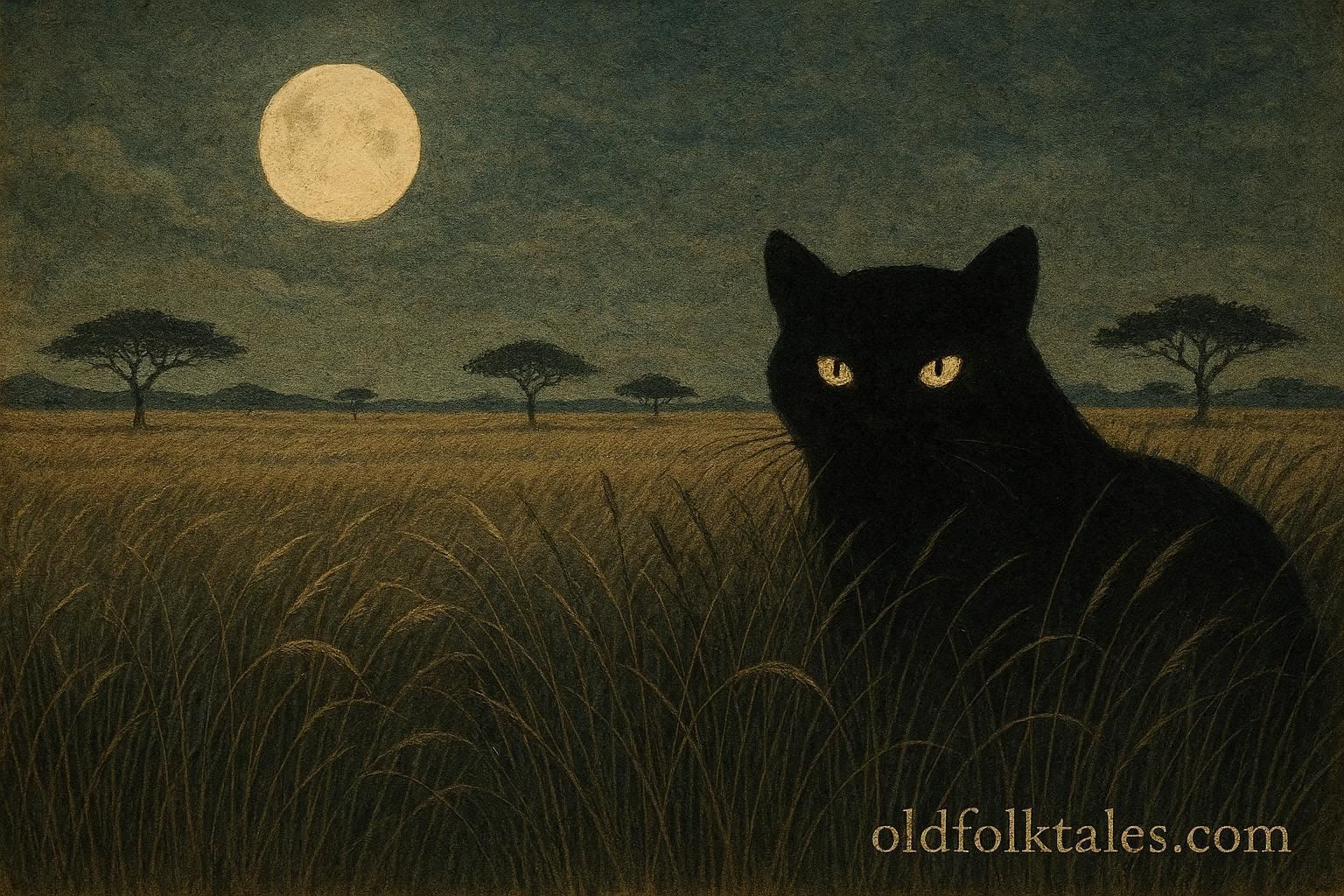
The night wind swept low across the East African savannas, stirring the tall golden grasses into restless waves. Hunters called this hour the quiet belly of darkness, when even the hyenas kept their distance and the moon seemed to hold its breath. Yet in that silence, the elders warned, another presence roamed. It was ancient, hungry, and patient. It was the Mngwa, the shadow cat that walked without tracks.
Long before the hunters carried modern weapons or lit their paths with metal lamps, the people lived by the rhythm of the land. They watched the sky for signs, listened to the birds for warnings, and treated the savanna as a living library of lessons. But as time passed, stories changed. Some young hunters began to brag. They boasted of trophies taken without prayer and meat gathered without gratitude. In these shifting attitudes, the elders sensed danger. They repeated a single warning: disrespect the land, and the shadow cat will come.
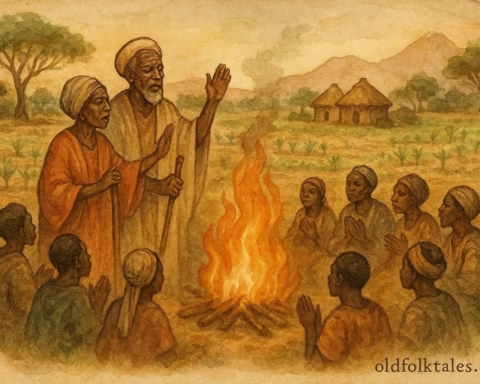
The legend began on a night much like this one. A young hunter named Juma had returned from a long expedition with a group of companions. He was skilled, quick, and proud, known for laughing loudly and claiming he feared nothing in the world. As they sat around the fire, Juma tossed aside the bones of their kill without a word of thanks. The wind shifted strangely, carrying a low hum across the grasslands.
Learn the ancient stories behind deities of light, storm, and shadow from cultures across the world
Old Mama Samira, the village storyteller, rose from her seat and leaned on her cane. She pointed at Juma with a trembling hand. The spirits do not forget disrespect, she said. The savanna has eyes that watch and ears that hear more than you understand.
Juma laughed and shook his head. Let the spirits watch, he said. I fear none of them.
The fire crackled once, then died low.
That night the hunters drifted into uneasy sleep, but Juma lay awake. A strange feeling settled over him, as if the darkness had thickened. The moon slipped behind clouds. The insects hid. Even the wind refused to move. He sat up and listened.
There was no sound, yet he felt something approaching.
A shape emerged at the edge of the clearing. It was massive, taller than any lion he had ever seen. Its fur was the color of storm clouds, shifting and rippling like smoke. Two deep golden eyes glowed with an unnatural light. The creature stepped closer, yet the grass beneath it did not bend. It walked with weight but left no print.
Mngwa.
Juma froze. He had heard the legends but never believed them. Now the stories breathed in front of him.
The shadow cat circled him. He felt its breath brush his face, hot as desert wind and cold as mountain stone all at once. A sound like deep humming filled the air, not from its throat but from the space around them, as if the earth itself vibrated.
Who hunts without gratitude, it seemed to whisper. Who takes without giving. Who boasts without knowing.
Juma’s pride drained from him like spilled water. For the first time in years, fear gripped him. He bowed his head and whispered a prayer of apology. His voice trembled as he promised to honor the land, treat animals with respect, and remember that the hunter depends on the very world he once took for granted.
The Mngwa watched him closely. Then it turned, dissolving into the darkness until even its glowing eyes vanished.
At dawn the other hunters woke and found Juma sitting alone, pale and silent. They asked what had happened but he only shook his head and gestured to the ground. There were no prints. No fur. No signs of life at all.
From that day forward Juma became a different man. He hunted with reverence. He offered thanks for every kill. He guided young hunters, teaching them humility before the land. And though he never spoke openly of the Mngwa, the fear in his eyes said everything.
The elders continued the story. They taught that the Mngwa appears not to punish blindly but to restore balance. It is a guardian, a reminder, a silent judge. When the savanna is threatened by arrogance or greed, the shadow cat walks again.
Some nights villagers swear they see two golden eyes shimmering in the tall grass. Others claim to hear a low rumbling where no animal stands. The bravest understand the meaning. The Mngwa watches always, waiting for those who forget their place in the delicate weave of the natural world.
And when the wind grows still at the belly of the night, the people know the ancient spirit is roaming once more, enforcing the truth that the land must never be taken for granted.
Explore the shadows of world mythology, where demons test the soul and spirits watch over mankind
Author’s Note
The story of the Mngwa highlights the deep connection between human communities and the natural world. Through this spirit, generations have learned the importance of humility, gratitude, and balance. It serves as a reminder that nature has its own guardians and that harmony requires discipline and respect.
Knowledge Check
-
What triggers the appearance of the Mngwa in the story?
Answer: Disrespect for the land and arrogant behavior from hunters. -
Why did Juma attract the Mngwa’s attention?
Answer: He disrespected the land and showed pride without gratitude. -
What made the Mngwa unique in its movements?
Answer: It walked without leaving any tracks. -
How did Juma change after encountering the Mngwa?
Answer: He became humble, respectful, and taught others to honor the land. -
What lesson does the Mngwa’s presence teach the villagers?
Answer: That nature must be respected and balance must be maintained. -
Why do the villagers listen when the night wind becomes still?
Answer: They believe it means the Mngwa is roaming again.
Source
Adapted from Swahili Hunting Legends noted by Captain William Hichens, 1927
Cultural Origin
Swahili and Coastal East African Peoples