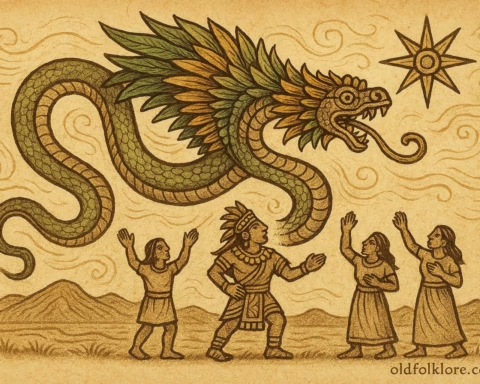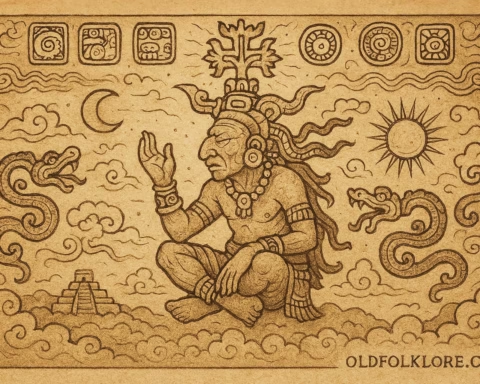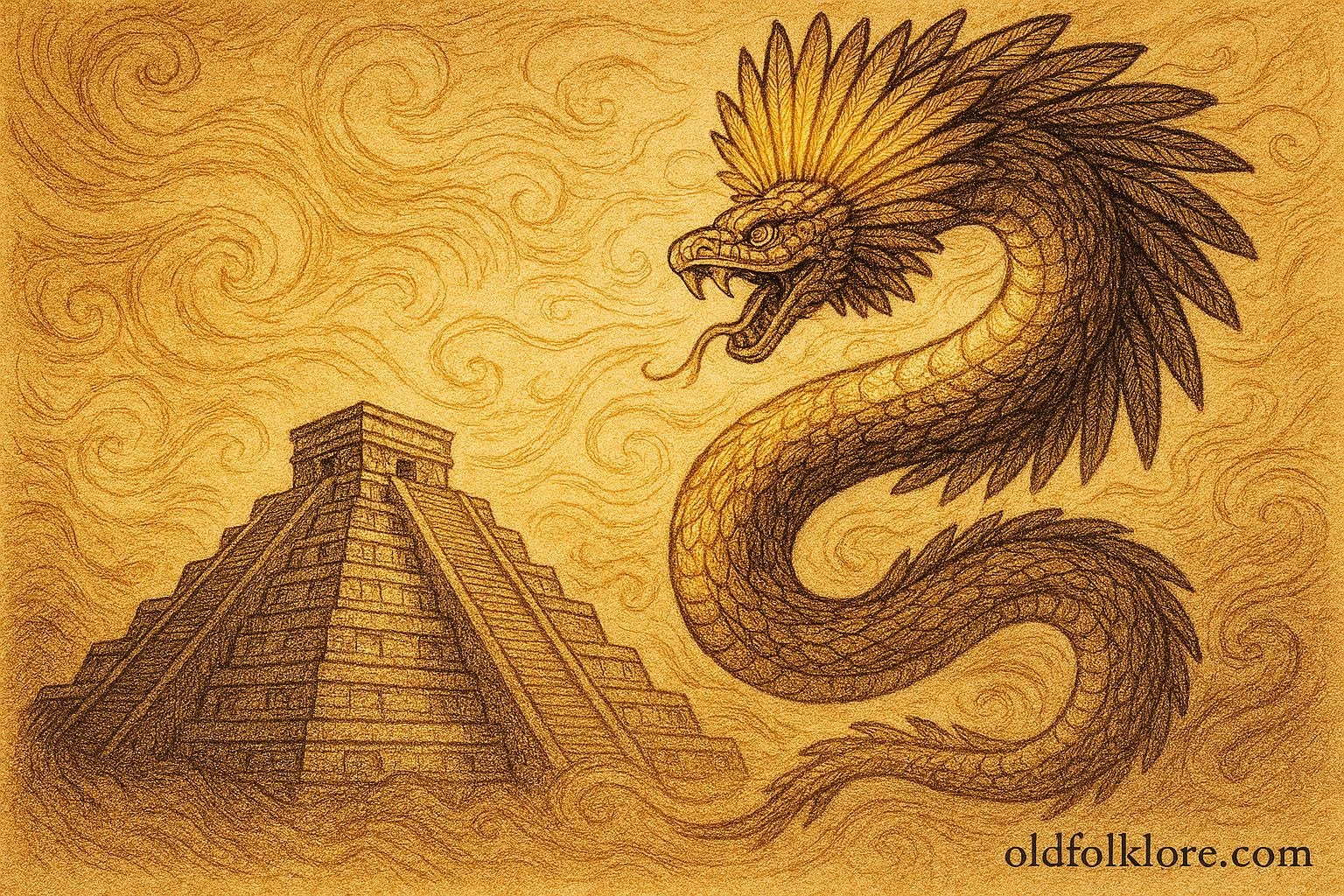
Kukulkan, meaning “Feathered Serpent”, is one of the most revered deities in Maya cosmology. His form unites two sacred forces:
-
The Quetzal feather, symbolizing sky, breath, wind, and divine intelligence.
-
The Serpent, symbolizing earth, rain, fertility, and the cycles of life.
As a sky-born god, he governs wind, rain, storms, calendars, astronomical order, agricultural fertility, and sacred knowledge. His presence guides kings, teaches astronomer-priests, and shapes the ethical behavior of rulers and people alike.
Kukulkan’s worship is most famously tied to El Castillo at Chichén Itzá, an architectural calendar aligned to equinox light. Twice each year, the sun creates the shadow of a serpent slithering down the pyramid, completing the cosmic descent of Kukulkan to the earth.
He appears throughout Maya codices as a bringer of civilization, teaching maize cultivation, astronomy, the count of days, moral order, and community discipline. His temples stretch across Yucatán and the Maya highlands, linking him to wind caves, cenotes, and sky observatories.
Though later associated with Quetzalcoatl through cultural interaction, Kukulkan remains distinctly Maya, woven into rituals, calendars, dynastic authority, and the sacred architecture of the ancient world.
Mythic Story: Kukulkan Descends to Teach the Maya
Long before the great cities rose above the jungle canopy, before the priests learned to read the stars or farmers knew when rains would return, the Maya world moved restlessly in half-formed rhythms. Clouds gathered without pattern. Winds blew without guidance. Days passed, but no one knew how to count them. In that age of uncertainty, the people looked to the sky and waited for a sign that order would come.
High above, where turquoise light flows like a river across the heavens, Kukulkan stirred from his celestial resting place. His body shimmered with emerald feathers, each one carrying the breath of wind and the power of storms. The coils of his serpentine form held within them the unshaped movements of time. From this height, he watched the earth below, unfinished, unmeasured, yearning for balance.
Sensing that humanity was ready, the Feathered Serpent prepared to descend.
As he crossed the threshold between sky and earth, a brilliant light followed him. The sun cast his image in shifting shadows across the great stone pyramid at Chichén Itzá, though the pyramid itself would only later be built to remember this moment. Down the terraces of the imagined temple, his silhouette danced, creating a serpent of light and darkness that slid toward the waiting world.
When his radiant head touched the ground, the wind stilled. Leaves froze mid-ripple. The very air held its breath.
Kukulkan spoke, not in words, but in wind. His voice stirred the dust, rustled the palms, and entered the hearts of all who gathered.
“Children of the earth,” he whispered, “I come to give you the order that the world follows, so you may live in harmony with it.”
To the elders and priests, he traced patterns in the soil with the tip of his tail. Spirals became wheels. Wheels became cycles. And thus he taught the Tzolk’in, the sacred count of days. With it, the Maya learned to understand seasons, ceremonies, and the turning of the cosmos.
He lifted his feathered crest, and the shadows shifted into constellations. From this came lessons of Venus, the sun, the moon, and the wandering stars, so that the Maya might track celestial rhythms with the precision of the gods.
To the farmers, he brought the secrets of maize, when to prepare the earth, when to plant, when rains would bless the fields. As he spoke, thunder rolled across the distant horizon, promising the return of the life-giving storms.
Then he turned to the rulers. His eyes glowed with golden fire, neither fierce nor gentle, but steady, demanding truth.
“A king without wisdom,” he said, “is like a serpent without feathers, earth-bound and blind. A ruler without humility is like feathers without serpent, beautiful, but without grounding.”
From him, leaders learned the laws of balance:
strength guided by compassion, authority tempered by justice, decisions made with the welfare of the people at heart.
Kukulkan stayed among the Maya for a season, traveling from village to village. He taught astronomer-priests the cycles of the heavens. He visited water-filled cenotes where offerings would later be cast in his honor. He encouraged artists to carve his image into stone so future generations would remember his teachings.
But the time came when he had to return to the sky.
Gathering the people, he ascended the great pyramid. Light surrounded him. His feathered body curled upward, scale upon gleaming scale, until he towered beside the sun. For a moment, he looked upon the world he had shaped, its ordered time, prepared fields, guided rulers, and he breathed out a final blessing.
With a rush of wind, he rose into the heavens.
Yet he did not vanish. Instead, he became the dawn breeze, the gentle wind that moves just before sunrise. The Maya say that when this wind stirs, Kukulkan is passing, reminding the world of the cosmic order he bestowed.
And twice each year, when sunlight forms the descending serpent on El Castillo, the Feathered Serpent returns to earth again, fulfilling an ancient promise etched into stone and sky.
Author’s Note
Kukulkan’s myth emphasizes the Maya belief that cosmic order, agriculture, astronomy, and moral leadership are inseparable. His descent symbolizes the moment when humanity received the wisdom needed to live in harmony with time, land, and the heavens.
Knowledge Check
Q1: What does Kukulkan’s name mean?
A: “Feathered Serpent,” combining quetzal feathers with serpent imagery.
Q2: What domains does Kukulkan govern?
A: Wind, rain, knowledge, astronomy, agriculture, and cosmic order.
Q3: Where is his most famous temple located?
A: El Castillo at Chichén Itzá in the Yucatán Peninsula.
Q4: What calendar did he teach to the Maya?
A: The Tzolk’in, the 260-day sacred calendar.
Q5: What did Kukulkan teach rulers?
A: Balance, power guided by wisdom, justice, and humility.
Q6: How is his return symbolically represented today?
A: Through the equinox serpent-shadow at Chichén Itzá and the dawn wind.
Source: Maya Mythology, Yucatán Peninsula.
Source Origin: Maya Civilization (Yucatán Peninsula, Mexico / Central America)