
Along the shimmering coastline of Brunei, where the South China Sea meets ancient mangrove forests and fishing villages dot the shore, there once lived a man whose legend would endure for centuries. His name was Nakhoda Ragam, the Singing Captain, and those who heard him never forgot the beauty of his voice or the tragedy of his fate.
Nakhoda Ragam was no ordinary sailor. He commanded vessels with the skill of a man born to the waves, navigating treacherous currents and sudden storms with an instinct that seemed almost supernatural. His crew respected him not only for his seamanship but for his courage in battle. When pirates threatened Brunei’s waters or rival kingdoms tested the sultanate’s strength, Nakhoda Ragam stood at the helm, sword in hand, his battle cries ringing across the decks.
But it was not his prowess as a warrior or navigator that made him legendary throughout Brunei. It was his voice.
When Nakhoda Ragam sang, the world transformed. Fishermen pulling in their nets would pause mid-motion, their weathered hands still on the ropes, listening as his melodies drifted across the water. Market vendors stopped their haggling. Children ceased their play. Even the waves themselves seemed to quiet, as if the ocean recognized something in his voice that transcended the mortal realm, a beauty so pure that nature itself paid homage.
His songs were not learned from courtly musicians or refined in palace halls. They came from somewhere deeper the rhythm of oars cutting through water, the creak of ships’ timbers, the whisper of wind through sails, the ancient melodies passed down through generations of seafaring people. When he sang of love, hearts ached. When he sang of the sea, listeners could taste the salt spray on their lips. When he sang of homeland, even hardened warriors felt tears prick their eyes.
Nakhoda Ragam was also blessed with a face that matched his voice in beauty. Tall and strong from years of hauling ropes and wielding swords, with eyes that held both the fierceness of a warrior and the gentleness of a poet, he turned heads wherever he walked. Young women in the villages whispered about him. Their mothers warned them away, knowing that the Singing Captain’s heart was not easily won.
But there was one who captured his attention completely a princess of the royal house, whose beauty was renowned throughout the sultanate. Her laughter was like music, her intelligence sharp as any blade, and her spirit as free as the sea birds that wheeled above the coast. When Nakhoda Ragam first saw her walking in the palace gardens, when he first heard her speak, he knew his wandering heart had finally found its home.
The princess, too, felt the pull of destiny. When she heard Nakhoda Ragam sing for the first time at a royal gathering, something shifted in her chest. His voice spoke directly to her soul, and when their eyes met across the crowded hall, both understood that they had found something rare and precious.
Their love bloomed like frangipani flowers swift, beautiful, and fragrant with promise. They met in secret, sharing whispered conversations beneath the stars, walking along the beach where waves erased their footprints. Nakhoda Ragam sang to her songs he had never sung for anyone else, melodies that seemed to flow directly from his heart to hers.
But their joy faced formidable obstacles. The royal family objected vehemently to the match. A princess of the blood royal, they argued, could not marry a mere sailor, no matter how renowned his voice or celebrated his victories. What noble lineage could he claim? What wealth could he offer that matched the treasury of princes? What connections could he bring to strengthen the sultanate’s position?
Nakhoda Ragam had no answers to these questions only his love, his loyalty, and his voice. The princess needed nothing more. She defied her family’s wishes with the same courage her beloved showed on the sea. If they would not bless the union, she declared, she would marry him anyway and face whatever consequences followed.
In the end, love prevailed over protocol. Perhaps the sultan softened, moved by his daughter’s determination. Perhaps the princess’s will proved stronger than tradition. Or perhaps Nakhoda Ragam’s fame was such that even royalty could not ignore it. Whatever the reason, they married, and for a time, their happiness seemed complete.
The Singing Captain brought his bride to a home near the coast at Tutong, where she could hear the waves that had been his first cradle song. He continued to sail, but always returned swiftly, eager to be in her presence. She learned the rhythms of his life the preparations before voyages, the homecomings, the nights when he sang to her alone. They built their days together carefully, treasuring each moment like pearls strung on a thread.
Those who saw them together spoke of how they laughed, how they teased one another with the easy affection of true companionship. The princess had not lost her playful spirit in becoming a sailor’s wife, and Nakhoda Ragam delighted in her wit and warmth. Their home was filled with joy, and locals passing by would often hear his songs drifting through the windows, accompanied by her laughter.
But fate, which had brought them together against such odds, had a cruel twist waiting.
One afternoon, during a moment of playful teasing, the princess reached out and gave Nakhoda Ragam a light push the kind of affectionate shove that lovers exchange a thousand times without consequence. She was laughing, her eyes bright with mischief. He was laughing too, turning toward her with a smile that had won her heart.
Neither of them had remembered the dagger at his waist.
It was a warrior’s habit, worn so constantly that it became part of him, as natural as his own skin. The blade was always kept sharp a sailor and fighter could not afford a dull weapon. As the princess’s hand made contact, as his body shifted from the gentle push, the dagger’s positioning became fatal.
The blade pierced him with terrible precision. Time seemed to slow. The laughter died on both their lips as they realized what had happened. Nakhoda Ragam’s eyes widened not with anger, but with a terrible understanding. The princess’s hand flew to her mouth, her playful expression transforming into horror.
He collapsed into her arms, his blood staining her garments, his breath coming in short, desperate gasps. She held him, crying his name, begging him to stay with her, promising anything if only he would not leave. But the wound was too deep, too precise. The same strength that had made him a formidable warrior now worked against him his heart beat powerfully, pumping blood through the wound faster than it could be stanched.
Nakhoda Ragam died there in his beloved’s embrace, his beautiful voice silenced forever, his eyes growing dim as they looked up at her face. His last expression was not one of pain or accusation only love and terrible sorrow for the grief he knew she would carry.
The princess’s anguish shook the household. She would not release his body, would not allow anyone to take him from her arms. For hours she held him, rocking back and forth, her tears falling onto his still face. When finally she could accept that he was truly gone, she knew she could not bear to have him buried in the earth, hidden away where she could never see him again.
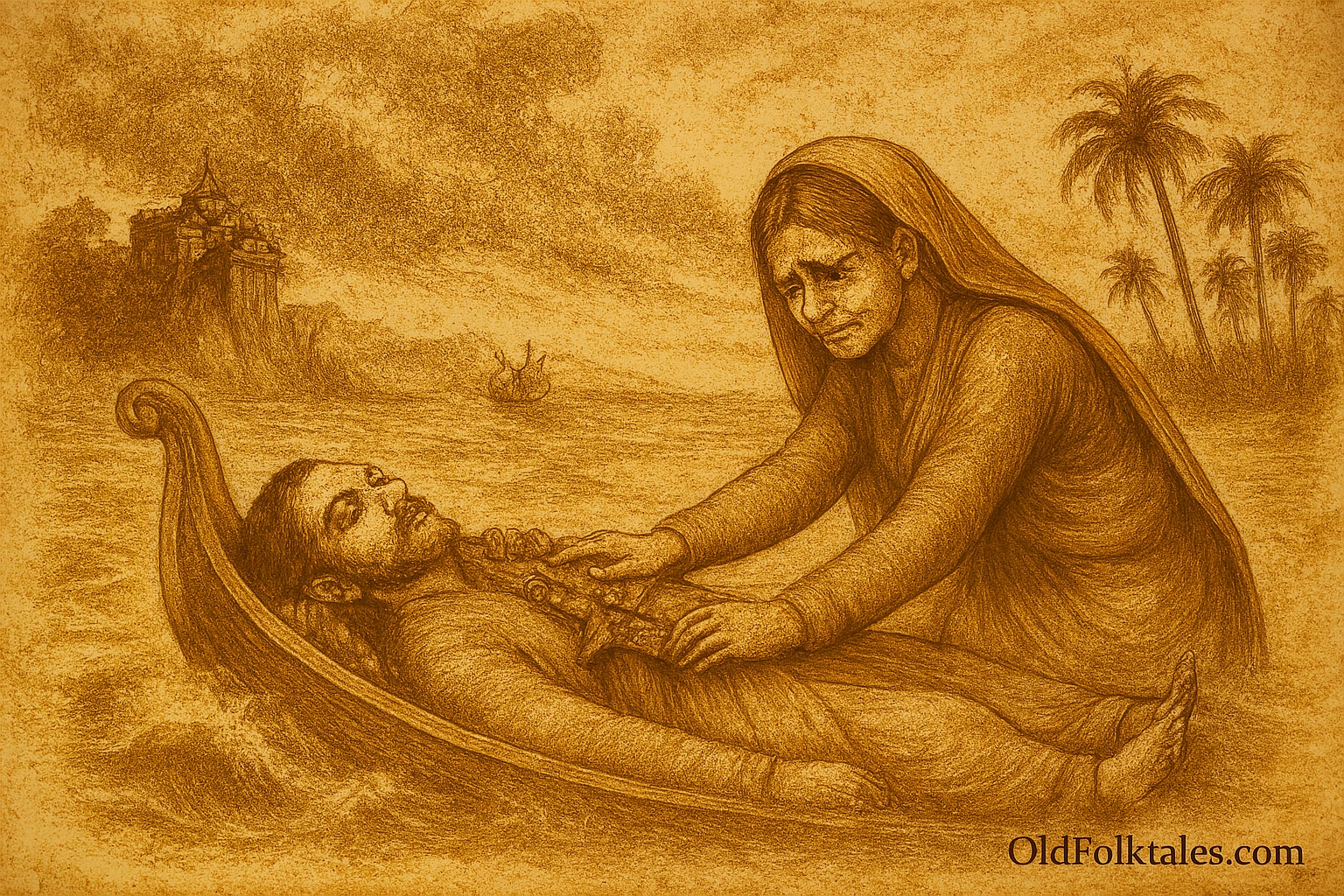
Instead, she prepared a boat a small vessel like those he had commanded with such skill. She placed his body carefully inside, arranging him as if he were merely sleeping, ready to wake and sing again. She draped him with fine cloth and surrounded him with flowers. Then, with her own hands, she pushed the boat into the water and watched as the tide caught it, carrying it away from shore.
The boat drifted out along the Tutong coastline, growing smaller and smaller until it vanished into the horizon. The princess stood on the shore long after it disappeared, her hand raised in farewell, her heart broken beyond repair.
But death could not entirely silence the Singing Captain. From that day forward, fishermen working the Tutong coast began reporting something extraordinary. On quiet nights, when the wind died down and the waves rolled gently against the shore, they heard singing a voice of heartbreaking beauty drifting across the water. The songs spoke of love and loss, of joy cut short of a spirit that could not rest while his beloved still mourned.
Locals say Nakhoda Ragam’s spirit still sails those waters, his voice carrying across the waves just as it did in life. Some claim to have seen a ghostly boat gliding over the surface on moonlit nights. Others report hearing his songs when fog rolls in from the sea, the melodies echoing from nowhere and everywhere at once.
The legend of Nakhoda Ragam became a cautionary tale told across Brunei a reminder that joy and tragedy can be separated by the thinnest of margins, that fate can turn on a moment’s carelessness, and that love, once lost, leaves an echo that never truly fades.
Click to read all Myths & Legends – timeless stories of creation, fate, and the divine across every culture and continent
The Moral Lesson
The legend of Nakhoda Ragam teaches us that life’s greatest joys and deepest sorrows often lie heartbreakingly close together, separated only by chance and circumstance. A moment of playful affection became tragedy through a simple accident, reminding us to cherish our loved ones while we can and to recognize how fragile happiness truly is. The story also illustrates how love transcends death the princess’s devotion in releasing his body to the sea and the singing spirit that still haunts the coast show that genuine love creates bonds stronger than mortality itself. Ultimately, this tale warns us to be mindful of our actions, however innocent they seem, for we cannot predict what small gesture might alter everything.
Knowledge Check
Q1: Who was Nakhoda Ragam and why was he famous in Brunei?
A1: Nakhoda Ragam, known as the Singing Captain, was a legendary warrior-sailor in Brunei renowned for his exceptional voice that was so beautiful even the waves would pause to listen. He was both a skilled navigator and courageous fighter who commanded respect for his seamanship and battle prowess, but it was his singing that made him truly legendary throughout the sultanate. His handsome appearance and extraordinary talent eventually won him the love of a royal princess.
Q2: How did Nakhoda Ragam die in the Brunei legend?
A2: Nakhoda Ragam died in a tragic accident during a playful moment with his princess wife. She gave him a light, affectionate push while teasing him, not realizing he wore a dagger at his waist. The blade pierced him fatally, and he died instantly in her arms. The tragedy lay in the complete innocence of the gesture what should have been a moment of loving playfulness became fatal due to the unfortunate positioning of his warrior’s weapon.
Q3: What happened to Nakhoda Ragam’s body after his death?
A3: Heartbroken and unable to bear having him buried in the earth, the princess placed Nakhoda Ragam’s body in a boat, arranged him as if sleeping, and surrounded him with flowers and fine cloth. She then pushed the boat into the water and let the tides carry it away along the Tutong coastline. This act of releasing him to the sea honored his life as a sailor and allowed her to feel he was returning to the element he loved most.
Q4: What supernatural phenomenon is associated with Nakhoda Ragam’s spirit?
A4: According to Brunei legend, Nakhoda Ragam’s spirit still haunts the Tutong coastline, singing across the waters on quiet nights. Fishermen and locals report hearing his beautiful voice drifting over the waves, especially when conditions are calm. Some claim to see a ghostly boat gliding across the water on moonlit nights, while others hear his melodies echoing through the fog songs of love and loss from a spirit that cannot rest.
Q5: What obstacles did Nakhoda Ragam face in marrying the princess?
A5: The royal family strongly objected to Nakhoda Ragam marrying the princess because he was considered merely a sailor despite his fame and accomplishments. They questioned his noble lineage, wealth, and political connections all things expected of someone marrying into the royal house. However, the princess’s determination and love proved stronger than tradition, and she defied her family’s wishes. Eventually, whether through the sultan’s softening or the princess’s unwavering will, the marriage was allowed.
Q6: What cultural significance does the Nakhoda Ragam legend hold for Brunei?
A6: The legend of Nakhoda Ragam serves as an important cautionary tale in Bruneian culture about the fragility of happiness and how tragedy can strike in the most innocent moments. It emphasizes themes central to Malay maritime culture the connection between sailors and the sea, the power of love to transcend social barriers, and the belief that strong spirits remain tied to the places and people they loved. The story also reinforces the idea that genuine love creates eternal bonds, as evidenced by the singing spirit that still haunts the Tutong coast, keeping the memory of true devotion alive across generations.
Source: Adapted from traditional Bruneian folklore preserved in oral traditions and documented in the Brunei Museums Journal and historical folklore collections.
Cultural Origin: Brunei Darussalam, Borneo (Southeast Asia)