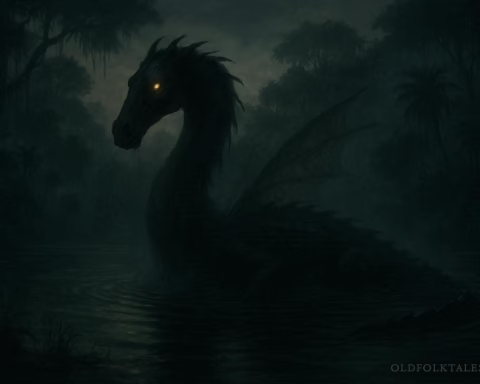

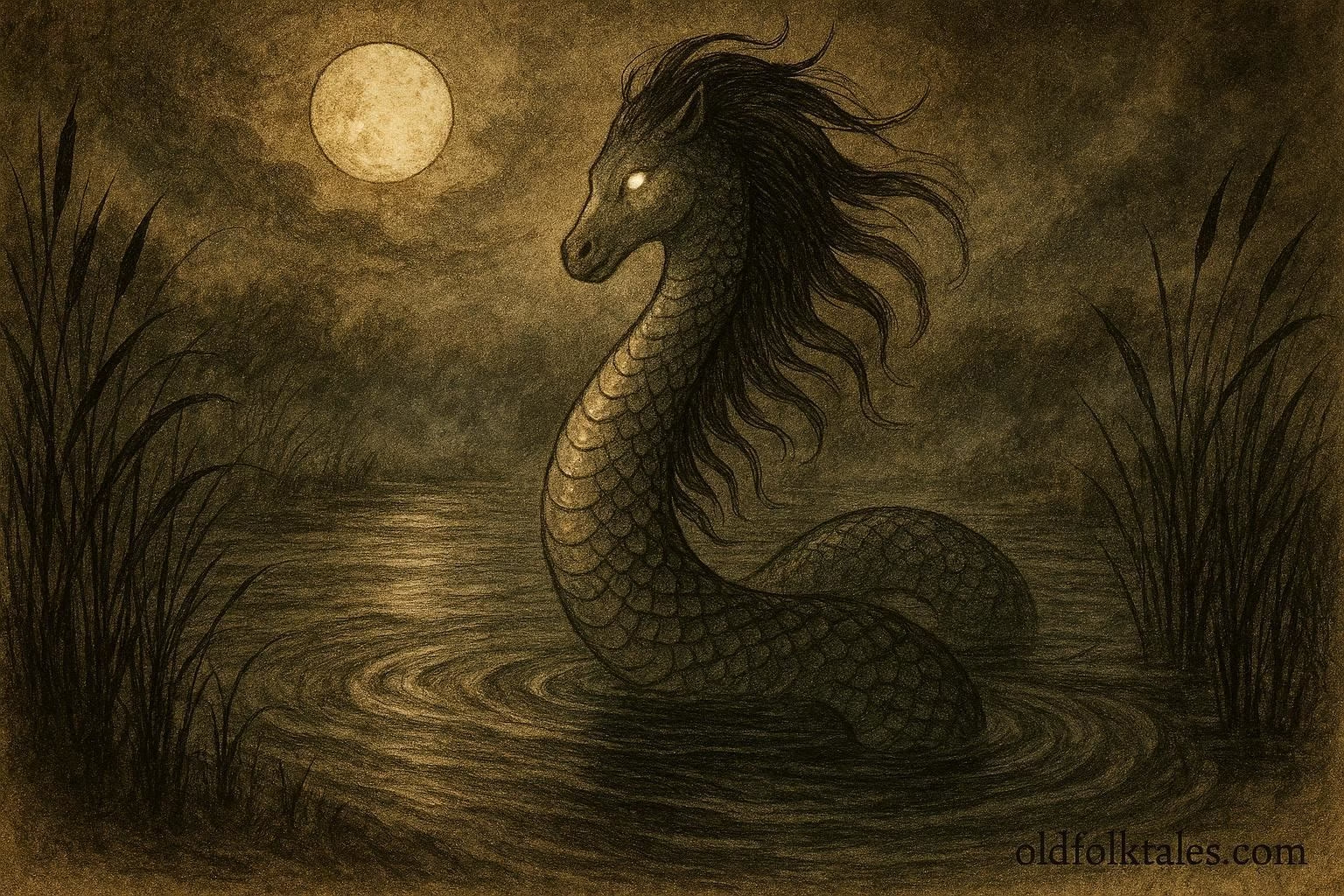
Mamlambo is one of the most striking and enigmatic beings in South African Zulu folklore: a shapeshifting supernatural water entity described variously as half-fish, half-horse, half-woman, or more simply, a dazzling serpent-like creature with the face of a beautiful woman and the body of a glistening aquatic monster. Oral accounts portray her as a long, sinuous figure who moves with hypnotic fluidity beneath river surfaces. She glows or shimmers, some say with green water-light, others with golden radiance, a detail that later gave rise to her association with sudden or illicit wealth.
Appearance
Descriptions vary across regions, but most share key features:
- A serpentine or eel-like body, long and muscular.
- The head or face of a woman, often extraordinarily beautiful or alluring.
- The neck, mane, or forehead ridge resembling a horse, hinting at speed and strength.
- Fish scales, especially gleaming in moonlight.
- Eyes that glow, sometimes green, sometimes blazing white, said to stun or mesmerize onlookers.
- A “shining skin” or “light like lightning” that flashes from her lower body.
Explore traditional sayings that reveal how humanity found meaning, patience, and strength
In some accounts, Mamlambo’s body is huge, capable of coiling around oxen or dragging a person down in seconds. In others, she is sleek and swift, darting through river reeds with barely a ripple.
Powers and Behavior
Mamlambo’s powers align her with many water-spirit traditions in southern Africa, but she is uniquely feared for her mix of beauty, danger, and seduction.
- She lures victims with beauty or light: Some stories say she appears in human female form near the riverbank, combing her hair or singing gently. When someone approaches, she slips backward into the water and beckons.
Others say she emits a strange underwater light that draws people closer until they lose balance and fall in. - Control over water and drowning: Many tales link Mamlambo to drownings, particularly sudden or inexplicable ones. Zulu oral tellings describe rivers as inhabited by powerful spirits; Mamlambo is one of the most feared, capable of:
- creating whirlpools
- dragging swimmers down with invisible coils
- stunning victims with light
- causing a “dream-like trance” that leads individuals toward deeper water
- Wealth-magic (“money calling”): In later interpretations, especially 20th-century rural accounts, Mamlambo becomes associated with illicit or dark wealth, sometimes called imali engcolile (“dirty money”).
People seeking sudden riches may be said to “feed the Mamlambo” through ritual offerings or secrecy.
This wealth, however, often comes with misfortune, illness, or death. - Shapeshifting: Some claim she shifts between three forms:
- woman (beautiful and mysterious)
- serpent (river monster form)
- horse-like creature (swift, strong, shining)
This triple-identity is why she is sometimes described as “half-fish, half-horse, half-woman.”
- Consumption of victims: Certain rural accounts, especially in the Eastern Cape and KwaZulu-Natal, say Mamlambo “drinks the brain” or “sucks the life” from victims by devouring the soft part of the head. While sensationalized in modern retellings, the older folkloric interpretation is symbolic: she “takes the mind” or “steals the spirit” of those who fall to her.
Myths and Beliefs
Mamlambo appears in stories that warn about:
- the danger of rivers, especially during the rainy season
- strangers who wander too close to water at night
- the temptations of sudden wealth
- ignoring taboos or disrespecting nature spirits
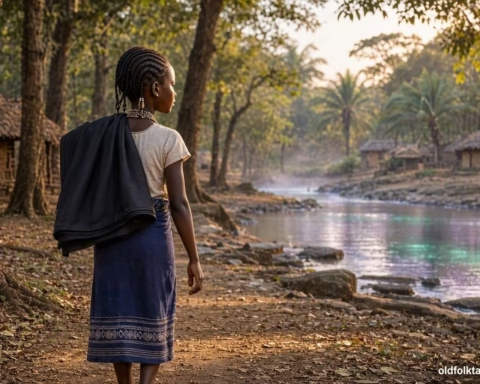
One Zulu tale recounts a young herder who encounters a beautiful woman by the river. Entranced, he follows her into the reeds, where she transforms into a long shimmering creature and coils around him. His body is never found, and elders blame Mamlambo, teaching that “the river has its own wives.”
Another telling describes a man who secretly calls the Mamlambo for wealth. He becomes rich quickly but grows paranoid, thin, and ill, believing the spirit follows him everywhere. Eventually, he is found drowned in shallow water, an omen that wealth gained through spirits must be repaid.
Cultural Symbolism
Mamlambo symbolizes multiple interconnected ideas in Zulu worldview:
- The Power and Danger of Water: In traditional cosmology, rivers are not only physical spaces but spiritual ones. Mamlambo personifies the river’s unpredictability:
- deadly currents
- sudden floods
- hidden depths
She represents nature’s sovereignty and the idea that human beings must respect living landscapes.
- Temptation and Desire: Her beauty and glowing body serve as metaphors for desire itself, something attractive but potentially fatal.
- Illicit Wealth and Moral Corruption: The 20th-century association with wealth reflects social tensions: fast money gained through mysterious means was often blamed on spiritual bargains. Mamlambo becomes the embodiment of wealth without labor, which inevitably ends in ruin.
- Shifting Female Power: As a woman-spirit who induces fear and awe, Mamlambo also carries themes of female agency, mystery, and independence within nature.
Cultural Role
Mamlambo serves as:
- a cautionary archetype against greed, seduction, and wandering near dangerous waters
- a guardian spirit of rivers, enforcing respect for natural boundaries
- an explanation for mysterious drownings and disappearances
- a moral figure reminding communities that shortcuts to wealth invite destruction
She is not purely evil; she simply enforces the reciprocal relationship between humans and the environment.
Encounter dragons, spirits, and beasts that roamed the myths of every civilization
Author’s Note
Mamlambo is one of Africa’s most intriguing water spirits because she blends ancient cosmology with evolving modern interpretations. Her mythology reveals how communities use narrative to explain natural dangers and human behaviors, especially desire, greed, and the unpredictability of nature. She is both beautiful and terrifying, a mirror of the river itself.
Knowledge Check
- What three forms is Mamlambo most commonly associated with?
A woman, a fish/serpent, and a horse-like creature. - What natural phenomenon does Mamlambo primarily symbolize?
The power and danger of river waters. - Why is Mamlambo linked with sudden wealth?
She is believed to grant illicit riches in exchange for offerings or spiritual bargains. - What aspect of her appearance is said to mesmerize victims?
Her glowing or shimmering light. - What moral lesson is emphasized in Mamlambo tales?
Wealth gained wrongly or without respect for spirits leads to misfortune. - In Zulu belief, why must rivers be respected?
They are inhabited by powerful spirits like Mamlambo who enforce natural boundaries.
Source: Early 20th-century missionary notes on Zulu oral tradition; South African anthropological fieldwork (20th century onward); regional oral tellings preserved in rural communities.
Origin: Zulu folklore, South Africa, especially riverine and swamp regions associated with dangerous currents, sudden drownings, and local wealth-magic traditions.