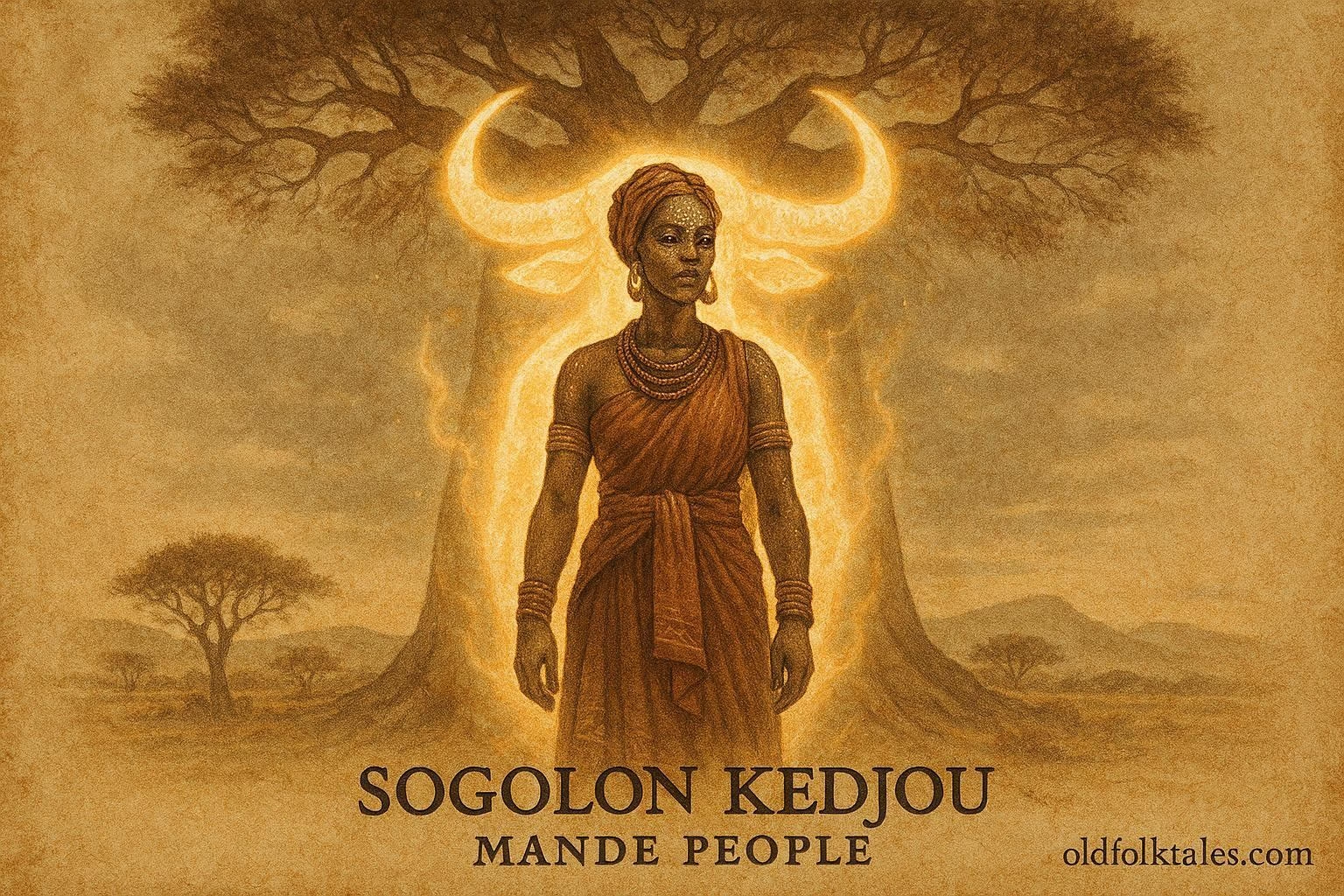
In the first dawn of the Mande world, when the red sun rose from the dust of ancient Savannah and the spirits of the bush still walked freely among humankind, there lived a woman unlike any other, Sogolon Kedjou, daughter of mystery, child of storm-shadow and hidden prophecy. She was born in the moment when the winds of the upper world tangled with the breath of the earth. Her mother, it is said, fell asleep beside a sacred pond, and a spirit of the wild buffalo entered her dream. When she awoke, she carried a daughter shaped partly by mortal soil and partly by the untamed wilderness. Thus Sogolon was called the Buffalo-Woman, a being whose presence made hunters lower their bows and griots whisper of destinies not yet set.
Sogolon grew tall and strong, though her appearance bore the unmistakable mark of divine strangeness. Her back arched like a beast ready to charge; her movements carried the quiet power of a stalking lioness. But behind her unearthly form lived a gentle heart, one that could feel the pulse of the land and hear the murmured counsel of ancestral spirits. Even as a girl, she would sit beneath ancient baobabs and listen to the rustling leaves as if receiving secrets from the unseen.
But such gifts often invite trial. Word of her powers reached distant courts, and rumors swirled that she was destined to birth a child greater than kings, one whose rise would shake the Mande world. The sorcerer-king Soumaoro Kanté, wary of this prophecy, sent hunters and shadowed spirits to frighten her. Yet Sogolon stood firm, turning aside each danger with courage and the calm strength bestowed upon her by the buffalo-spirit.
In the kingdom of the Mande, the noble king Maghan Kon Fatta heard of her. His griots revealed a prophecy spoken long before: “A woman of strange form will come. From her womb shall rise the Lion of Mali, the uniter of nations.” On hearing this, Maghan Kon Fatta sought her out, guided by the wise seers who recognized the glimmer of destiny upon her.
When Sogolon arrived at the royal court, the nobles whispered and mocked her appearance, but she remained grounded like the roots of the mighty kapok tree. Maghan Kon Fatta saw past her outward form and recognized the divine fire within her. In the marriage that followed, two destinies intertwined, the king’s noble lineage and Sogolon’s spirit-forged power.
But destiny rarely unfolds without struggle.
Sogolon’s greatest trial came with the birth of her son, Sunjata, whose legs refused to stand, as though the world itself trembled to bear the weight of his future greatness. Sogolon faced scorn from rival wives and nobles who whispered that her son was cursed. Her enemies taunted her: “Your child, the one of prophecy, he cannot walk!” Yet she guarded him with fierce devotion, holding her silence like a shield. For in dreams, she saw spirits forging a golden lion in a distant realm, shaping muscles and courage that would one day roar through the plains.
Her moral struggle burned quietly but deeply. She questioned the gods: “Why give me a child of destiny only to cloak him in weakness?” But the spirits gave no answer, only the rustle of wind in the grass, the shimmer of rising heat, the pulse of a distant drum. So she resolved to become the silent fortress around her son, bearing humiliation so he could bear greatness.
When Sunjata finally rose, pulling himself upright with the trunk of a young ironwood tree, lifting it from the earth as easily as a warrior lifts his spear, the world changed. Sogolon wept, not from surprise, for she had always known this hour would come, but from the release of years of steadfast faith. Her courage had nourished the seed of a king.
Yet her challenges did not end. As political storms gathered and Sunjata’s enemies hunted him, Sogolon led her children into exile. She bore hardship like a warrior, refusing to allow despair to take root. Along distant roads, across strange lands, she taught Sunjata the wisdom of patience, endurance, and mercy, virtues without which even the mightiest lions fall.
At the end of her life, when Sunjata had grown into a leader powerful enough to challenge Soumaoro Kanté and reclaim his homeland, Sogolon felt her spirit preparing to depart. She rested beneath a baobab tree, its roots entwined with the bones of ancient ancestors. Calling her son to her, she whispered:
“My child, born of prophecy, raised in hardship, destined for greatness, the lion is awake. Remember the softness of your mother’s hands, for strength without compassion becomes tyranny.”
With that final blessing, the winds stilled, and the buffalo-spirit returned to claim her. Her passing marked not an end, but a transformation, her courage became Sunjata’s armor, her wisdom his crown, her legacy the soil on which the Mali Empire would rise.
Author’s Note
Sogolon Kedjou stands not merely as a mother in an epic but as a foundational force behind one of West Africa’s greatest legends. Without her endurance, prophetic lineage, and moral strength, the rise of Sunjata, the Lion of Mali, would not have been possible. Her story reminds us that heroes are shaped not only by destiny, but by those who guard and guide their earliest steps.
Knowledge Check
-
What divine elements shaped Sogolon’s birth?
-
Why did Soumaoro Kanté fear her?
-
How did Sogolon respond to scorn at the Mande court?
-
What was her moral struggle regarding Sunjata’s early weakness?
-
How did Sogolon help shape Sunjata during their exile?
-
What symbolic meaning surrounds her death beneath the baobab tree?
Cultural Origin: Mande people of West Africa (Mali and surrounding regions)
Source: Epic of Sunjata (oral tradition; version compiled by D. T. Niane, 1960)