
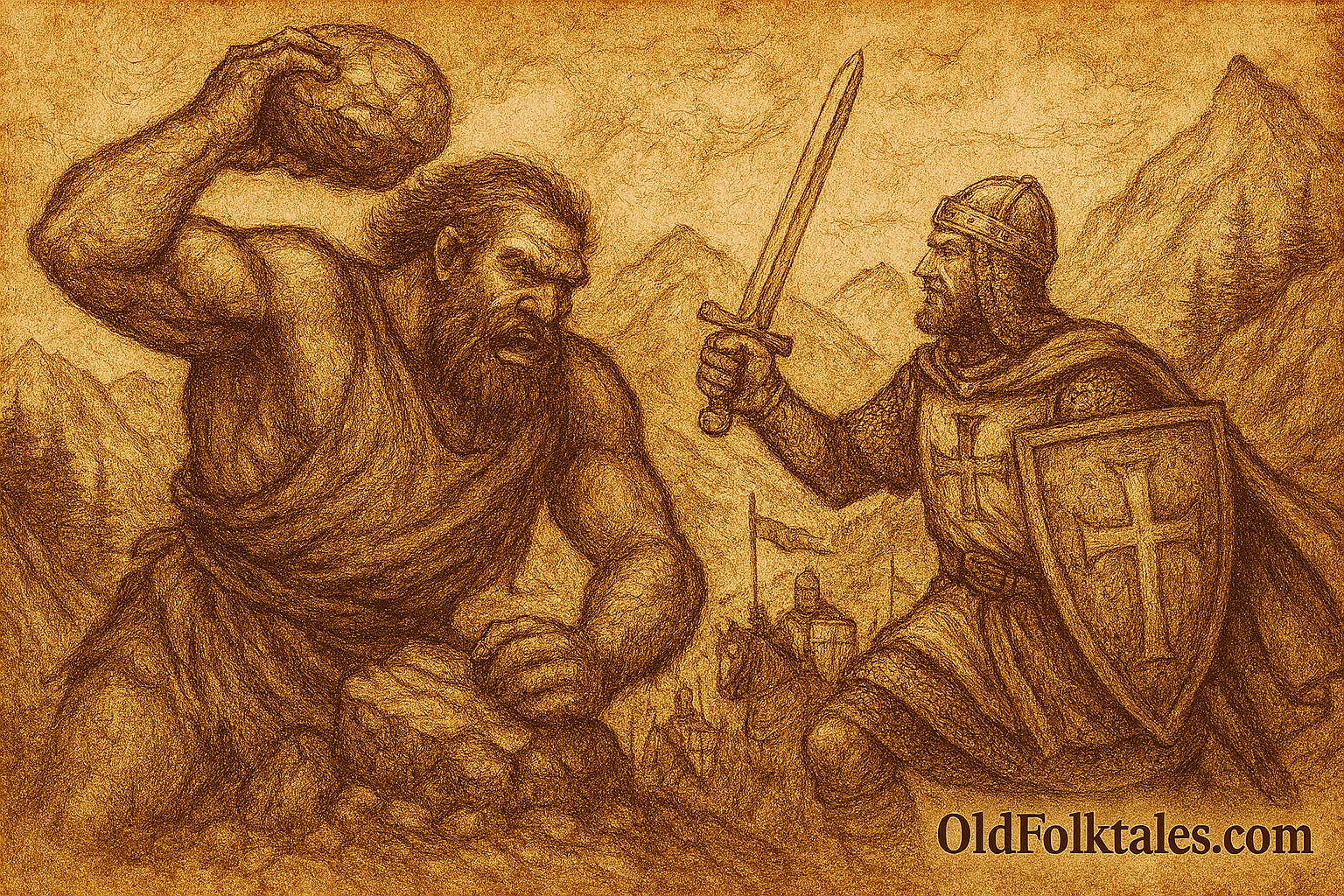
In the early years of the Middle Ages, when kingdoms rose and fell like the tide and mighty rulers carved their names into history with sword and crown, the hidden valleys of Andorra lay nestled deep within the Pyrenees Mountains. These were lands of breathtaking beauty, where jagged peaks pierced the clouds and crystal streams tumbled through narrow gorges. Pine forests clung to steep slopes, and meadows bloomed with wildflowers that swayed in the mountain winds. Yet for all their beauty, these valleys had become a place of terror.
Giants walked the mountains of Andorra in those dark days. They were creatures of immense size and terrible strength, beings whose footsteps shook the earth and whose shadows fell across entire villages like the coming of night. Their bodies were as hard as the granite peaks they called home, their voices like thunder rolling through the valleys, and their appetites were endless. They roamed the high places with malicious intent, their cruel eyes searching the slopes below for any sign of human life.
Click to read all Myths & Legends – timeless stories of creation, fate, and the divine across every culture and continent
The people of Andorra lived in constant fear. Shepherds who drove their flocks to the high pastures would hear the grinding sound of stone against stone and look up in horror to see massive boulders tumbling down the mountainsides, launched by giant hands from peaks shrouded in mist. These stones crushed everything in their path sheep pens, humble dwellings, and sometimes the shepherds themselves. Entire settlements, painstakingly built from timber and stone, were reduced to rubble by the giants’ raids. Families huddled in their homes at night, listening to the distant booming footfalls and praying they would not venture closer.
The villagers tried everything they could think of to appease or escape their tormentors. They abandoned the highest pastures, leaving their best grazing lands empty. They set out offerings of food and livestock at the edges of their settlements, hoping to satisfy the giants’ hunger. But nothing worked. The giants continued their reign of terror, growing bolder with each passing season. The people’s hope began to fade like morning mist under the harsh mountain sun.
In their desperation, the people of Andorra turned to prayer. They gathered in their small churches, built of mountain stone with wooden crosses that pointed hopefully toward heaven. Old women and young children weathered farmers and desperate mothers all knelt together and lifted their voices in supplication. They prayed for deliverance, for a champion who could free them from the shadow of the giants. Their prayers rose like incense through the valleys, carried on the wind across mountains and kingdoms far beyond their sight.
And their prayers were heard.
Word of Andorra’s suffering reached the court of Charlemagne, King of the Franks and ruler of much of Western Europe. He was already a legend in his own time a warrior of unmatched courage, a king of great wisdom, and a protector of Christendom. His name alone struck fear into the hearts of his enemies and brought hope to the oppressed. When messengers brought tales of the giants plaguing the innocent people of Andorra, Charlemagne’s heart was moved to action. He could not stand idle while his fellow Christians suffered under such tyranny.
The great king summoned his army, that magnificent force of mounted knights and seasoned warriors who had fought beside him in countless battles. They donned their armor steel that gleamed like silver, chainmail that rang like bells, and helmets crowned with horsehair plumes. Charlemagne himself mounted his warhorse, his sword hanging at his side and his banner flying high, emblazoned with symbols that promised both justice and might. With determination burning in their hearts, the army began its march toward the Pyrenees.
The journey through the mountains was arduous. The passes were narrow and treacherous, winding through landscapes where one false step could send a man tumbling into bottomless chasms. But Charlemagne’s forces pressed on, driven by their king’s unwavering will and the righteousness of their cause. The ground beneath them trembled with the march of so many men and horses, and the mountain air echoed with the sound of armor and weaponry.
When Charlemagne’s great army finally descended into the valleys of Andorra, the people emerged from their homes in disbelief, tears streaming down their faces. Could salvation truly have arrived? But before there could be celebration, the giants appeared. From the highest peaks they came, roaring their defiance, their massive forms silhouetted against the sky. They had ruled these mountains for generations, and they would not surrender them without a fight.
The giants seized enormous boulders rocks that would have taken twenty men to lift and hurled them down at the army below. The stones crashed through the valleys like falling stars, gouging the earth and sending up clouds of dust and debris. Lesser men might have broken and fled in the face of such an assault, but Charlemagne’s warriors held firm. They had faced dragons of human cruelty and monsters of war before; they would not be cowed by these giants.
Charlemagne, his voice rising above the chaos, commanded his bravest knights to ascend the mountains and face the giants directly. “We do not hide from evil!” he declared, his words carrying the weight of absolute conviction. “We climb to meet it and strike it down!”
And so they climbed. The knights left their horses behind and scaled the treacherous slopes on foot, their armor weighing them down but their spirits lifting them up. They climbed through scree fields where every step threatened to send them sliding backward, up rock faces where they clung by their fingertips, past the tree line into the realm of stone and ice where the giants waited.
The battle that followed became the stuff of legend. On narrow ledges and windswept peaks, knights and giants clashed in savage combat. Swords rang against stone-hard flesh, shields splintered under crushing blows, and the mountains themselves seemed to shudder with the violence. The giants fought with the fury of cornered beasts, but Charlemagne’s knights fought with something stronger the righteous anger of protectors defending the innocent. One by one, the giants fell, tumbling from the cliffs or fleeing into the deepest, most remote reaches of the mountains where they would never threaten the valleys again.
When the last giant had been defeated and silence finally returned to the peaks, Charlemagne stood victorious. The people of Andorra emerged once more, this time with joy overflowing in their hearts. They gathered around their savior, offering thanks and blessings, weeping with relief and gratitude.
In recognition of their deliverance, the people of Andorra knelt before Charlemagne and pledged their loyalty to him and to his kingdom. They swore oaths of fealty, promising that they and their children would remember this day and honor the king who had freed them. Charlemagne, in turn, granted them his protection and his blessing. He declared the valleys of Andorra to be free lands under his safeguard, territories that would enjoy his favor and defend their liberty under his watchful eye.
From that day forward, the people of Andorra lived in peace. The giants never returned, driven away forever by Charlemagne’s courage and might. The valleys flourished, their people free to tend their flocks and build their homes without fear. And though centuries would pass and kingdoms would rise and fall, the memory of Charlemagne remained alive in Andorra’s heart the great king who heard their prayers and became not just their protector, but the legendary founder of their small but proud nation nestled in the mountains.
The Moral Lesson
The legend of Charlemagne and the Giants teach us that no tyranny is too powerful to overcome when courage and righteousness unite against it. The story illustrates how desperate prayers for justice can be answered through brave action, and how true leadership means responding to the suffering of others, no matter how small or remote their community. Charlemagne’s willingness to march his army through treacherous mountains for a vulnerable people demonstrates that greatness is measured not by the size of one’s kingdom, but by the compassion shown to those in need. The tale also reminds us that freedom must sometimes be fought for and defended, and that gratitude and loyalty form lasting bonds between protectors and protected.
Knowledge Check
Q1: Who was Charlemagne and why did he come to Andorra?
Charlemagne was the King of the Franks and ruler of much of Western Europe during the early Middle Ages. He came to Andorra after hearing the prayers and pleas of the valley people who were being terrorized by giants. Moved by their suffering and his duty as a Christian protector, he marched his army through the Pyrenees to free them from the giants’ tyranny.
Q2: What did the giants do to terrorize the people of Andorra?
The giants roamed the Pyrenees Mountains surrounding Andorra and attacked the valley settlements by hurling massive boulders down from the peaks. These stones destroyed shepherds’ pens, crushed homes, killed livestock, and threatened the lives of the villagers. The giants’ constant raids made it impossible for people to live safely or use their high mountain pastures.
Q3: How did Charlemagne’s army defeat the giants?
When the giants hurled boulders at Charlemagne’s army from the mountain peaks, Charlemagne commanded his bravest knights to climb directly up the mountains to confront them. The knights scaled the treacherous slopes and engaged the giants in fierce combat on the cliffs and peaks. Through courage and determination, they defeated the giants in battle and drove them away from Andorra forever.
Q4: What did the people of Andorra do after being freed from the giants?
After their liberation, the grateful people of Andorra pledged their loyalty to Charlemagne. They swore oaths of fealty to him and his kingdom, promising to honor and remember their deliverance. In return, Charlemagne granted them his protection and recognized their valleys as free lands under his safeguard.
Q5: Why is this legend important to Andorran national identity?
This legend explains Andorra’s historical claim to Charlemagne as the protector and legendary founder of their nation. It establishes a mythological origin story that connects the small mountain country to one of medieval Europe’s greatest rulers, providing a sense of legitimacy, pride, and cultural identity. The story symbolizes Andorra’s values of freedom, courage, and the importance of powerful protectors for small nations.
Q6: What do the giants in this legend symbolize?
The giants represent the various threats and invading forces that historically plagued small mountain communities whether literal military invasions, natural disasters, or the general dangers of medieval life in isolated regions. They embody chaos, tyranny, and the overwhelming challenges faced by vulnerable populations. Their defeat symbolizes the triumph of civilization, order, and Christian virtue over barbarism and evil.
Cultural Origin: Pyrenees Mountains, Andorra






