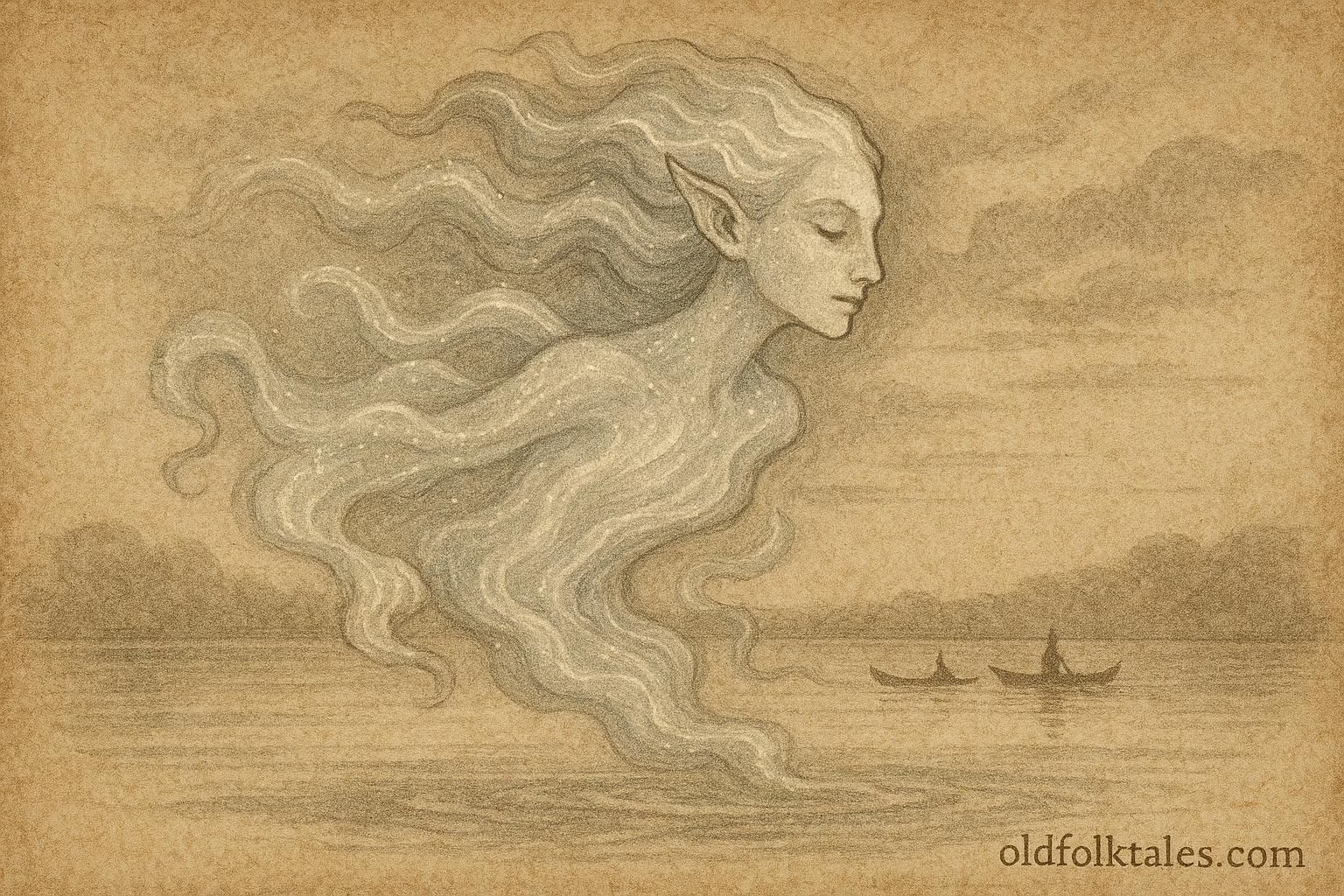
In the early hours before sunrise, when the sky still carried the soft glow of night, the people of the Lau Islands would gather along the shore and listen for the breath of the Lagoon Mother. She drifted across the water as a faint silver mist, so delicate that she seemed to rise from the lagoon itself. The elders taught that she was older than the islands and that her breath held the truth of every heart that approached the shore.
On quiet mornings, the fishermen came to the water with calm spirits. They waited in respectful silence, letting their breath settle into the rhythm of the tide. The Lagoon Mother glided toward them in a graceful sweep, her mist swirling like soft waves that curled into shapes before dissolving into the air. When she passed over the bows of their canoes, the water remained smooth and steady. The fishermen understood this as her blessing, an assurance that their day would be guided by safety and balance.
The villagers believed that the Lagoon Mother responded not to offerings or chants, but to the emotions carried within a person. A peaceful heart allowed her mist to move freely, while anger or quarrels disrupted the gentle patterns of her breath. For this reason, elders often reminded the youth to speak kindly and carry themselves with patience each morning. They said the lagoon reflected more than the sky. It reflected the inner life of the people who lived beside it.
Learn the ancient stories behind deities of light, storm, and shadow from cultures across the world
One season, a young man named Savenaca struggled with restless thoughts. He often spoke sharply with his brothers and argued with his father over the best way to prepare nets. Though skilled at fishing, he carried frustration like a tightly wound rope. As dawn approached one morning, he walked toward the shore with heavy footsteps and a frown carved deeply across his brow. The elders saw him coming and exchanged worried glances. But no one stopped him, for every person must learn the truth of the Lagoon Mother on their own.
The mist began to rise slowly over the surface of the water, shimmering in the pale moonlight. Savenaca stepped into his canoe, gripping his paddle with impatience. When the Lagoon Mother’s breath drifted toward him, it did not flow smoothly over his canoe. Instead it curled into sudden sharp spirals, as if stirred by invisible winds. The water beneath him trembled. A gust of air swept across the lagoon, catching him off guard and forcing him to steady himself quickly.
Savenaca looked around in alarm. The fishermen nearby kept their distance, watching silently. They understood the message. The Lagoon Mother was warning him that his spirit was unsettled and that he carried conflict within him. The currents around his canoe shifted, making small unpredictable movements that nudged him away from his intended path. It felt as if the lagoon itself urged him to turn back.
Embarrassed and confused, Savenaca paddled to shore. His father approached him without anger, but with quiet understanding. He placed a gentle hand on his son’s shoulder and said, The lagoon does not punish. It mirrors what is inside us. You must calm your heart if you wish the waters to guide you.
Savenaca remained silent but his thoughts began to soften. He spent the day reflecting on his actions. He remembered how often his anger had caused confusion among his brothers and how his impatience had clouded the joy he once felt on the water. By evening, his heart felt lighter, shaped by a new understanding.
The next dawn he approached the lagoon again, but this time he walked slowly. He closed his eyes and allowed the air to fill his lungs with a gentle rhythm. He thought of his family and the peace he wished to bring to his home. When he stepped into his canoe, he felt a calmness he had not known for many months.
The Lagoon Mother rose again in her soft silver form. Her mist drifted across the water toward Savenaca. This time it wrapped around his canoe in gentle spirals that reflected the stillness within him. The water smoothed, and the pale glow of dawn touched the surface like a blessing. In that moment, Savenaca understood that the Lagoon Mother had accepted his change of heart. He dipped his paddle into the calm water and felt it carry him forward with quiet strength.
From that day onward, Savenaca became known as a fisherman whose heart remained steady even when the sea changed moods. He passed the teachings of the Lagoon Mother to the younger children, reminding them that the spirit of the lagoon responded to honesty, gentleness, and emotional balance. The villagers continued to honor her breath each morning, knowing that she guided not only their canoes but also their lives.
And so the Lagoon Mother remained a guardian of the heart, her mist drifting across the water with the first light of day, reminding all who lived beside the lagoon that inner peace was the truest compass they could follow.
Author’s Note
This story reflects the way many Fijian traditions connect natural forces to human emotion. The Lagoon Mother symbolizes the belief that calm hearts and respectful relationships create harmony both on the water and within the community.
Knowledge Check
-
What does the Lagoon Mother appear as in the early morning?
She appears as a gentle silver mist drifting across the lagoon. -
How do the fishermen show respect when waiting for her presence?
They wait in silence with calm hearts, allowing their breath to follow the rhythm of the tide. -
Why does the Lagoon Mother cause the water to shake around Savenaca’s canoe?
Because his heart is filled with anger and conflict, which the Lagoon Mother reflects through unsettled waters. -
What lesson does Savenaca learn after returning to shore?
He learns that the lagoon mirrors inner emotions and that he must calm his heart to receive guidance. -
How does the Lagoon Mother respond when his heart becomes calm?
Her mist flows gently around his canoe, and the water becomes smooth, signaling acceptance and guidance. -
What does the Lagoon Mother symbolize for the villagers?
She symbolizes inner peace, emotional balance, and harmony between people and the natural world.Source
Adapted from Fijian lagoon spirit traditions in The Lau Islands of Fiji, collected by Arthur Hocart (1929), London: Royal Anthropological InstituteCultural Origin
Fijian Peoples of Melanesia