In the ancient times when Bosnia and Herzegovina’s mountains touched the clouds and dense forests covered the valleys below, a terror emerged that would test the courage of an entire people. The Aždaja had awakened, a monstrous dragon of unimaginable power, and its arrival brought nothing but devastation and despair to the land.
The Aždaja was no ordinary creature. It possessed multiple heads, each one capable of independent thought and deadly action. From every mouth spewed torrents of fire so intense that the flames turned the ancient forests to ash in mere moments. Where the dragon walked, the earth itself seemed to recoil. Rivers that had flowed clear and cold for thousands of years suddenly began to boil and steam when the beast approached. The very stones of the mountains cracked and split from the heat radiating from its massive, scaled body. The sky above wherever the Aždaja traveled turned dark with smoke and cinders, blocking out the sun and casting an eerie twilight across the countryside.
Click to read all Myths & Legends – timeless stories of creation, fate, and the divine across every culture and continent
The people of Bosnia lived in constant fear. Farmers abandoned their fields, unable to tend crops when the dragon might appear at any moment and reduce everything to cinders. Shepherds no longer led their flocks into the high pastures, for the Aždaja hunted livestock with terrifying efficiency. Children no longer played outside, and villages that had once been filled with laughter and song became silent, their inhabitants huddled behind closed doors, praying that the monster would pass them by.
Then came the demand that broke the spirit of even the bravest souls. The Aždaja, speaking through smoke and flame in a voice that rumbled like thunder through the mountains, proclaimed a terrible tribute. Every village, from the smallest hamlet to the largest town, must send forth a young maiden. These innocent girls would be given to the dragon as offerings. If the villages refused, if they withheld this cruel tribute, the Aždaja promised total annihilation. It would burn every field, every forest, every home. It would boil every river and stream. It would leave nothing but scorched earth and death in its wake.
The elders of the villages gathered in desperate council. What choice did they have? To sacrifice their daughters was unthinkable, an abomination that went against everything they held sacred. But to refuse meant the destruction of everything, the death of all their people, young and old alike. With heavy hearts and tears streaming down weathered faces, they made the only decision they felt they could make. The tribute would be paid.
One by one, the villages began their sorrowful processions. Young women, some barely more than girls, were led to designated places where the dragon would come to claim them. Mothers wailed, fathers stood silent and broken, and the maidens themselves walked with trembling steps toward their doom. The entire land seemed to be drowning in grief and helplessness.
But in one village, there lived a warrior named Halil. He was known throughout the region for his strength and skill in battle, but more than that, he was known for his sense of justice and his deep love for his people. When Halil learned of the dragon’s demand and saw the preparations being made to send a young woman from his own village to certain death, something inside him rebelled against this fate.
He stood before the village elders and the gathered people, his voice clear and unwavering. “No,” he declared. “We will not send our daughters to feed this monster. We will not bow to this tyranny. I will face the Aždaja myself.”
The elders protested. The dragon was invincible, they said. Its multiple heads made it impossible to defeat. Dozens of warriors from other regions had already tried to slay the beast, and all had perished, their bodies burned to ash or torn apart by the dragon’s terrible jaws. But Halil would not be dissuaded. He prepared himself for battle, sharpening his sword until it gleamed like silver, checking his armor, and making his peace with the possibility that he might not return.
When he was ready, Halil set out alone into the mountains to seek the Aždaja. He did not have to search long. The dragon, perhaps sensing that someone dared to challenge it, came rushing through the forest, its multiple heads weaving through the air like serpents, flames already beginning to build in their throats.
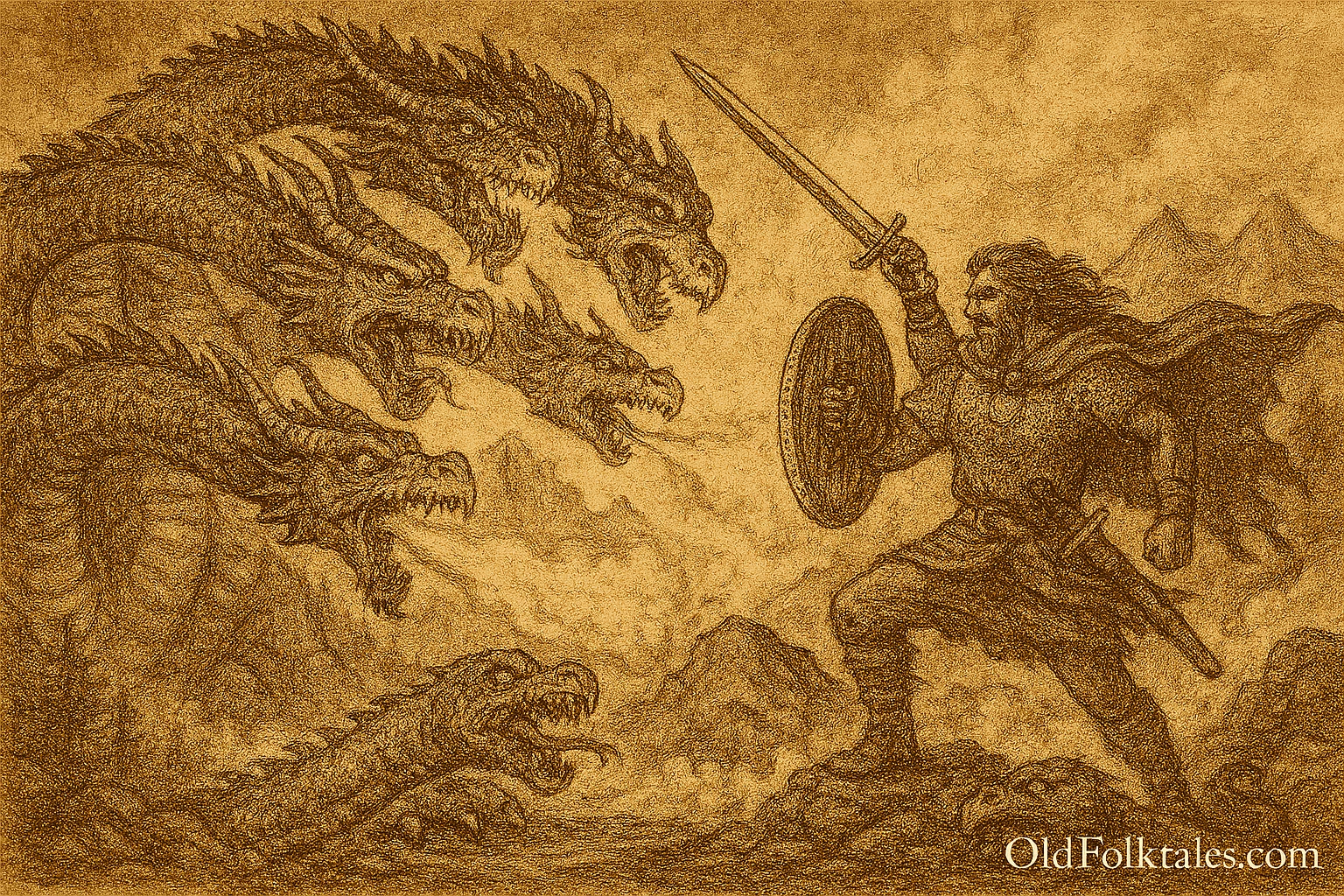
The battle that followed would be sung about for generations. For three days and three nights, Halil fought the Aždaja without rest, without retreat. The dragon’s heads struck at him from every direction, snapping with jaws that could crush stone, breathing fire that turned the ground beneath his feet to molten glass. One head would attack from the left while another lunged from the right, a third dove from above while a fourth swept low to catch him off guard.
But Halil was like water, flowing between the attacks, his sword flashing in the firelight. He fought with the strength of desperation, with the knowledge that every person he had ever loved depended on his success. When exhaustion threatened to overwhelm him, he thought of the maidens who had already been lost, of the young woman from his village who would be next if he failed. This gave him renewed strength.
On the first day, he severed two of the dragon’s heads. The beast screamed in rage and pain, its remaining heads redoubling their assault. On the second day, gasping for breath, his armor scorched and dented, Halil cut down three more heads. The dragon was weakening, but so was he. His arms felt like lead, his legs trembled with fatigue, and every breath burned in his lungs.
The third day brought the final confrontation. With the last of his strength, calling upon reserves of courage he did not know he possessed, Halil struck down the remaining heads one by one. The final head fell just as dawn broke over the mountains, and the Aždaja, that terrible monster that had terrorized an entire land, crashed to the earth and moved no more.
Halil stood victorious, barely able to remain on his feet, his sword still gripped in bleeding hands. Word of his triumph spread like wildfire through the villages. The people emerged from their homes, hardly daring to believe that the nightmare had ended. They gathered around their hero, celebrating his courage, weeping with relief and joy. The maidens who had been spared sang songs of thanksgiving, and Halil’s name became legend.
From that day forward, the story of Halil and the Aždaja was preserved in the epic songs of Bosnia and Herzegovina. Gusle singers, accompanying themselves on the traditional one stringed instrument, would recite the tale in villages and towns, ensuring that future generations would remember the warrior who defied a monster and saved his people through courage, determination, and unwavering devotion to what was right.
The mountains of Bosnia no longer trembled with fear. The forests grew back green and strong. The rivers ran clear and cool once more. And though dragons might exist in legend, none would ever again terrorize the land, for the people remembered that even the most terrible evil could be overcome by a single individual with the courage to stand and fight.
The Moral of the Story
The legend of Halil and the Aždaja teaches us that true courage means standing up against injustice even when the odds seem impossible. One person, motivated by love for their community and refusing to accept cruelty as inevitable, can make a difference that saves countless others. The story reminds us that we should never accept evil as unavoidable, and that sometimes the greatest heroism comes from saying “no” when everyone else believes there is no choice.
Knowledge Check
Q1: What was the Aždaja in Bosnian folklore?
A1: The Aždaja was a monstrous multi headed dragon from Bosnian mythology that terrorized the mountains of Bosnia and Herzegovina. Each of its heads could spit fire, and it was so powerful that it turned forests to ash and caused rivers to boil wherever it passed.
Q2: What terrible tribute did the Aždaja demand from the villages?
A2: The Aždaja demanded that every village send a young maiden as an offering. If the villages refused to provide this tribute, the dragon threatened to burn the entire land, destroying all crops, homes, and people.
Q3: Who was Halil and why is he important in this legend?
A3: Halil was a brave warrior who defied the dragon’s demand and challenged the Aždaja to save his people. He refused to accept the sacrifice of innocent maidens and fought the multi headed beast for three days and nights, ultimately slaying it and freeing Bosnia from its terror.
Q4: How long did Halil fight the Aždaja dragon?
A4: Halil fought the Aždaja for three days and three nights without rest or retreat. During this epic battle, he systematically struck down each of the dragon’s multiple heads until the beast was finally defeated at dawn on the third day.
Q5: How is the story of the Aždaja preserved in Bosnian culture?
A5: The story of Halil and the Aždaja is preserved through traditional Bosnian epic songs performed by gusle singers. These singers use a one stringed instrument called the gusle and recite the tale in villages and towns, keeping the legend alive through generations.
Q6: What does the Aždaja dragon symbolize in Bosnian folklore?
A6: The Aždaja represents overwhelming evil, tyranny, and seemingly impossible challenges that threaten entire communities. Its defeat by Halil symbolizes the triumph of courage, justice, and individual heroism over oppression and the power of refusing to accept injustice as inevitable.
Cultural Origin: Bosnian and Herzegovinian folklore, South Slavic epic tradition, Bosnia and Herzegovina