Dziady, meaning “Forefathers”, is one of the most profound ancestral rites of the Baltic and Slavic world. Practiced for centuries across Belarus, Lithuania, and parts of eastern Poland, the ceremony forms a spiritual bridge connecting the living with the dead. Rooted in pre-Christian cosmology, Dziady survives as a cultural memory of a time when families believed ancestors walked beside them, guiding, advising, and protecting the lineage. Although Christianization reshaped many customs, the essence of the rite remains: honoring the departed through food, fire, prayer, and communal remembrance.
Description
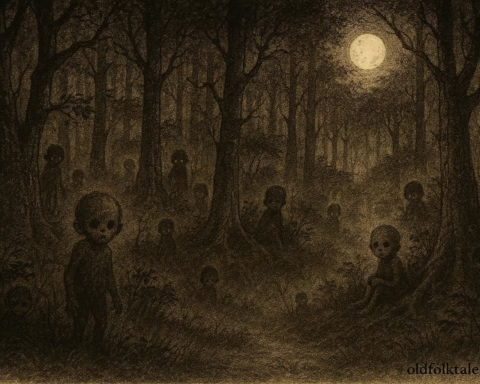
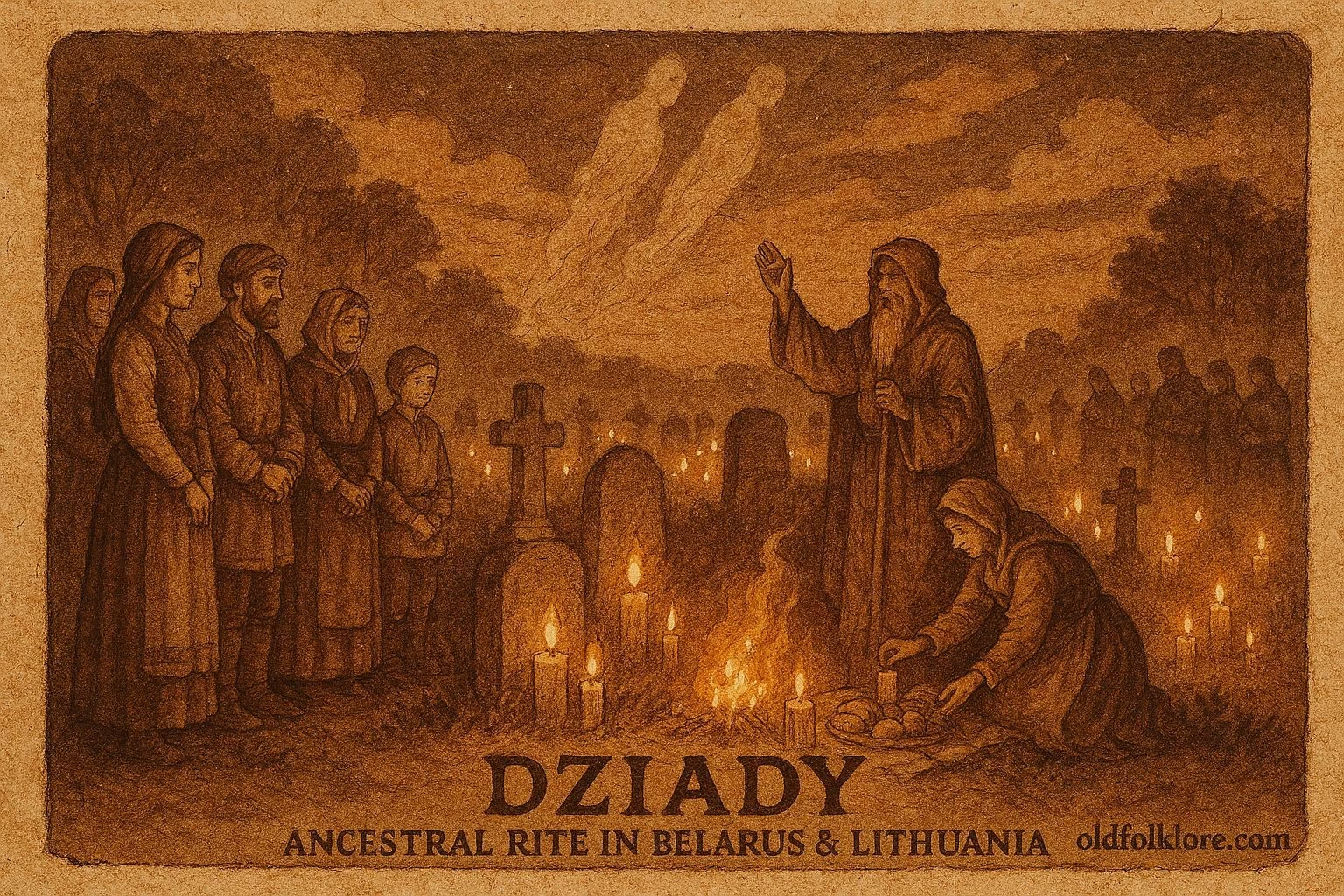
Traditionally held twice a year, once during spring and once in autumn, Dziady marks a liminal moment when the worlds of the living and the spirits briefly converge. Families prepare ritual meals consisting of bread, grains, honey, eggs, porridge, and fermented drinks. These offerings are arranged with care, not for the living but for the returning souls. Windows and doors are left open to allow ancestral visitors to enter freely, while candles illuminate the path so spirits do not lose their way.
In many communities, the rituals took place in graveyards, crossroads, or village ritual houses. Participants gathered in silence or low conversation, aware that they were not alone. Elders or ritual specialists, sometimes healers, sometimes the oldest family members, guided the ceremony. They recited prayers that asked ancestors to accept the offerings, forgive the living for past mistakes, and continue providing protection. The food was left untouched until the spirits were believed to have eaten their spiritual share. Only then could family members partake, allowing the blessing to pass symbolically into their own bodies.
Fire played a central role. Candles flickered on graves, hearths burned with steady flames, and torches lit the gathering places. Fire was not merely a source of warmth; it was a sacred element believed to attract, cleanse, and safely guide wandering souls. Water, too, had symbolic power, often placed inside homes as a resting place for spirits traveling from distant realms.
Some rituals addressed restless or troubled souls, individuals who died violently or without proper burial rites. Village leaders recited specific invocations to soothe these spirits, helping them find peace. This act revealed a moral dimension within Dziady: communities sought to balance the spiritual order, ensuring that all members of the lineage, regardless of their earthly burdens, were remembered and given dignity.
Even after Christianity spread across the region, Dziady persisted. Churches attempted to align it with All Souls’ Day, but families continued performing their ancestral rites privately. Over time, the tradition blended religious influences yet remained distinctly tied to ancient cosmology. Today, revived versions of Dziady appear in cultural festivals, literature, and regional heritage events, preserving its enduring spiritual significance.
Mythic Connection
Dziady reflects a worldview in which ancestors are not distant memories but active participants in daily life. In Baltic and Slavic mythology, the boundary between worlds is permeable, particularly during transitional seasons. Ancestors were considered guardians who influenced health, harvests, fertility, and moral balance. By honoring them, communities reinforced the cyclical nature of time, a constant rhythm moving between life, death, and rebirth.
The rite also echoes the ancient belief that the dead require nourishment. Food offerings symbolize gratitude, while fire symbolizes guidance. Crossroads, graveyards, and thresholds, places where rituals occurred, were seen as spiritual gateways. The presence of candles, prayers, and shared meals demonstrates a cosmology in which every action maintains harmony between realms.
Dziady therefore becomes more than a ritual. It is a conversation across generations, a reaffirmation of identity, and a ceremonial acknowledgment that the past is never truly gone. Through this sacred practice, people strengthen bonds with the unseen and declare their place within a lineage shaped by those who came before.
Author’s Note
This article summarizes the origins and cultural significance of Dziady, highlighting its ancestral foundations, pre-Christian symbolism, and enduring role in linking the living with their forefathers. It interprets the ritual as a cultural expression of continuity, memory, and spiritual reciprocity.
Knowledge Check
1. What does the word “Dziady” mean?
Answer: “Forefathers,” referring to ancestral spirits.
2. Why are doors and windows opened during the ritual?
Answer: To welcome ancestral spirits into the home.
3. What purpose does fire serve during Dziady?
Answer: It guides, purifies, and helps spirits navigate the human world.
4. When is Dziady traditionally practiced?
Answer: In spring and autumn during seasonal transitions.
5. Why are food offerings important in the ritual?
Answer: They nourish ancestors spiritually and express gratitude.
6. How did Christianity influence the tradition?
Answer: It merged Dziady with All Souls’ Day, though many older customs continued privately.