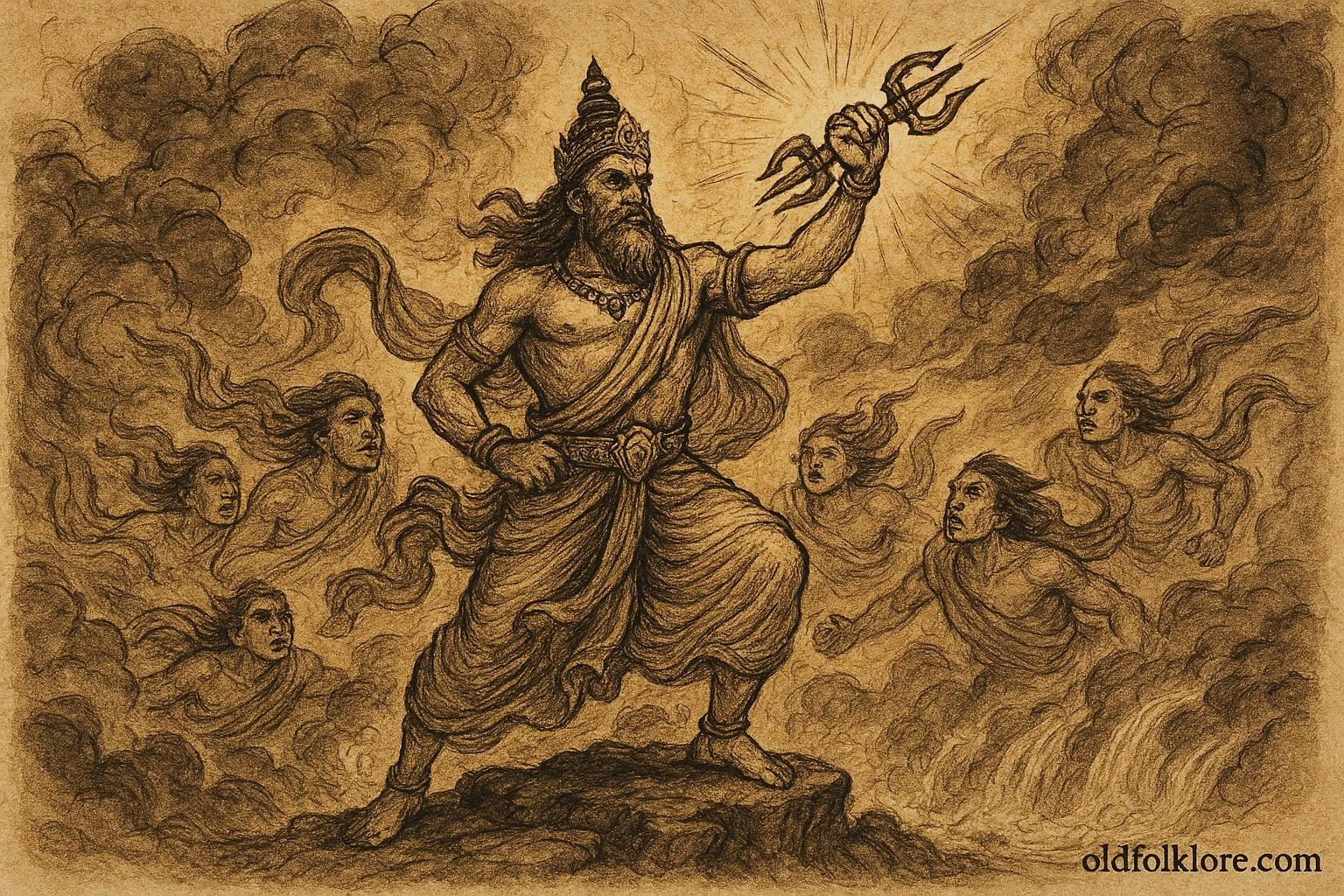
Indra stands as one of the most powerful deities of the early Vedic pantheon, a storm-bringer, warrior-king, and protector of cosmic order, known as ṛta. He is celebrated as the wielder of the vajra, the thunderbolt forged for him by the divine craftsman Tvaṣṭṛ. Indra’s presence is marked by roaring thunderclouds, lightning-split skies, and the life-giving rains that fall upon the earth.
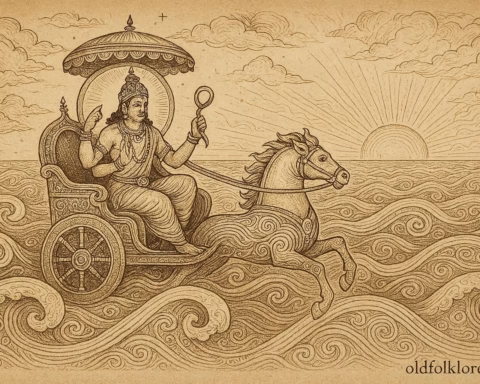
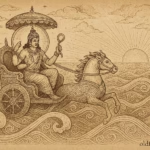
He is associated with courage, rulership, and decisive action. As the leader of the Devas, he commands the heavens, riding in a golden chariot drawn by divine horses. His companions include the Maruts, youthful storm gods who follow him into battle, chanting hymns that echo through the trembling sky.
Indra’s sacred associations include rain, rivers, bulls (symbolizing strength), and the ritual drink soma, which empowers him before great battles. He is invoked in countless hymns of the Rig Veda, where he appears as the champion who protects gods and humans from demons, drought, and disorder. Though later Hindu traditions place him in a diminished role beneath deities like Vishnu and Shiva, the Vedic Indra remains a towering figure whose thunder shaped the earliest Indo-Aryan cosmology.
Mythic Story: Indra and the Slaying of Vritra
In the age when the world was young, before the rivers knew their paths and before rain had touched the earth, a great shadow lay across creation. The serpent-demon Vritra, vast as a mountain range, had taken hold of the world’s waters. He coiled his immense body around the rivers, lakes, and clouds, sealing them in a dry prison. Life withered beneath him. Fields cracked. Animals grew thin. Even the gods felt the breath of drought upon their lips.
The people cried out to the heavens, and the Devas themselves trembled. Without water, the fabric of ṛta, the sacred order, began to fray. Something had to be done. The gods gathered upon the high ridge of heaven, their faces dimmed with worry. All eyes turned to the one who had never turned away from battle: Indra.
He stood luminous, his golden armor reflecting the faint light of the starless sky. His voice carried the force of rolling thunder. “If the waters are bound,” he declared, “then I shall break their bonds.”
But to face Vritra, strength beyond ordinary divine might was needed. And so the gods prepared the holy drink soma, pressed from sacred plants, glowing with life-giving potency. Indra drank deeply. The soma coursed through him like fire through a river of oil. His arms surged with power, his breath became wind, and his eyes shone with the brightness of a storm about to break.
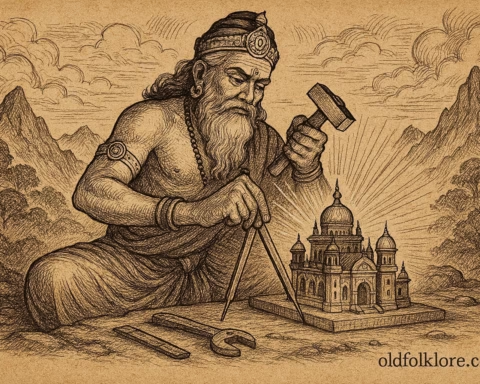
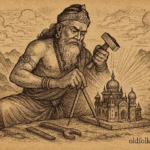
Then Tvaṣṭṛ, divine artisan of celestial tools, placed in Indra’s hands the weapon that would become his symbol through all ages: the vajra. It gleamed like a fragment of the sun, humming with pent-up lightning.
Indra mounted his chariot, its wheels spinning clouds into storm. The Maruts gathered around him, their song rising like a war-chant woven from thunder. Together they charged into the shadowed realm where Vritra lay.
There the serpent waited, coiled atop the imprisoned waters. His breath was hot and dry, his scales dark as the void. When he saw the glittering ranks of the storm gods, his great eyes narrowed.
“So,” hissed Vritra, “the gods send their thunder-king.”
Indra stood upon his chariot, raising the vajra. The sky darkened. The winds bent before him.
“Release the waters,” Indra commanded.
Vritra’s laughter slithered through the barren air. “These waters are mine. Let the world thirst.”
With that, the serpent struck, uncoiling in a rush of black power. Mountains shook under his weight. Darkness billowed. But Indra leapt forward, meeting force with force. The vajra streaked from his hand, a spear of lightning that split the sky and crashed into Vritra’s massive form.
The serpent shrieked, the sound echoing across heaven.
Again Indra struck. And again. Each blow shook creation, sending sparks of lightning bursting through the heavens. Storm clouds whirled violently, winds screamed in wild circles, and the Maruts roared their hymns of battle.
Vritra fought fiercely, throwing coils around Indra, trying to smother him beneath crushing darkness. But the thunder-god, strengthened by soma, broke free each time. His resolve did not falter. The world depended on him. The rivers cried out from within the serpent’s hold.
Summoning all his power, Indra called upon the storm within his own chest. He lifted the vajra once more, its light now blinding, its hum throbbing like the pulse of creation. With a final cry, he hurled it at Vritra.
The blast shattered the demon’s coils. Cracks split across the sky. The earth shook like a drum. And with one shattering roar, Vritra fell.
Silence followed. Then, slowly, movement: the waters burst free. They cascaded over the land, flowing in long-lost channels, flooding parched earth with life. Rivers leapt back into motion; lakes filled; clouds opened and released rain that had been held for ages.
The gods rejoiced. The world breathed again.
Indra stood over the fallen serpent, his armor damp with fresh rain. The storm began to soften. Light spread across the horizon. The people lifted their faces to the skies, grateful for the rains that revived their fields and spirits.
From that day, Indra was honored not only as the king of heaven, but as the protector of both gods and humans, the one who restored the world’s balance by freeing the waters of life.
Discover the gods, goddesses, and divine spirits who ruled the heavens and shaped human fate
Author’s Note
The slaying of Vritra is one of the oldest myths of cosmic renewal, an ancient reminder that disorder, drought, and stagnation can seize both nature and the human spirit. Indra’s victory teaches that courage must rise precisely when the world seems most constricted. His story reflects a truth woven through Vedic thought: that cosmic order is maintained not passively, but through decisive action aligned with a higher purpose.
Knowledge Check
Q1: What is Indra’s primary weapon?
A: The vajra, a divine thunderbolt forged by Tvaṣṭṛ.
Q2: What cosmic principle does Indra uphold?
A: Ṛta, the sacred order of the universe.
Q3: Who is the serpent-demon Indra defeats?
A: Vritra, who imprisoned the world’s waters.
Q4: Which sacred drink empowers Indra before battle?
A: Soma.
Q5: In which ancient text is this myth recorded?
A: The Rig Veda.
Q6: What natural phenomenon symbolizes Indra’s victory?
A: The release of rivers and rainfall restoring life to the world.
Source: Rig Vedic Mythology, India.
Source Origin: India (Vedic Tradition)