The Sevusevu ceremony originates from the islands of Fiji, rooted in the traditions of the Itaukei, the Indigenous Fijian people. It is a ritual centered on yaqona (kava), a plant deeply embedded in Fijian cosmology and chiefly protocol. Historically, Sevusevu served as the formal process for entering a village, acknowledging its spiritual guardians, and requesting peaceful passage. It connects directly to older systems of sacred exchange, respect for chiefly authority, and the belief that communities are protected by ancestral spirits who must be honored before any interaction can begin.
The Ceremony and Its Cultural Meaning
To understand Sevusevu, one must first understand vanua, a Fijian concept that means land, people, ancestors, and spiritual identity fused into a single reality. When a visitor enters a village, they do not simply enter a geographic space, they step into a living ancestral domain. The Sevusevu ritual is therefore the bridge between outsider and community, aligning the visitor with the village’s spiritual structure.
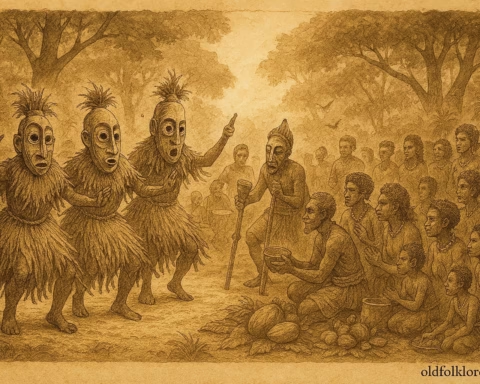
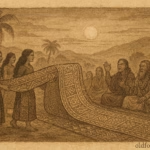
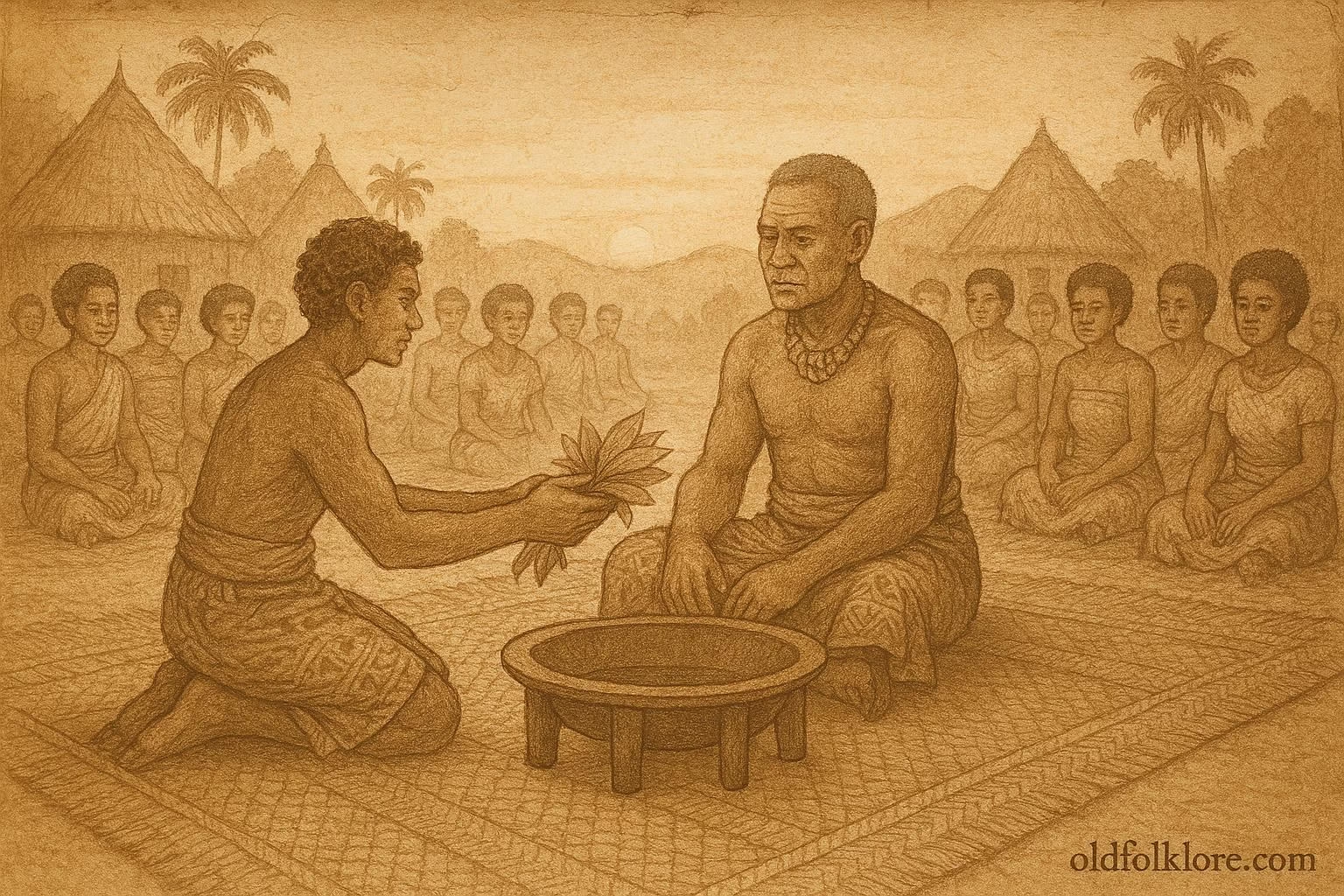
The ceremony begins when the visitor presents a bundle of yaqona roots. This gift is not just symbolic; it is an offering to the village chief and, by extension, to the ancestral guardians. The presentation is often made while seated on the floor, demonstrating humility and deference. The host’s representative, usually the chief or a senior elder, accepts the gift with solemnity. This act signals that the visitor is now under the community’s protection and has been acknowledged by its spiritual hierarchy.
Once accepted, the yaqona is prepared in a large wooden communal bowl called a tanoa. Water is mixed with the pounded root, and each movement reflects a structured order that has remained consistent across centuries. The first cup is served to the chief, an act that honors the chiefly line, whose authority is believed to descend from ancestral spirits. Only after this gesture can others drink, reflecting the way social order flows outward from the center.
Through chanting, formal speech, and rhythmic handclaps, the ceremony creates a moment in which all participants feel the presence of the ancestors. It is not simply a welcoming; it is an invocation of harmony, safety, and spiritual recognition. In traditional belief, once the ceremony is complete, the visitor’s presence is fully sanctioned by both human and spirit authorities.
Mythological and Ancestral Connections
Although Sevusevu is not tied to a singular myth, it embodies Fijian cosmology in profound ways. Yaqona itself is believed to carry spiritual potency. In some oral traditions, the plant grew from the resting place of a sacrificed daughter or a high-born ancestor, creating a bond between the drink and ancestral memory. Because of this, yaqona is used not only in welcoming ceremonies but also in rites for healing, conflict resolution, chiefly installation, and invoking tribal guardians.
The act of presenting yaqona transforms a visitor from an unknown outsider into a recognized participant in the village’s spiritual order. Fijians have long believed that each village has unseen protectors, spirits of warriors, chiefs, and family lines who ensure safety. Without the Sevusevu, those spirits may perceive a visitor as a threat.
This mythic connection also clarifies why the ceremony is so structured. Each gesture honors a stage of creation: the land (vanua), the people (tamata), the ancestors (vu), and the social order (cakacaka vakavanua). Through these layers, Sevusevu becomes more than a greeting, it becomes a reenactment of the harmony between humanity, nature, and the unseen world.
How Sevusevu Reflects Fijian Culture
Sevusevu offers a window into the deeper values of Fijian society:
1. Respect for Hierarchy
Fijian culture is strongly structured around chiefs and elders. The order in which yaqona is served, the speeches made, and the seating arrangement all reinforce this hierarchy.
2. Harmony With the Land
The ceremony affirms the belief that the land is a living entity. Entering a village without permission disrupts this harmony; Sevusevu restores balance.
3. Sacred Hospitality
Unlike casual greetings, Sevusevu binds host and visitor. Once accepted, the visitor is protected, fed, and treated as part of the broader community.
4. Ancestral Presence
The ritual acknowledges ancestors not as distant figures but as active guardians. Their blessings are sought in every stage of the ceremony.
Author’s Note
This article explores the Sevusevu ritual as a living thread of Fijian social and spiritual identity. The ceremony reflects the deep respect the Fijian people hold for land, lineage, and ancestral presence. Through structured acts of gift-giving and communal drinking, Sevusevu reinforces the harmony between visitor and host, the living and the dead, and the human and the natural world.
Knowledge Check
1. What is the main purpose of the Sevusevu ritual?
It formally welcomes visitors and aligns them with the village’s spiritual and social order.
2. Why is yaqona central to the ritual?
Yaqona is linked to ancestral memory and spiritual potency, making it sacred in Fijian life.
3. Who receives the first cup during Sevusevu?
The village chief, emphasizing hierarchy and respect.
4. What concept connects land, people, and ancestors in Fiji?
Vanua, the foundational idea of identity and sacred belonging.
5. How does Sevusevu protect visitors?
By signaling to ancestral spirits that the visitor is accepted and under the community’s care.
6. Why is the ritual highly structured?
Its order mirrors Fijian cosmology, reinforcing harmony between humans and the spirit world.