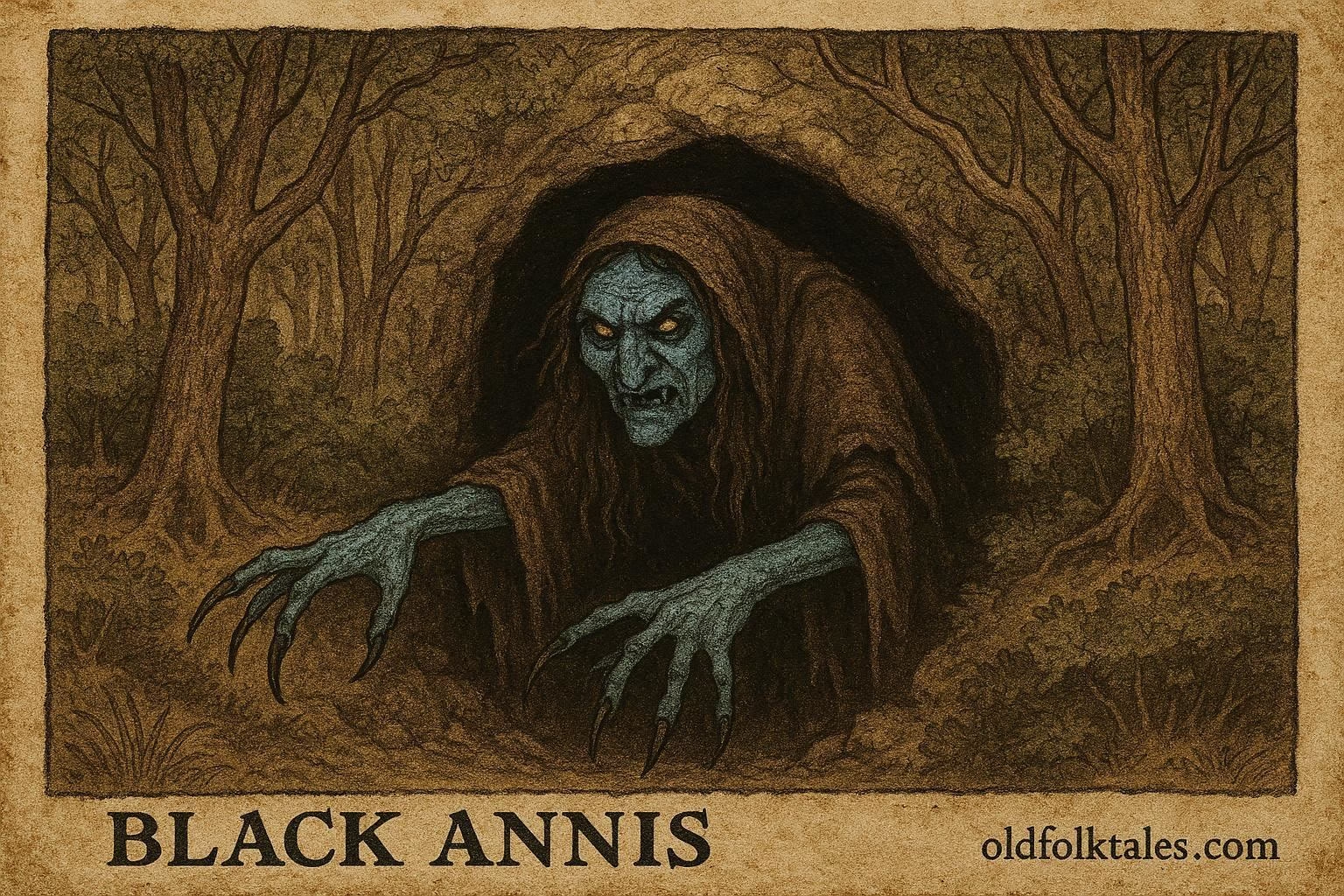
In the rolling countryside of Leicestershire, where old oak roots twist tightly through the earth and ancient hills hold memories older than villages, there is a cave that locals avoid once the sun dips below the fields. This cave, shadowed by tangled branches and shaped like an open mouth, is said to be the dwelling place of Black Annis, the ancient spirit who guards the land with cold patience and sharper iron claws.
She is described as a tall haglike figure with skin the color of storm clouds and a face stained blue like winter frost. Her iron claws glint like moonlit metal, long enough to carve into stone and powerful enough to split branches. Yet Black Annis is not a creature of random cruelty. She only appears when boundaries are crossed and when respect for the land is forgotten. Those who honor the earth may walk safely. Those who disregard it may hear her slow breathing echo through the trees.
Long ago, the villagers of Leicestershire understood the paths she watched. These paths wound between farms, skirted the edge of sacred groves, and passed near the riverbanks where the soil was soft and full of memory. Elders taught children never to wander from these paths, not because the forest was dangerous by itself, but because Black Annis listened for footsteps in forbidden places. If someone’s steps pressed into untouched patches of moss or trampled new buds in spring, she would awaken within her cave. Her blue eyes would open like lanterns in the deep dark.
Discover the gods, goddesses, and divine spirits who ruled the heavens and shaped human fate
One autumn evening, when fog drifted low over the fields, a young boy named Rafe ignored the warnings. He was bold and eager to prove his bravery to older children who taunted him. They dared him to cut across the grove instead of using the marked path. Rafe, wanting to impress them, stepped under the ancient branches, breaking a small twig as he entered. The snap of that twig carried through the quiet grove. The children who watched from the safe path felt a sudden chill. Somewhere deeper in the forest, a slow growl rose from beneath the roots.
Rafe walked further, kicking leaves and shouting loudly, proud of his disobedience. He boasted that he felt no fear. Yet the grove grew silent around him. The birds stopped chirping. The wind held its breath. Even the leaves seemed to freeze in place. Rafe suddenly heard something like the dragging of iron across stone. Then the sound repeated, closer this time, and strangely rhythmic, as though someone with long claws was tracing slow circles on the ground.
He turned and saw two faint blue lights glowing between the trees. They were not torches. They were not lanterns. They were the eyes of Black Annis.
She emerged from the shadows as though the darkness itself had peeled back to reveal her form. Her hair hung like knotted seaweed, and her breath rolled across the forest floor like cold mist. Rafe was rooted to the spot by fear. Black Annis raised her clawed hand, and the air trembled around her. Yet she did not strike him. Instead she pointed toward the broken twig at his feet. Her voice was deep and ancient, sounding more like wind in a cave than a human voice.
“You break what you do not honor,” she said. “And so the land cries out.”
Rafe trembled and whispered an apology, stumbling backward. The spirit watched him in silence. Then she stepped aside, clearing a narrow path of moonlight for him to follow. Terrified, he ran through the clearing until he reached the safety of the main path where the other children waited. When he looked back, Black Annis had vanished. Only the echo of her voice drifted faintly through the branches.
From that night on, Rafe became one of the most respectful children in the village. He tended the land carefully, never stepped into sacred groves without permission, and guided younger children along the safe paths. His fear had become wisdom, exactly as Black Annis intended.
For generations, villagers told Rafe’s story. They used it to teach children that the land was alive and deserving of respect. Black Annis became a symbol not only of fear but also of protection, reminding people that the earth held both danger and guidance. Those who listened to the warnings of their elders walked safely. Those who ignored them risked hearing the scrape of iron claws in the dark.
And so the cave remains untouched. Travelers still pass by quietly, offering a respectful nod to the shadows within. For in Leicestershire, the land remembers, and somewhere deep inside the earth, Black Annis listens still.
Author’s Note
This tale reflects how English folklore uses fear to teach boundaries and respect. Black Annis is not simply a monster but a guardian spirit who defends sacred places and reminds people that nature must not be treated carelessly. Through her story, we understand that caution and respect protect both the traveler and the land.
Knowledge Check
-
Who is Black Annis?
Answer: A blue faced haglike spirit with iron claws who guards the land. -
Where does Black Annis live?
Answer: In a cave in the forests of Leicestershire. -
What action awakened Black Annis in the story?
Answer: Rafe breaking a twig and wandering off the safe path. -
Why did Black Annis spare Rafe?
Answer: Because he apologized and learned respect for the land. -
What sound warns travelers that she is near?
Answer: The scraping of iron claws across stone. -
What lesson does the story teach?
Answer: Respect for nature and obedience to wise instructions.