
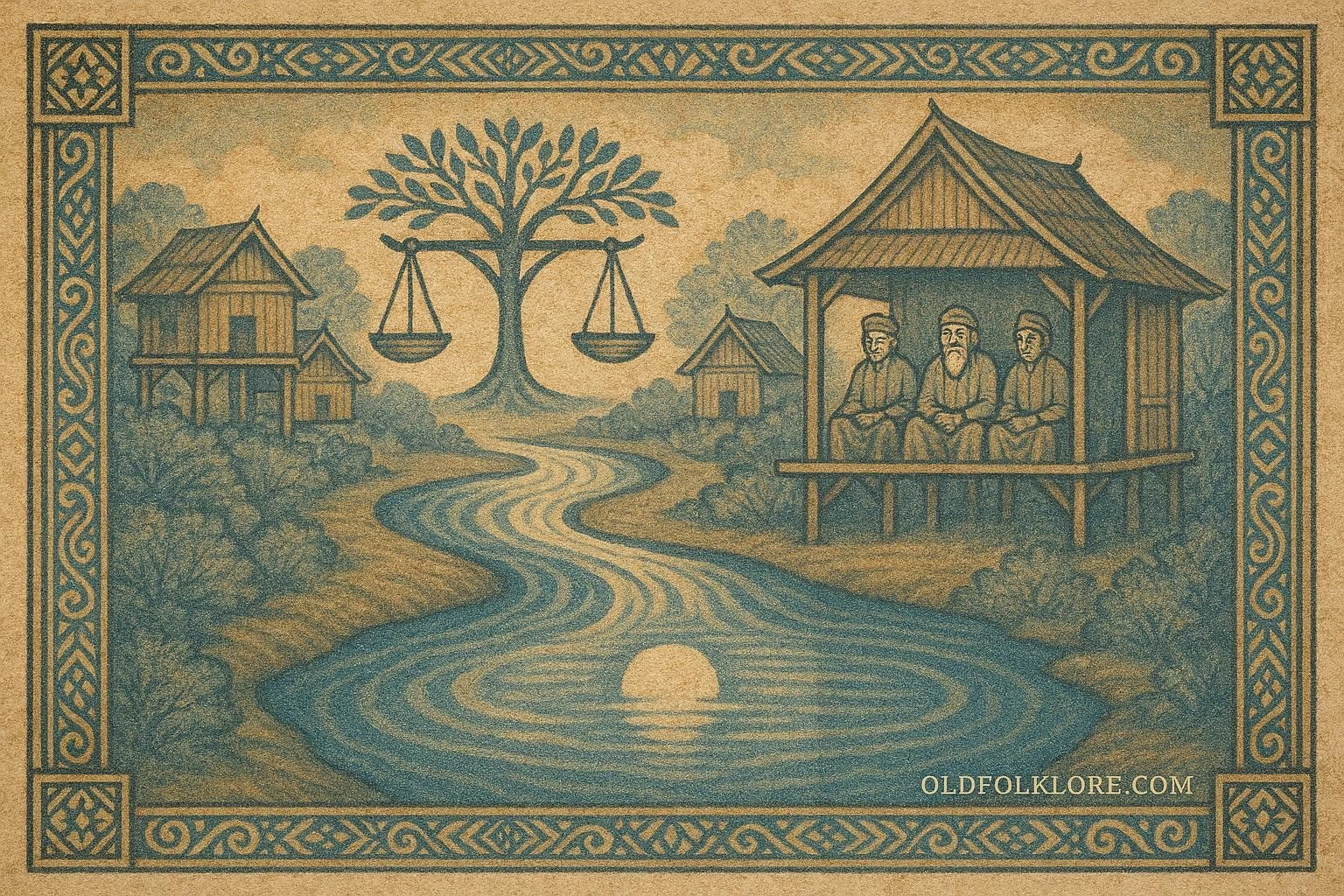
Across the archipelago, from the mist-veiled highlands to the tide-shaped coasts, adat law has long upheld the belief that the world is governed by an invisible but unbreakable equilibrium. In many Indonesian and Southeast Asian communities, justice is not merely a set of rules, it is the steady flow of moral consequence. Indonesian proverbs echo this belief, and people say “air mencari tempatnya” (water finds its place) to remind each other that wrongdoing cannot remain hidden, and righteousness cannot be denied. Just as water settles into balance, so too does truth rise and falsehood sink, no matter how forcefully they are disturbed.
Furthermore, traditional village councils, balai adat, became places where harmony was not just desired but actively shaped. Elders recognized that social order requires patience, fairness, and collective responsibility. Rather than rushing to punish, they sought resolutions that restored relationships and repaired imbalance. These proverbs grew out of the belief that justice flows like a river: sometimes gentle, sometimes fierce, but always moving toward equilibrium.
In this worldview, balance is not only a moral principle but also a natural law. Every action invites a response, every excess calls for correction, and every injustice carries within it the seeds of its own undoing. These sayings serve as reminders that although human judgment may falter, the universe itself does not.
Proverbs List (100 Proverbs with Meanings)
- 1: Water finds its level.
(Truth and justice always settle in the right place.) - 2: The river may bend, but it never forgets its course.
(People may stray, but justice eventually returns.) - 3: A crooked bamboo casts a crooked shadow.
(One’s character reveals itself through actions.) - 4: Where the water is clear, fish do not fear.
(Transparency invites trust.) - 5: Muddy water hides the snake.
(Dishonesty protects wrongdoing.) - 6: The tide brings back what the wave takes away.
(Losses and gains often balance with time.) - 7: A broken dam floods every field.
(One unjust act harms an entire community.) - 8: The slow current still reaches the sea.
(Justice may be delayed, but it arrives.) - 9: Rain falls on all roofs.
(Fairness means equal treatment for all.) - 10: What sinks is stone; what floats is truth.
(Truth cannot be suppressed forever.) - 11: The one who disturbs the pond drinks the mud.
(Those who cause trouble suffer the consequences.) - 12: The shallow well echoes loudly.
(The less someone knows, the more they boast.) - 13: The deep well speaks softly.
(Wisdom is quiet and humble.) - 14: A river without banks becomes a flood.
(Society without rules falls into chaos.) - 15: A just leader is like shade at noon.
(Fair leadership brings relief and protection.) - 16: The path of the ant is straight—even if unseen.
(Right actions are steady, even when unnoticed.) - 17: Clouds gather before the rain of justice.
(Signs of change appear before justice is restored.) - 18: One rotten drop spoils a whole jar.
(Corruption spreads quickly.) - 19: Still water holds hidden depth.
(Quiet people often possess great wisdom.) - 20: The overflowing cup wastes the drink.
(Excess leads to loss or imbalance.) - 21: When the current meets the rock, both are shaped.
(Conflict transforms both sides.) - 22: A balanced scale fears no measure.
(The just have nothing to hide.) - 23: The water you poison will be the water you drink.
(Harm done to others eventually harms oneself.) - 24: The storm ends; the river remembers.
(People remember injustice long after events pass.) - 25: The fish rots from the head.
(Corruption begins with leaders.) - 26: The one who stirs the lake must face the ripples.
(Every action has consequences.) - 27: Clear water reveals the stone beneath.
(Honesty shows reality as it is.) - 28: A leaking pot cannot hold fairness.
(Untrustworthy people cannot deliver justice.) - 29: A just word is a smooth stone—small but powerful.
(Simple truth can resolve great conflict.) - 30: The thirsty buffalo knows where water lies.
(Those in need recognize fairness.) - 31: Water cannot climb a mountain; neither can lies climb truth.
(Falsehood cannot overcome honesty.) - 32: The deeper the river, the steadier the flow.
(Wise people act calmly.) - 33: Every drop counts in a drought.
(Small acts of fairness matter most in hard times.) - 34: Water kept still grows stale.
(Justice must be active to remain healthy.) - 35: A cloud cannot hide the sun forever.
(Truth always reappears.) - 36: Two rivers meeting must share the same bed.
(Cooperation requires compromise.) - 37: The rain that grows rice also floods the road.
(Good things can bring challenges.) - 38: The river that forgets its source runs dry.
(Communities fall when they ignore their values.) - 39: A balanced heart fears no judgment.
(Those who live rightly have peace.) - 40: When the stream narrows, stones speak louder.
(In tense situations, small issues become big.) - 41: A fair council is a bridge over troubled water.
(Good mediation restores peace.) - 42: A dishonest boatman sinks his own passengers.
(Dishonest leaders endanger everyone.) - 43: The waves reveal what the tide hides.
(Secrets eventually come to light.) - 44: The one who divides the water divides the village.
(Favoritism creates conflict.) - 45: Rain falls by nature; justice falls by choice.
(We must choose to act fairly.) - 46: Water that stagnates breeds mosquitoes.
(Unresolved problems create bigger ones.) - 47: A river born of storms becomes strong.
(Hardship builds resilience.) - 48: The gourd floats because it is light.
(The unburdened prosper.) - 49: The heavy stone sinks because it is full.
(A guilty conscience weighs people down.) - 50: A fair heart keeps the village warm.
(Compassion strengthens community.) - 51: Shared water tastes sweeter.
(Fair distribution brings unity.) - 52: Water does not argue with the rock.
(Patience overcomes resistance.) - 53: The riverbank guards the river.
(Rules protect freedom.) - 54: Balance is the boat that never sinks.
(Moderation is stability.) - 55: A fearless swimmer respects the depth.
(Confidence must pair with caution.) - 56: The thirsty well teaches fairness.
(Need teaches empathy.) - 57: A river without fish warns of imbalance.
(Visible loss signals hidden injustice.) - 58: The mouth that drinks first must offer next.
(Privilege requires responsibility.) - 59: Even the rain must ask the mountain’s permission.
(Respect maintains harmony.) - 60: The one who blocks the stream blocks himself.
(Obstructing others harms oneself.) - 61: Truth is like water in sunlight—it shines.
(Truth reveals itself naturally.) - 62: Justice is a canoe rowed from both sides.
(Fairness requires cooperation.) - 63: The river teaches that rushing leads to falls.
(Haste leads to mistakes.) - 64: The pool reflects as it receives.
(Treatment mirrors behavior.) - 65: A just word cools the hottest anger.
(Fair speech calms conflict.) - 66: Drought teaches gratitude for every drop.
(Hardship reveals value.) - 67: Water spilled cannot be gathered again.
(Some actions cannot be undone.) - 68: The honest canoe leaves no hidden tracks.
(Honesty brings peace.) - 69: Calm water shows the moon.
(A peaceful mind sees clearly.) - 70: The stream widens where hearts open.
(Generosity expands opportunity.) - 71: The one who shares the spring gains friends.
(Kindness builds goodwill.) - 72: The unjust borrow from tomorrow’s peace.
(Wrongdoing creates future trouble.) - 73: Water follows gravity; justice follows truth.
(Truth guides fair judgment.) - 74: A heavy rain remembers light clouds.
(Great consequences begin with small causes.) - 75: The one who steals water thirsts later.
(Injustice backfires.) - 76: A clean well blesses generations.
(Good decisions benefit the future.) - 77: A fair council listens twice before speaking once.
(Good judgment requires patience.) - 78: The river sings where stones are smooth.
(Harmony comes when roughness is resolved.) - 79: A swollen river warns before it breaks.
(Signs of trouble appear before disaster.) - 80: The one who hoards water fears sunlight.
(The selfish fear exposure.) - 81: Clear springs come from honest soil.
(Integrity produces fairness.) - 82: A deep wound needs slow water to heal.
(Serious conflicts require patience.) - 83: A wise elder is a steady tide.
(Good leaders provide consistent guidance.) - 84: The river teaches all who sit beside it.
(Nature reveals universal wisdom.) - 85: When the water sings, listen.
(Pay attention to subtle warnings or truths.) - 86: Balance is the bridge between enemies.
(Fairness resolves conflict.) - 87: Injustice is a drought of the heart.
(Lack of fairness withers relationships.) - 88: The one who splashes others gets wet.
(Malice harms the one who spreads it.) - 89: The water that softens stone softens anger.
(Gentleness can overcome hostility.) - 90: A just ruler rains on all fields.
(Fair leaders care for everyone.) - 91: The shallow river boasts of its noise.
(Inexperienced people overstate their wisdom.) - 92: The deep river flows quietly.
(True wisdom needs no display.) - 93: Water climbs by mist, not force.
(Growth can be gentle, not aggressive.) - 94: A broken jar teaches caution.
(Past mistakes guide better decisions.) - 95: The water that nourishes also shapes the land.
(Goodness transforms its surroundings.) - 96: A fair heart untangles knots.
(Fairness simplifies conflict.) - 97: Justice walks with a slow but firm step.
(True fairness is deliberate.) - 98: Where water gathers, life gathers.
(Fairness attracts cooperation.) - 99: Water remembers the hands that lifted it.
(People remember kindness.) - 100: The river ends in the sea, and the truth ends in peace.
(Ultimately, truth leads to harmony.)
Author’s Note
These proverbs remind us that justice is not merely a human construct but a natural principle woven into the world itself. The rivers, streams, and rains of adat culture reveal a worldview where moral action mirrors the movement of water, always seeking balance, always shaping the landscape of community. May these sayings inspire you to live with fairness, act with compassion, and trust that truth, like water, always finds its level.
Knowledge Check
- Q: What does “Water finds its level” primarily symbolize?
A: The inevitability of truth and justice. - Q: Why do adat councils value slow, deliberate decision-making?
A: Because justice requires patience to maintain balance. - Q: What does muddy water metaphorically represent in adat proverbs?
A: Dishonesty and hidden wrongdoing. - Q: Why is a just leader compared to shade at noon?
A: Fairness brings comfort and protection. - Q: What teaches that every action has consequences in these sayings?
A: The ripples caused when someone disturbs still water. - Q: What is the overall theme connecting all 100 proverbs?
A: Balance, justice, and the natural order of moral consequence.






