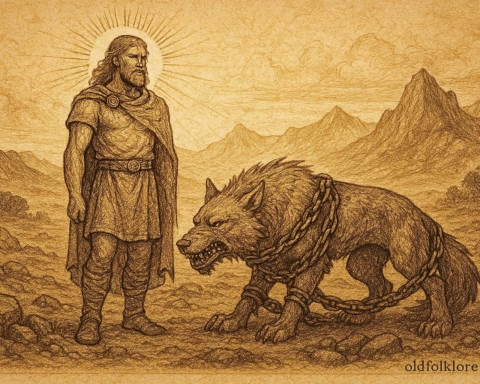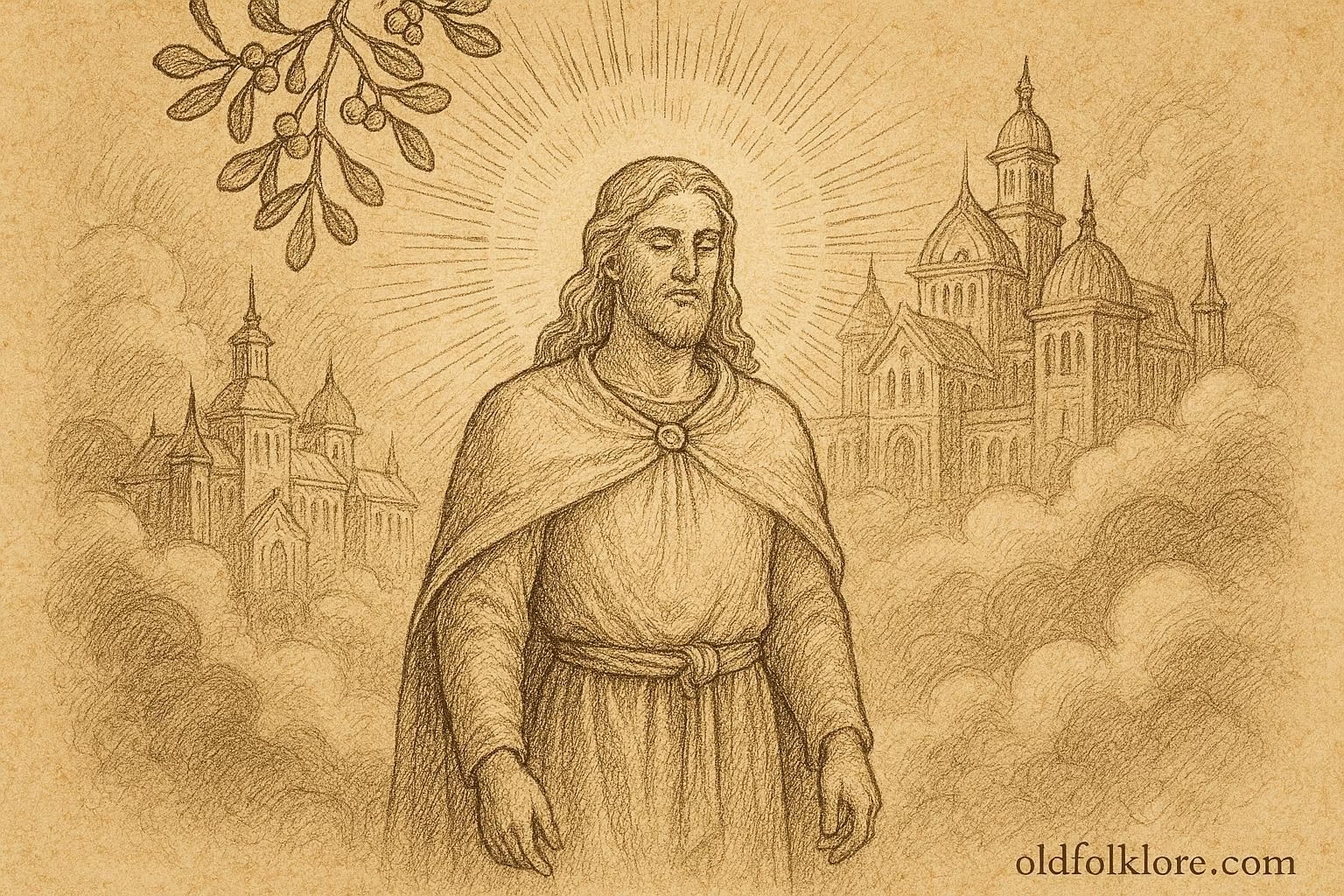
Baldr (Old Norse: Baldr), son of Óðinn and Frigg, is the most beloved among the Aesir. He embodies light, purity, beauty, and righteous peace, radiating a divine brightness that warms gods and humans alike. No impurity clings to him. His hall, Breiðablik, is said to be so sacred that no unclean thing may enter.
Baldr is the half-brother of Thor, the twin of the gentle god Höðr, the husband of Nanna, and father of the young Forseti. He is associated with renewal, hope, and the untouched radiance of innocence. His sacred symbols include sunlight, white blossoms, and the glittering shield that once hung above his hall like a small sun.
He is honored in older Norse rites through quiet invocations tied to mercy, truth, and the fragile balance between life and cosmic order. His mythic role lies not in battle but in the moral center of the pantheon. And yet, paradoxically, it is the death of this most innocent god that ignites the slow-burning catastrophe that will one day become Ragnarök.
Mythic Story
From the earliest ages of the Nine Worlds, Baldr’s radiance was a beacon among the Aesir. His presence softened tempers, settled quarrels, and lifted gloom as dawn brushes away the night. Yet one season, a strange heaviness came upon him. Dreams, dark dreams, began to trouble Baldr, shadows creeping over his once-unshakable calm. Each night he saw himself falling, wounded, gone from the world, and all the gods wept in his sleep.
When Baldr shared his visions, fear passed through Asgard like a cold wind. Dreams in the halls of gods were never meaningless; they were prophecies.
Frigg, ever watchful, refused to allow doom to touch her son. She traveled across the worlds, gathering oaths from all things, stones and iron, fire and water, beasts and trees, illnesses and poisons, securing promises that none would harm Baldr. Every element, every creature, every weapon swore to spare him.
With doom seemingly undone, the gods rejoiced.
Soon, Baldr stood untouched in the shining courtyards of Asgard while the Aesir tested the new decree of fate. They hurled stones, spears, and axes, all of which bounced harmlessly away. Laughter filled the realm, for the threat seemed conquered. Baldr smiled, radiant and unshaken, the center of their joy.
Yet one watched from the edges, Loki, the shape-shifter, whose cunning sharpened where others grew comfortable. He felt no malice toward light itself, but the ease of the Aesir stirred a bitter curiosity in him. How had they unraveled fate so easily?
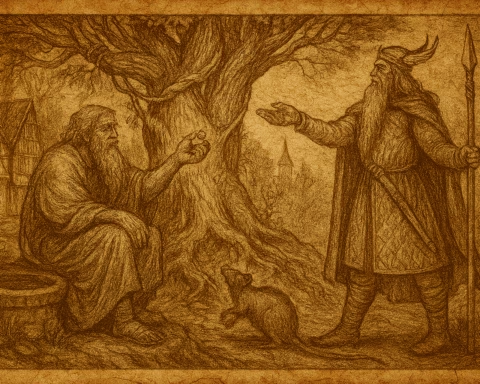
Disguised as an old woman, Loki sought out Frigg in her hall, Fensalir. In gentle disguise he asked whether truly everything had sworn an oath. Frigg, thinking no danger could arise from a harmless passerby, admitted one exception: a small shoot of mistletoe, too young and frail, she thought, to pose any threat.
That slender detail was all Loki needed.
In the shadows, he shaped mistletoe into a dart, slim, pale, seemingly innocent. He approached Höðr, Baldr’s blind twin brother, who stood apart from the sport of the gods, unable to join the game he couldn’t see.
“Why do you not honor your brother?” Loki asked.
“Because I cannot aim,” Höðr answered.
“I will guide your hand,” Loki said softly.
He placed the dart in Höðr’s grasp. Höðr, trusting, raised his arm. Loki guided his motion.
The dart flew.
No god expected harm. No one even turned, until Baldr fell.
His brightness dimmed like a sun suddenly swallowed by cloud. Silence tore through Asgard. Then a cry broke from Frigg, and the Aesir rushed to him, but Baldr’s radiance was gone. The weapon had pierced where all others failed.
There, amid the gods’ disbelief, Loki slipped away.
The grief of the Aesir was unlike any sorrow in all the Nine Worlds. They could not accept death for the one least deserving of it. So they prepared Baldr’s funeral with a solemnity befitting a fallen sun. His ship, Hringhorni, was pulled to the shore, and fires were prepared. Nanna, heartbroken beyond mortal measure, collapsed and died beside him, joining her beloved in the journey. Baldr’s horse and treasures were placed aboard, and the pyre was lit as the ship drifted out to sea.
Even giants and dwarves stood in awe of the sight.
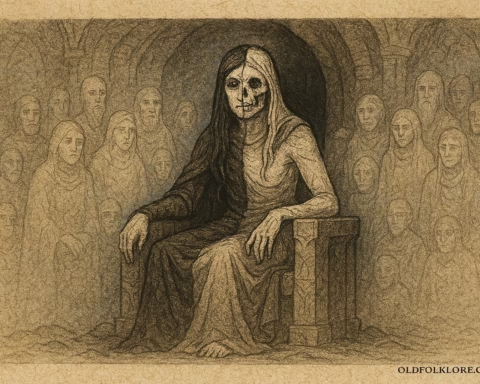
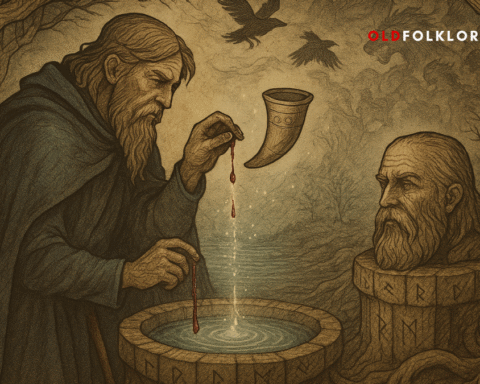
But the gods were not done. Hermóðr the Bold, another son of Óðinn, rode the eight-legged Sleipnir down the road to Hel, seeking ransom for Baldr’s return. Hel, queen of the dead, agreed, but only on one condition:
“Let every being weep for Baldr. If all things mourn him, he shall return to the living.”
The message spread across the worlds. And everything wept.
Stones grew damp. Trees shed dew. Beasts cried out. Even metals glistened as if grieving.
Until one refused.
A giantess named Þökk (who many believe was Loki in disguise) would not shed a single tear.
“With dry eyes will I weep for Baldr’s death,” she said.
“Let Hel hold what she has.”
And so Hel did.
Baldr remained in the realm of the dead, awaiting the distant day after Ragnarök, when he will return to rebuild a cleansed world with the surviving gods.
Thus the brightest of the Aesir fell not by strength, but by innocence exploited, and his absence became the first great wound in the fate of the cosmos.
Discover the gods, goddesses, and divine spirits who ruled the heavens and shaped human fate
Author’s Note
Baldr’s myth reminds us that even purity cannot escape the patterns of fate. His story teaches that innocence, while powerful, is also vulnerable, and that the smallest overlooked detail can change the destiny of worlds. Through Baldr, the Norse tradition explores grief, the fragility of peace, and the quiet truth that light often shines brightest after its loss.
Knowledge Check
Q1: What domain does Baldr represent in Norse mythology?
A: Light, innocence, beauty, and purity.
Q2: Why did Frigg gather oaths from all things?
A: To prevent harm to Baldr after he dreamed of his own death.
Q3: What weapon ultimately killed Baldr?
A: A dart of mistletoe, the only plant that had not sworn an oath.
Q4: Who guided Höðr’s hand?
A: Loki, disguised and manipulating events.
Q5: What condition did Hel give for Baldr’s return?
A: All beings must weep for him.
Q6: Why did Baldr remain in Hel?
A: Because one being, Þökk (likely Loki), refused to weep.
Source: Norse Mythology, Scandinavia.
Source Origin: Scandinavia (Old Norse Tradition)