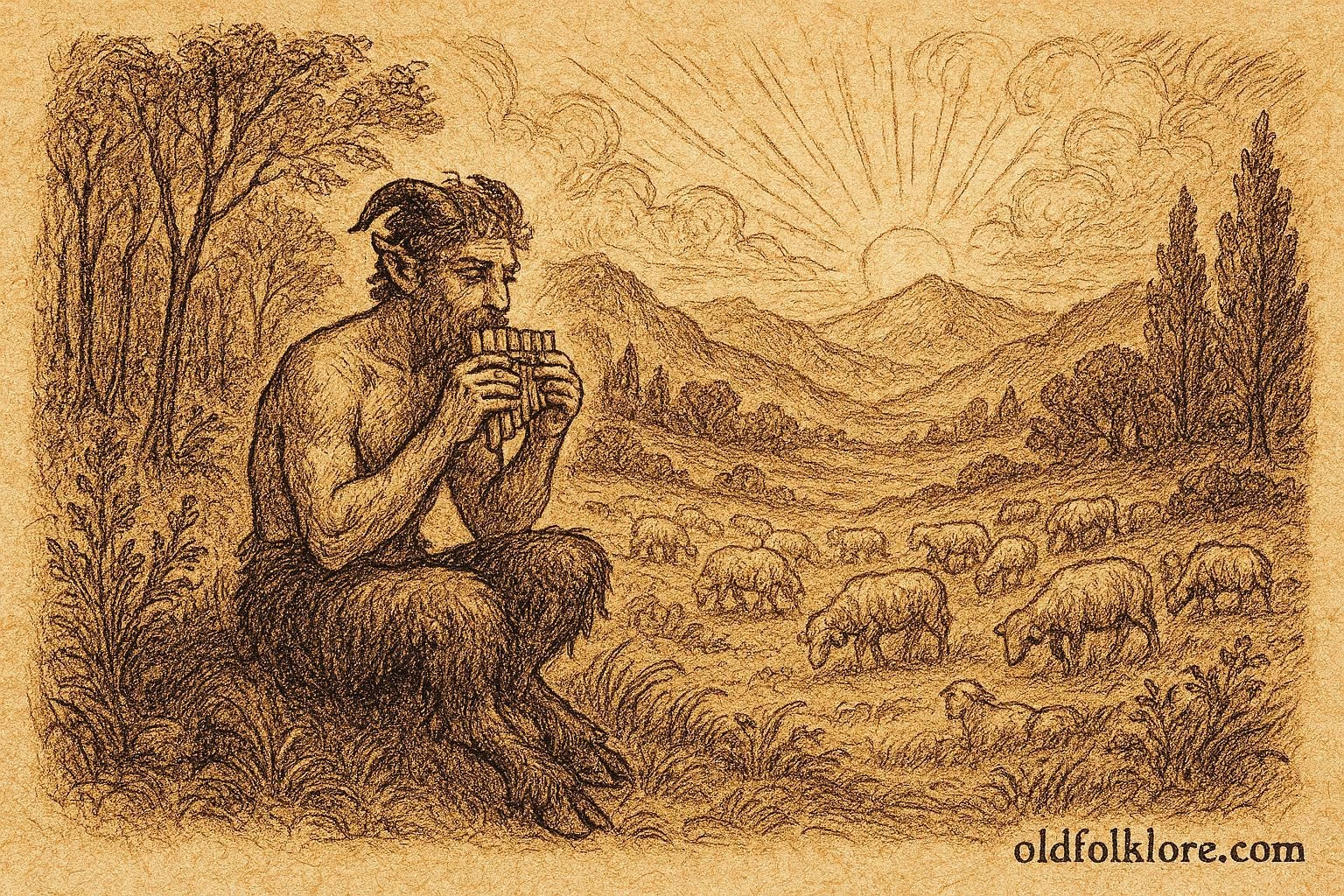
Pan (Πάν) is the rustic god of wild places, shepherds, flocks, and untamed nature. Depicted as part man and part goat, he embodies both fertility and sudden, irrational terror, from which the word “panic” originates. Revered across Arcadia and rural Greece, Pan’s presence is inseparable from forests, hillsides, and streams, and he often moves unseen, filling the night air with the haunting music of his pan pipes.
Pan wields a dual power: he nurtures pastoral life, aiding shepherds, farmers, and flocks, yet he can also instill sudden fear in mortals or animals, especially travelers alone in wild terrain. His symbols include the goat, the pan pipes (syrinx), and the rustic landscape itself. Pan’s cult emphasized open-air worship, with groves, caves, and streams serving as natural sanctuaries. Festivals in his honor celebrated fertility, pastoral abundance, and musical skill.
The god’s playful and erotic nature often mingles with humor and mischief; he pursues nymphs or surprises shepherds, demonstrating the unpredictable vitality of the natural world.
Mythic Story
Pan’s myth is deeply entwined with Arcadian landscapes and pastoral life. One of his most famous tales concerns the origin of the pan pipes. According to legend, the nymph Syrinx, devoted to chastity and the forest, fled from Pan’s advances. As he pursued her through reeds and marshes, the goddess was transformed by river nymphs into hollow reeds to escape him. In despair, Pan cut several reeds, tying them side by side to form the first syrinx. Blowing through it, he produced a mournful melody that echoed through the valleys, capturing the longing, wild beauty, and melancholy of the untamed world.
Pan’s influence was not limited to music. Shepherds revered him as the guardian of flocks and the bringer of fertility to pastures. He would wander hills and glens, ensuring the health of goats, sheep, and cattle. Yet Pan’s laughter could turn to sudden terror. Travelers alone in deep forests might feel an invisible presence pressing close; their hearts would pound with inexplicable fear, the “panic” sent by Pan’s restless spirit. This duality, creator and trickster, nurturer and instiller of dread, illustrates the god’s primal connection to the unpredictability of nature.
Arcadian poetry and vase imagery celebrate Pan as both comic and chthonic. Stories depict him bounding across mountainsides, playing pipes, or chasing nymphs in playful pursuit. In contrast, mystery cults and Hellenistic poets imbue him with darker undertones, associating him with underground caves, fertility rites, and the raw energy of life itself. These layers of narrative capture Pan’s complexity: he is the pulse of pastoral existence, both joyous and perilous.
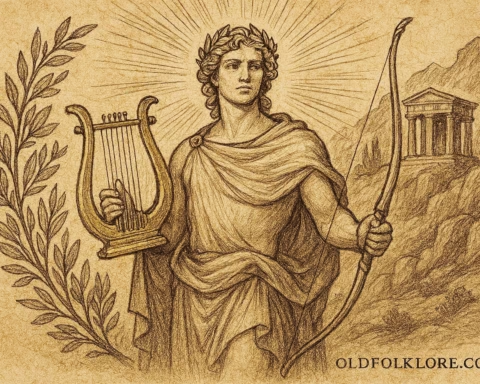
Pan’s encounters with mortals often carry moral or philosophical weight. In one tale, the god mocked Apollo, the refined Olympian of music, in a musical contest. Pan’s untrained, rustic music, full of life’s irregularities, won him admiration among the common folk, illustrating the value of spontaneity, earthiness, and the natural world’s voice, even against the ordered perfection of divine artistry.
His nocturnal presence makes Pan a liminal deity. He inhabits the threshold between safety and danger, civilization and wilderness. Shepherds’ tales recount how Pan’s call could signal sudden inspiration, fertile flocks, or, alternately, fear and confusion. The god thus embodies humanity’s ambivalent relationship with nature: a source of sustenance and creativity, yet beyond full control or comprehension.
The enduring motif of Pan’s pan pipes exemplifies his character. Music flows as both gift and warning, joyous yet tinged with sorrow. As Pan’s melodies echo through glens, the listener senses the wild world’s pulse: the wind through trees, the rustle of animals, and the unbridled rhythm of life. Pan teaches humans to respect the vitality of the natural world, to find joy in creativity, and to approach life with a blend of reverence and playful courage.
Pan’s imagery, half-goat, half-man, with goat’s horns and legs, symbolizes the boundary between civilized human existence and untamed nature. His laughter, music, and sudden terrors remind mortals that life and the natural world cannot be fully predicted or mastered. Pan is both companion and challenge, a deity of instinct, joy, fertility, and uncontainable spirit.
Discover the gods, goddesses, and divine spirits who ruled the heavens and shaped human fate
Author’s Note
Pan embodies the duality of nature: its abundance and unpredictability, its joy and fear. Through his myths, we learn that the wild is both nurturing and dangerous, that creativity and instinct are essential to life, and that human existence is inseparable from the rhythms of the natural world. His music, laughter, and presence remind us of the vitality of life beyond human control, urging harmony with nature’s untamed spirit.
Knowledge Check
Q1: Who is Pan and what does he symbolize?
A: Pan is the Greek god of wild nature, shepherds, and pastures, symbolizing fertility, music, and primal fear.
Q2: How did the pan pipes (syrinx) originate?
A: Pan created them from reeds that the nymph Syrinx transformed into to escape him.
Q3: What dual role does Pan play in myth?
A: He nurtures flocks and fertility but can also induce sudden fear (“panic”).
Q4: Which region is most closely associated with Pan?
A: Arcadia, in the pastoral heart of Greece.
Q5: Name two symbols of Pan.
A: The goat and the pan pipes.
Q6: How does Pan contrast with Apollo in myth?
A: Pan represents rustic spontaneity and primal music, while Apollo embodies order, refinement, and formal artistry.
Source: Hesiod, Homeric Hymns, Arcadian pastoral cults, Greece.
Source Origin: Greece (Archaic/Classical Greek Mythology)