Kapa, the barkcloth of Hawai‘i, stands among the most intricate textile traditions of Polynesia. Its roots trace back to early voyagers who carried tapa-making knowledge across the Pacific. Hawaiians refined the craft into a highly ritualized art, elevating it beyond practical cloth into a medium tied to rank, temple protocol, and ancestral order. Made from the inner bark of the wauke (paper mulberry), kapa was central to daily life and sacred ceremony, carrying social and spiritual meaning that reflected the Hawaiian worldview of balance between the living, the land, and the gods.
Description
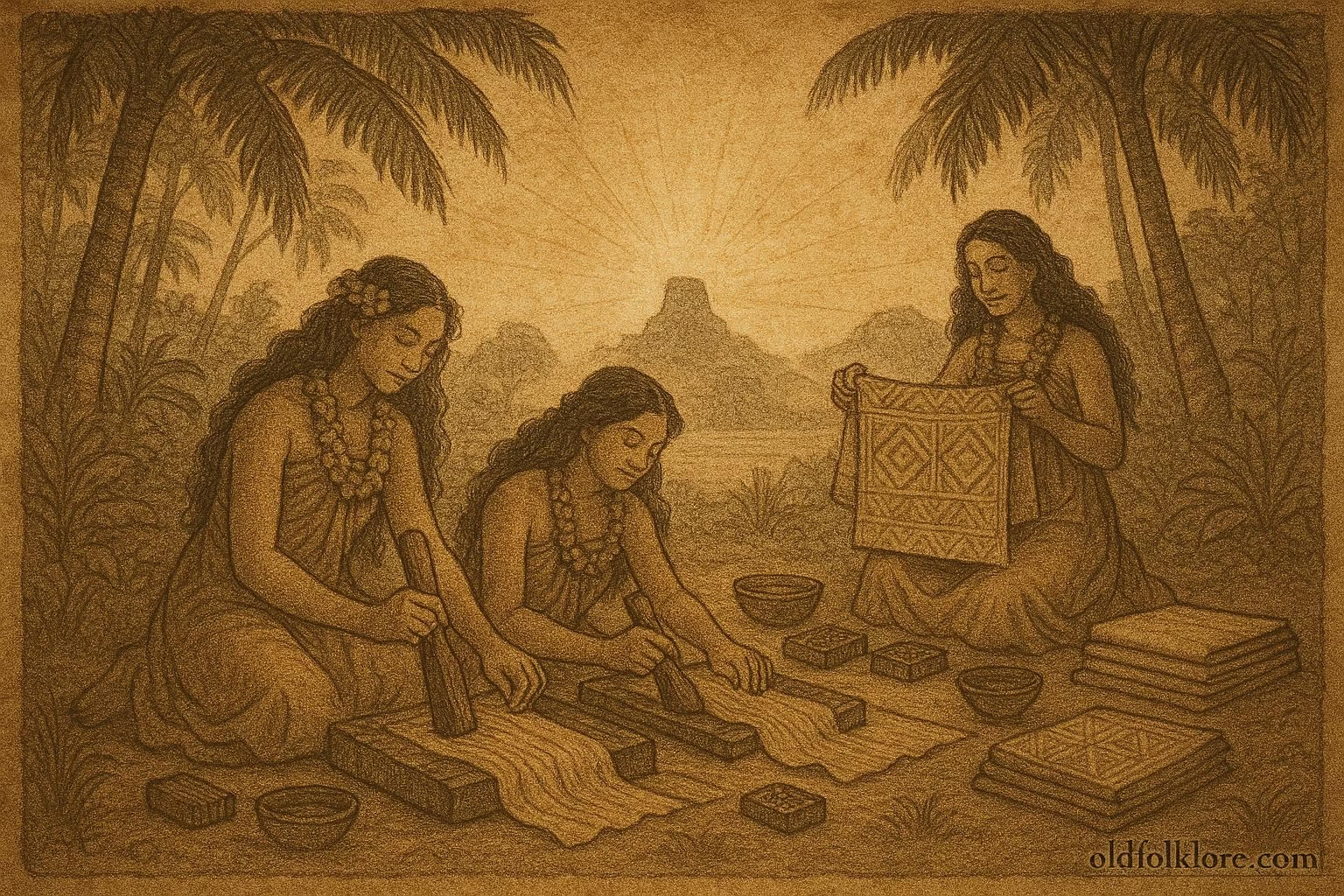
Kapa production began long before the first strike of the wooden beater. Women, the traditional kapa makers (kua kapa), tended the wauke groves with ritual purpose. The plants were harvested with respect, stripped of their outer bark, and soaked so the fibers could soften. This preparation required skill, patience, and spiritual attention. The work was not rushed; it followed the natural rhythms of growth and water, reminding the makers of their connection to akua (gods) and ancestors.
Once softened, the fibers were placed on a wooden board and repeatedly struck with i‘e kuku beaters, tools carved with special patterns that left distinct textures on the cloth. The rhythmic sound of beating kapa was once heard throughout Hawaiian valleys, echoing as a living heartbeat of the land. Strips were widened, layered, joined, and smoothed until they formed large sheets. Dyes from plants, earth, and minerals were applied, and geometric designs were stamped using ʻohe kāpala (bamboo tools). Each pattern carried meaning: lineage, rank, environment, the movement of waves, the shape of mountains, or symbols tied to a deity.
Kapa was deeply woven into ceremonial life. It wrapped newborns and chiefs, covered altars in heiau (temples), shrouded the dead, and accompanied rituals of purification. Chiefs (ali‘i) wore the finest kapa, soft, thick, dyed in colors reserved for rank, reflecting both political authority and divine descent. Kapa could serve as offerings, as temple banners, or as coverings during chants that required ritual separation and sanctity.
In some rites, the making of kapa itself was sacred. Women followed kapu (sacred restrictions), avoided certain foods or activities, and worked within times deemed spiritually appropriate. The process symbolized transformation: from bark to cloth, from nature to culture, from raw material to sacred object.
Mythic Connection
Kapa’s meaning rests in the cosmological framework of Hawaiian life. In Hawaiian tradition, nature and deity are inseparable. The wauke plant belonged to the realm of Lono, god of agriculture, peace, and fertility. The beating of kapa invoked the generative power of creation, the cultural equivalent of shaping the world from formless material. Thus kapa making echoed the mythic acts of ancestral gods who organized the cosmos out of raw darkness.
The patterns stamped onto kapa often reflected stories embedded in the land: the motion of wind, the presence of a guardian spirit, or the shape of a sacred mountain. In this sense, every sheet of kapa became a cultural map, reminding its wearer of the divine forces that surrounded and sustained them.
Social order was also expressed through kapa. Fine-quality cloth indicated chiefly rank, reinforcing the spiritual mana (divine power) of the ali‘i. To wrap a sacred chief in kapa was to cloak mana with mana, symbolically containing and honoring the spiritual authority that governed the people.
In funerary rites, kapa played a role in guiding a soul toward the ancestral realm. Covering the body was not merely practical; it formed a protective transition, connecting the dead with the continuum of lineage.
Through these layers of meaning, kapa served as a physical expression of the Hawaiian belief that all things, people, plants, gods, and ancestors, exist within a shared spiritual framework.
Author’s Note
This article examines the sacred Hawaiian kapa tradition as an intersection of artisan skill, spiritual meaning, and cultural identity. It highlights how kapa functioned both as a practical textile and as a ceremonial medium that reflected lineage, cosmology, and the ritual order of Hawaiian society.
Knowledge Check
1. What plant forms the base of Hawaiian kapa?
Kapa is made from the inner bark of the wauke, or paper mulberry plant.
2. Who traditionally made kapa in Hawaiian culture?
Women were the primary kapa makers, following specialized training and ritual protocols.
3. Why were patterns on kapa important?
Patterns conveyed lineage, spiritual symbolism, environmental references, or ties to specific gods.
4. How did kapa connect to Hawaiian religious practice?
Kapa was used in temple rites, funerals, purification rituals, and chiefly ceremonies, symbolizing sacred order.
5. What deity is closely linked to kapa production?
Lono, god of agriculture and peace, is connected through the wauke plant used to create kapa.
6. What role did kapa play in expressing social rank?
High-quality kapa signified chiefly status and carried mana, reinforcing political and spiritual authority.