In the days when the Niger River curved like a serpent of silver through the lands of Gao and Timbuktu, when the Songhai people walked beneath the blessing of ancestral spirits, a child was born beneath a night of trembling stars. Her mother, a priestess of the river cult, had dreamt of a radiant woman rising from the waters, a djinn-queen of light, bearing a child made of both earth and spirit. When dawn came, the infant lay in her arms, eyes shining like wet stone. She was called Nana Miriam, for the ancestors whispered that she would become a bridge between mortals and the unseen.
From her earliest breath, the river taught her. The currents curled around her ankles like affectionate snakes; the fish swam to her shadow; the reeds bowed as she passed. She heard the language of water, its murmurs of memory, its warnings, and its distant thunder. By adolescence she could summon mist with a gesture, command river winds, and call healing herbs to her hands with only their true names. Yet she trained also with iron and leather, for her father, a seasoned warrior, taught her spearwork and the discipline of defense. Thus she grew, a fusion of sorcery and steel.
But beneath the river’s glittering surface, a darkness stirred.
For seasons uncounted, a monstrous being slept in the river’s deepest coils, the Buru, a serpent of ancient malice with scales black as old storms and breath that carried the stench of forgotten graves. In the age of Nana Miriam, drought tightened its grip across the land, and the Buru awoke in fury, believing humans had stolen the river’s lifeblood. It rose from the depths, capsizing boats, dragging cattle from the banks, and swallowing whole fishermen before the eyes of their families. Panic seethed among the Songhai villages. Offerings were thrown into the water; prayers rose like smoke, but the river answered with only shadows.
When the chiefs gathered, voices broke with fear. “No spear can pierce its hide,” they lamented. “No charm has turned its rage.” One elder, trembling like an autumn leaf, whispered, “Only one walks between worlds. Only one may face the Buru.”
And so eyes turned toward Nana Miriam.
She felt the weight of their expectation as a stone upon her chest. Though gifted, she was still mortal, still fallible. She had felt fear in her life, but never like this, a deep trembling that asked whether one woman, however blessed, could challenge an ancient terror. That night she sat beside the river’s silver ribbon and whispered to it.
“Show me the truth,” she pleaded.
The waters stirred. A low, mournful voice, the river spirit herself, rose in the mist: “Daughter of earth and light, the monster’s fury springs from imbalance. The drought has sealed his hunger into rage. If you face him, it must be with not only power but wisdom.”
Nana Miriam bowed her head. “Then guide my path.”
The spirit breathed a charm into her hand, a glowing sigil shaped like a coiled serpent. “This is the Word of Binding. Speak it only when your heart is still as stone, or it will falter.”
At dawn, Nana Miriam prepared for the battle. Her mother braided her hair with amulets of river-shell and bronze. Her father fastened a spear into her hand, though both knew it might be useless against the Buru. The people gathered along the bank, voices wavering between dread and hope. Nana Miriam raised her palm in reassurance.
“I do not fight for glory,” she declared, her voice like the morning wind. “I fight because the river itself calls for balance. Stand firm. The ancestors watch.”
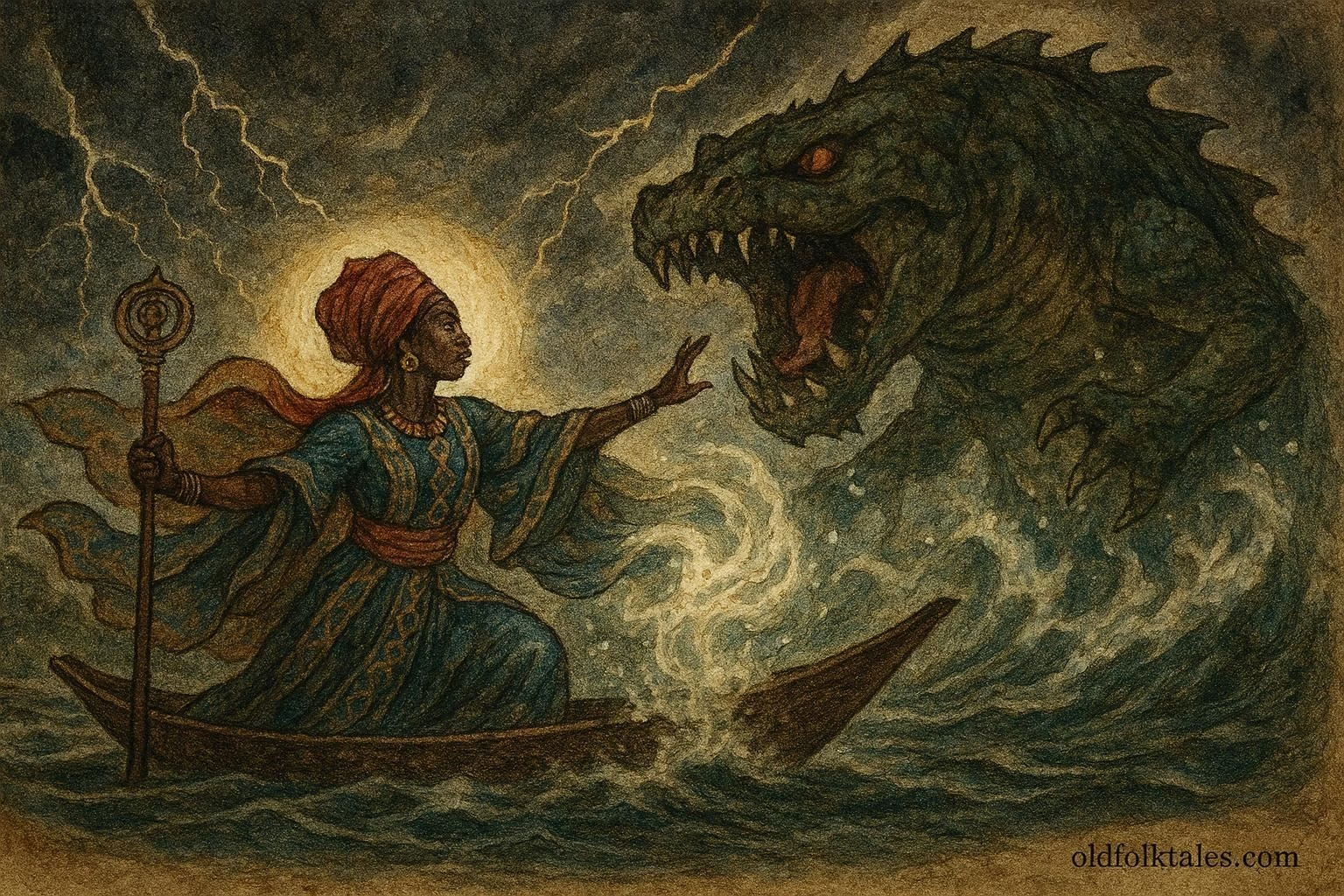
She stepped into a canoe and paddled to the river’s heart, where the waters turned black with depth. There she stood, raising her voice in the ancient invocation. The river grew still. The sky darkened. A rumble shook the air.
The Buru rose like a living mountain.
Its jaws opened wide enough to swallow the canoe and the woman in one gulp. Water cascaded from its fangs. Its eyes blazed with hatred older than kingdoms. Nana Miriam held her ground, though her heart hammered like a trapped drum.
“You strike at the innocent,” she called. “You swallow the children of the river. Why do you rage?”
The monster’s voice was a grinding roar. “The drought steals my depths! The people steal my peace!”
“Then let the river flow again,” she answered, “but release your vengeance.”
The Buru lunged.
Nana Miriam leapt aside, calling winds to push her canoe clear. Waves rose like walls; the monster’s tail smashed against the waters, sending her spinning. She summoned tendrils of mist to blind it, sparks of river-light to confuse its senses. She thrust her spear toward its eye, though the tip shattered upon its hide.
She fell to her knees, breath ragged. The monster towered above her.
Only then did she understand: This battle could not be won with force.
She closed her eyes, letting fear drain from her bones. When she opened them again, they glowed like moonlit water. She spoke the Word of Binding.
The sigil burst into light, wrapping the Buru in a spiral of shimmering chains. The creature shrieked, thrashing, but the binding tightened, not from cruelty, but from harmony. Slowly, its rage dimmed; its scales dulled from black to a deep river-blue.
“Nana Miriam,” the monster rumbled at last, subdued, “you restore what drought has taken. I will harm your people no more.”
As it sank once more into the depths, the river surged with fresh clarity. Days later, rain fell upon the land. Fishermen returned to the water. Children laughed again along the banks. The name Nana Miriam spread like birdsong from village to village.
And the river, ever faithful, murmured her story for generations.
AUTHOR’S NOTE
Nana Miriam stands in West African memory as a symbol of harmony, between the human and the supernatural, between courage and compassion, between the necessity of strength and the wisdom of restraint. Her victory was not merely a conquest but a restoration, reminding the Songhai people that true power lies in balance. Her legend continues to inspire those who defend their communities with both heart and honor.
KNOWLEDGE CHECK
-
What divine signs marked Nana Miriam’s birth?
-
What role did the Niger River play in her upbringing?
-
Why did the Buru rise in rage against the people?
-
What moral understanding allowed Nana Miriam to defeat the monster?
-
What was the significance of the Word of Binding?
-
How did the land change after the Buru’s defeat?
CULTURAL ORIGIN: Songhai / Mali, Niger Bend oral epics and cosmologies.
SOURCE: Based on the Niger Bend traditions recorded by Leo Frobenius (1910).