The ‘Ava, known elsewhere in Polynesia as Kava, is one of the oldest ceremonial traditions in the Pacific. It is practiced across Samoa, Tonga, Fiji, and other island cultures. Its roots reach back into early Polynesian cosmology, where sacred drinks and ritual gatherings defined the connection between leaders, ancestors, and the gods. Over generations, the ‘Ava ceremony became the formal marker of chiefly assemblies, moments of negotiation, honor, and spiritual grounding. Some scholars note that its structure may have replaced far older forms of blood-offering rites, transforming sacrifice into a symbolic, peaceful act of sanctifying space.
Description
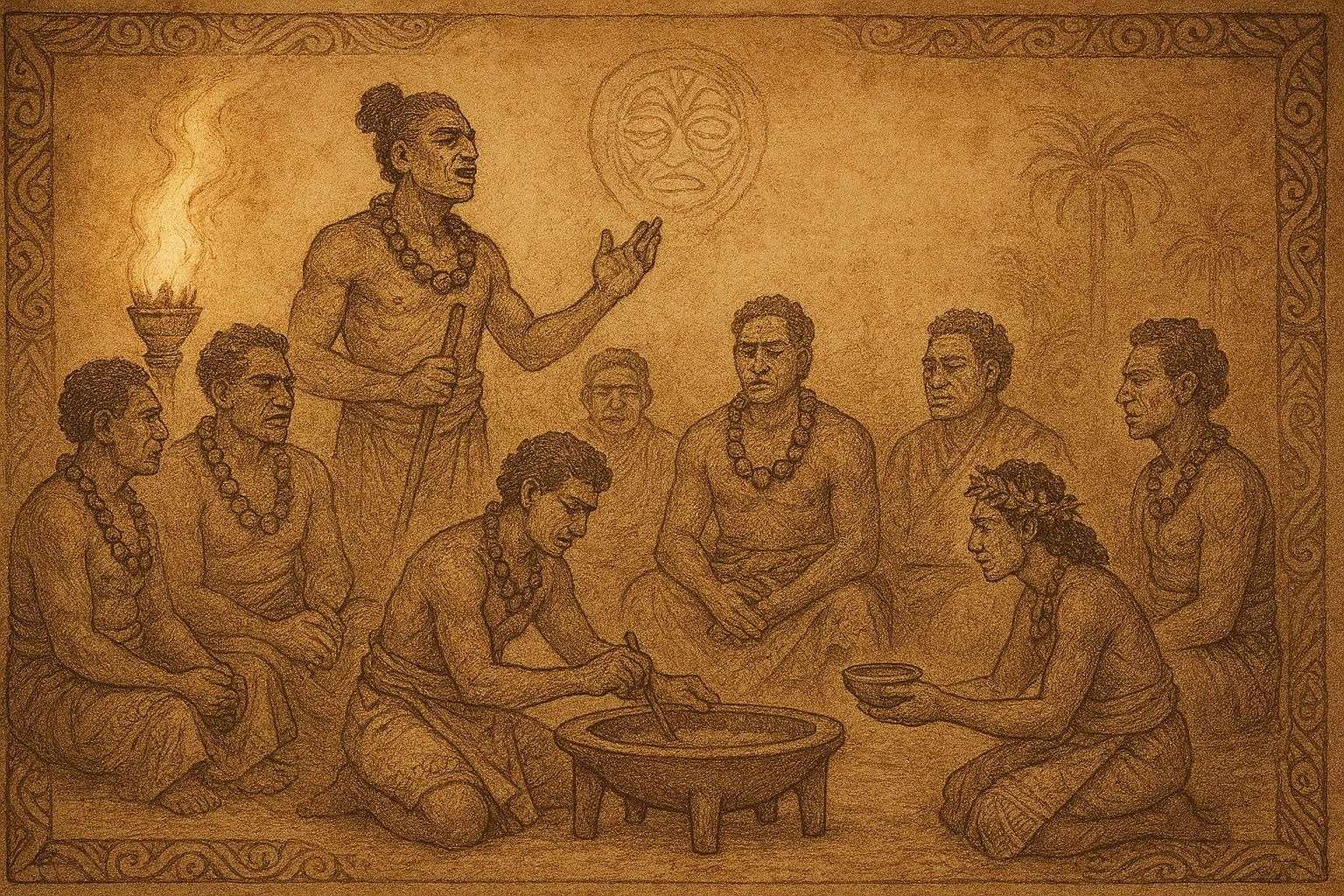
The ‘Ava ceremony is a carefully ordered ritual that expresses rank, relationship, and reverence. Every motion, seating, mixing, speaking, drinking, and serving, is performed according to custom. The ritual centers on the tanoa, a wide wooden bowl placed before the aumaga (the mixing attendants). Inside it, the powdered root of the ‘ava plant is kneaded and strained with water. The process looks simple, yet it is sacred; the attendants are trained in posture, speech, and rhythm, because each gesture reflects the sanctity of ancestry.
Participants sit according to status. Chiefs occupy the highest positions, while orators, attendants, and visitors take their culturally assigned places. Before the drink is prepared, the presiding orator chants the ceremonial introduction, acknowledging ancestors, the purpose of the gathering, and the chiefs being honored. These spoken lines are not casual words but formal speech acts that carry authority.
When the ‘ava is ready, the cupbearer, often a young man trained for precision, rises, holding the ‘ava cup with both hands. He listens for the orator’s command naming the first recipient. The highest-ranking chief drinks first. The cupbearer moves with slow, deliberate steps, never turning his back to the chief as he approaches. After the chief receives the drink, he lifts it, speaks a brief blessing or acknowledgment, and drinks in a single, smooth motion.
The cupbearer returns to the tanoa. More names are called. Each serving reflects social order, alliances, lineage, and respect. The ceremony continues until all have been honored.
Across Polynesia, variations appear. In Tonga, titles and language differ; in Fiji, the mixture may be stronger and served with a sharper taste; in Hawai‘i, the ritual once supported the kapu system of sacred law. Yet the meaning remains stable: to gather people in a sacred space shaped by order, rank, and ancestral presence.
Mythic Connection
Polynesian oral traditions describe sacred drinks as pathways between the living and the divine. In some myths, deities teach humans how to cultivate the ‘ava plant, granting it as a tool of peace and clarity. In others, the plant grows from the burial place of a devoted sibling or ancestor, symbolizing continuity between the worlds. Because of these origins, drinking ‘ava is not merely social; it is an act of honoring the past.
The ceremony’s structure reflects divine order. Just as the gods arranged the cosmos, sky, sea, islands, and spirits, the ‘ava ceremony arranges people according to lineage and duty. The cupbearer’s movement symbolizes the flow of blessings. The chiefs’ participation echoes their inherited authority from ancestral guardians. The formal speeches preserve memories of genealogies and ancient migrations.
Many Polynesian communities also see the drink as spiritually calming. It opens the mind for dialogue, reduces aggression, and prepares leaders for decisions. In this sense, the ‘ava ceremony is a ritual of harmony, channeling mana, the sacred force that moves through chiefs, ancestors, and the natural world.
Even today, during instalments of matai (chiefly) titles, weddings, peace negotiations, or village councils, the ceremony recreates these mythic principles. It reminds participants that community is strongest when anchored in genealogy, respect, and divine balance.
Author’s Note
This article explores how the ‘Ava / Kava ceremony preserves the ancient Polynesian worldview, weaving together ancestry, sacred order, and social harmony. The ritual’s structure mirrors cosmic balance, and its continuity from pre-contact times to the present reflects the resilience of Polynesian identity and the enduring reverence for ancestors.
Knowledge Check
1. What is the purpose of the ‘Ava / Kava ceremony?
Its purpose is to sanctify gatherings, honor chiefs, and establish sacred order within the community.
2. Why is the tanoa significant?
The tanoa holds the ‘ava mixture and represents the ceremonial center where sacred preparation occurs.
3. How is rank shown in the ceremony?
Rank appears in seating order, who drinks first, and how the cupbearer moves toward each participant.
4. What mythic themes shape the ritual?
Themes include ancestry, divine order, spiritual calm, and the flow of mana through chiefs and communities.
5. How does the ceremony reflect Polynesian cosmology?
It mirrors the cosmic structure established by gods—order, lineage, harmony, and sacred connection.
6. Why is spoken protocol important?
Formal speeches honor ancestors, define the ritual’s purpose, and preserve genealogical memory.