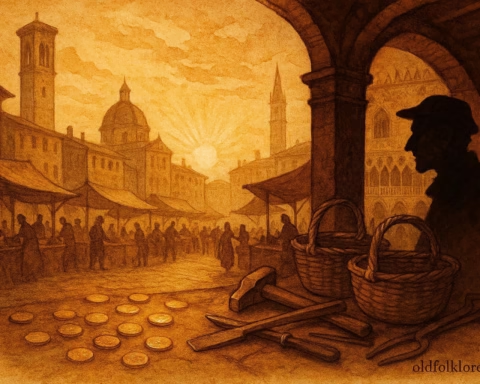
In the rolling hills and narrow valleys of medieval Italy, communities lived closely with the land and the rhythms of faith. The uncertainty of harvests, weather, and life itself led people to contemplate the limits of human control. Catholic beliefs, blended with folk superstition and pilgrimage culture, emphasized that while humans can act with diligence, ultimate outcomes rest in the hands of God. These communities developed proverbs that convey humility, acceptance of fate, and awareness of life’s unpredictability.
Pilgrimages, a common spiritual practice, provided both literal and symbolic journeys beyond the familiar hills of daily life. Travelers came to recognize that paths may twist unexpectedly, fortunes may change, and human strength alone cannot ensure success. Wisdom, therefore, was measured not by cleverness or ambition, but by the ability to navigate uncertainty with faith, patience, and moral rectitude.
The proverbs collected here offer reflections on destiny, divine providence, and human limitations. They remind us that while effort matters, humility before forces beyond our control, spiritual, natural, or social, is essential. Life is a journey beyond the visible hills; only those who respect its mysteries can find balance, hope, and guidance along the way.
Proverbs List (100 Proverbs with Meanings)
1–20: Fate and Divine Will
- “The road beyond the hill is not yours to choose, only to walk.”
We may act, but outcomes are in God’s hands. - “God writes straight lines on crooked hills.”
Divine providence orders life beyond apparent confusion. - “Man plans, heaven laughs, but faith endures.”
Human plans may fail, but trust sustains. - “The wind and the pilgrim guide the way more than the compass.”
External forces often shape life more than our calculations. - “Fortune hides behind the next hill.”
Life’s surprises cannot be predicted. - “Even the bravest knight cannot fight fate.”
Courage alone cannot override destiny. - “What God wills flows like a river; resist and you spill water on the sand.”
Acceptance of divine will prevents wasted effort. - “The longest road begins beyond the nearest hill.”
Life’s significant challenges often lie beyond immediate perception. - “Pray before the hill, walk after it, rest only at God’s call.”
Faith should guide action. - “A crooked path may lead to a holy shrine.”
Unexpected routes can lead to important outcomes. - “Do not curse the wind, it carries the messenger.”
Misfortune may bring necessary lessons. - “The road sees no favorites.”
Fate affects all, rich or poor. - “God’s shadow falls on both castle and cottage.”
Divine will is universal. - “The pilgrim’s staff supports, but God carries the soul.”
Preparation matters, but ultimate aid is divine. - “Even saints walked paths they did not know.”
Wisdom comes from experience and faith, not foresight. - “The hill tests the traveler, the valley teaches patience.”
Challenges develop character. - “Man may dig wells, but rain fills them.”
Effort is necessary, yet some outcomes are beyond control. - “Fate is a silent guide on unseen roads.”
Destiny often operates quietly, beyond awareness. - “Do not measure the hill by its shadow at noon.”
Appearances can be deceiving; true difficulty may differ. - “The road beyond is known only to God.”
Humility recognizes human limits.
21–40: Fortune and Uncertainty
- “Luck favors those who respect both sun and storm.”
Fortune rewards awareness and preparation. - “The gold you seek may be under the next stone.”
Opportunities lie just beyond the familiar. - “A twist in the path may save a life.”
Unexpected changes can have positive effects. - “Count not the steps, but the journey.”
Focus on progress rather than precise control. - “Fortune dances where patience sits.”
Timing and endurance attract opportunity. - “Even the best-laid maps cannot show hidden cliffs.”
Planning cannot anticipate all hazards. - “The humble heart attracts unseen aid.”
Faithful humility draws support beyond human effort. - “He who fears the hill never climbs it.”
Courage is necessary even in uncertain circumstances. - “Blessings arrive as quietly as shadows at dusk.”
Good fortune often comes unexpectedly. - “Even the richest purse cannot buy a safe journey.”
Wealth cannot guarantee outcomes. - “The storm shapes both tree and traveler.”
Adversity develops resilience. - “Fortune and misfortune are two sides of the same hill.”
Life’s highs and lows are interconnected. - “The road beyond the hill is narrow, but it leads to faith.”
Life’s challenges refine spiritual understanding. - “A twist of fate is often a hidden mercy.”
Unexpected events may serve higher purpose. - “Gold shines, but humility guides.”
Material success is secondary to wisdom. - “The river does not ask, yet it flows.”
Life progresses beyond human permission. - “Chance visits the bold, but favors the prepared.”
Opportunities reward readiness. - “The pilgrim’s eyes see only what the heart allows.”
Perception is shaped by attitude. - “Even shadows speak truths unseen.”
Hidden signs and subtle cues carry wisdom. - “Fortune’s road is best traveled with prayer and caution.”
Faith and prudence guide through uncertainty.
1–20: Human Limits and Resilience
- “The strongest hands cannot hold the sky.”
Humans have natural limitations. - “One cannot control the sun, only how one faces it.”
Focus on response rather than control. - “Even the fastest horse tires on the unseen road.”
Preparation cannot remove all difficulty. - “The pilgrim cannot carry both stone and bundle.”
Limitations require prioritization. - “Wisdom knows the measure of its strength.”
Self-awareness preserves safety and dignity. - “The road humbles those who walk it.”
Challenges teach humility. - “Man’s eyes cannot see the whole horizon.”
Our understanding is limited. - “The hill may hide both danger and blessing.”
Life’s path contains unknowns. - “Do what you can, and leave the rest to God.”
Effort is necessary, but ultimate outcomes are divine. - “The pilgrim learns patience from the mule.”
Even slow guidance teaches virtue. - “No fortress keeps fate outside.”
No one is exempt from destiny. - “The traveler grows stronger with each unseen obstacle.”
Challenges build resilience. - “Even the wisest monk cannot predict the wind.”
Certainty is beyond human reach. - “One cannot outrun the hill, only endure it.”
Acceptance of limits is necessary. - “Fate may stumble, but it will not be stopped.”
Life moves forward regardless. - “Man’s path is long, but his will is finite.”
Effort has limits. - “The road tests both faith and courage.”
Spiritual and moral strength are examined. - “Even the saint leans on the cross.”
Humility recognizes dependence. - “Do not measure life by miles, but by steps taken rightly.”
Ethical action matters more than speed or distance. - “God watches the road even when the traveler sleeps.”
Divine providence operates beyond human awareness.
1–20: Pilgrimage, Faith, and Moral Lessons
- “The road is harder without prayer.”
Faith sustains in difficulty. - “The heart guides where maps fail.”
Intuition matters when planning is limited. - “Pilgrims learn more from stones than from maps.”
Practical experience teaches wisdom. - “Every hill has its lesson.”
Challenges bring insight. - “Even the path through shadow leads to light.”
Adversity can result in growth. - “Do not scorn the crooked road; it may protect you from a cliff.”
Perceived obstacles can prevent harm. - “Blessings often ride the mule of hardship.”
Reward comes with effort and struggle. - “A prayer spoken before dawn carries far.”
Faithful action has lasting impact. - “The wise pilgrim asks the way, even if he knows it.”
Humility and inquiry prevent error. - “The stones remember every footstep.”
Actions leave lasting consequences. - “Even shortcuts may lead to peril.”
Haste can be dangerous. - “He who fears every hill sees no valley.”
Caution must be balanced with courage. - “The road humbles the proud and steadies the meek.”
Life teaches humility. - “A well-tied bundle is lighter on the back.”
Preparation eases challenges. - “He who trusts only in legs walks farther than he knows.”
Faith extends endurance. - “The path beyond the hill changes with each season.”
Life’s circumstances shift continuously. - “Pilgrimage teaches more than sermons.”
Experience often outweighs instruction. - “Even a saint must rest before the hill.”
Acknowledging limits is virtuous. - “God carries the traveler’s burden when he cannot.”
Divine help sustains human weakness. - “The road tests patience as much as faith.”
Endurance is a spiritual virtue.
1–20: Acceptance, Reflection, and Human Perspective
- “The hill is high, but the soul is higher.”
Spiritual strength surpasses physical difficulty. - “Do not curse the stone; it may mark the way.”
Challenges can provide guidance. - “The path beyond the hill is hidden until walked.”
Experience reveals truth. - “Even the moon sees the road differently each night.”
Perspective changes understanding. - “Man may sow, but the harvest belongs to God.”
Effort and divine will coexist. - “The traveler who hurries misses holy sights.”
Rushing can obscure important lessons. - “Fate will not bend to anger.”
Emotions do not alter destiny. - “Even a short road can teach patience.”
Small challenges still offer lessons. - “Walk humbly; the hill remembers the proud.”
Pride invites hardship. - “Blessed is he who sees mercy beyond the hill.”
Faith brings insight into fortune. - “The unseen valley holds both danger and delight.”
Life’s outcomes are uncertain. - “The wise accept both shadow and sunlight.”
Balance comes from acceptance. - “A careful step is safer than a bold leap.”
Caution preserves life and virtue. - “The road tests both body and soul.”
Challenges develop holistic strength. - “Even the longest night ends at the horizon.”
Patience brings relief. - “The hill changes, but the horizon remains.”
Some truths endure beyond shifting circumstances. - “He who trusts the road trusts God.”
Faith supports action. - “The traveler learns the value of small blessings.”
Attention to detail cultivates gratitude. - “Even the final hill teaches humility.”
Every challenge offers wisdom. - “Walk beyond the hill with faith; the path unfolds as it must.”
Acceptance allows life’s journey to continue gracefully.
Author’s Note
These proverbs reflect the medieval Italian understanding of human limits, divine providence, and life’s unpredictability. Pilgrimage culture, Catholic belief, and folk superstition all shaped a worldview in which humility, patience, and reflection were essential virtues. By acknowledging the limits of human control and respecting the unseen hand of God, one navigates the “road beyond the hill” with courage, faith, and hope. These sayings remind us that life is a journey in which preparation, diligence, and spiritual awareness guide us through uncertainty.
Knowledge Check
- Why is the hill a recurring metaphor in these proverbs?
It represents challenges, unpredictability, and the journey of life. - How do these sayings balance human effort with divine will?
They emphasize that while effort matters, ultimate outcomes are determined by God. - Why is patience repeatedly highlighted?
Because life’s path is uncertain, and rushing can lead to mistakes. - How do pilgrimage and travel serve as metaphors for life?
They illustrate that personal experience and journeying reveal lessons not learned from instruction alone. - What role does humility play according to these proverbs?
Humility ensures we respect natural, social, and divine limits. - Why are both fortune and misfortune presented as teachers?
All experiences, positive or negative, provide insight and growth.