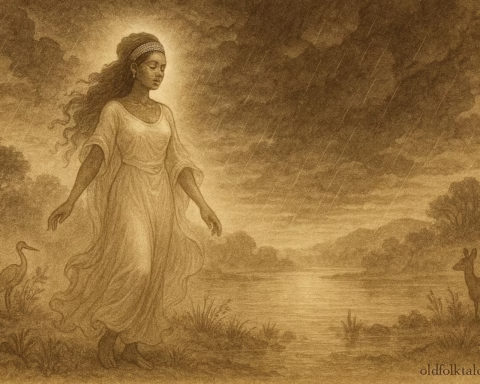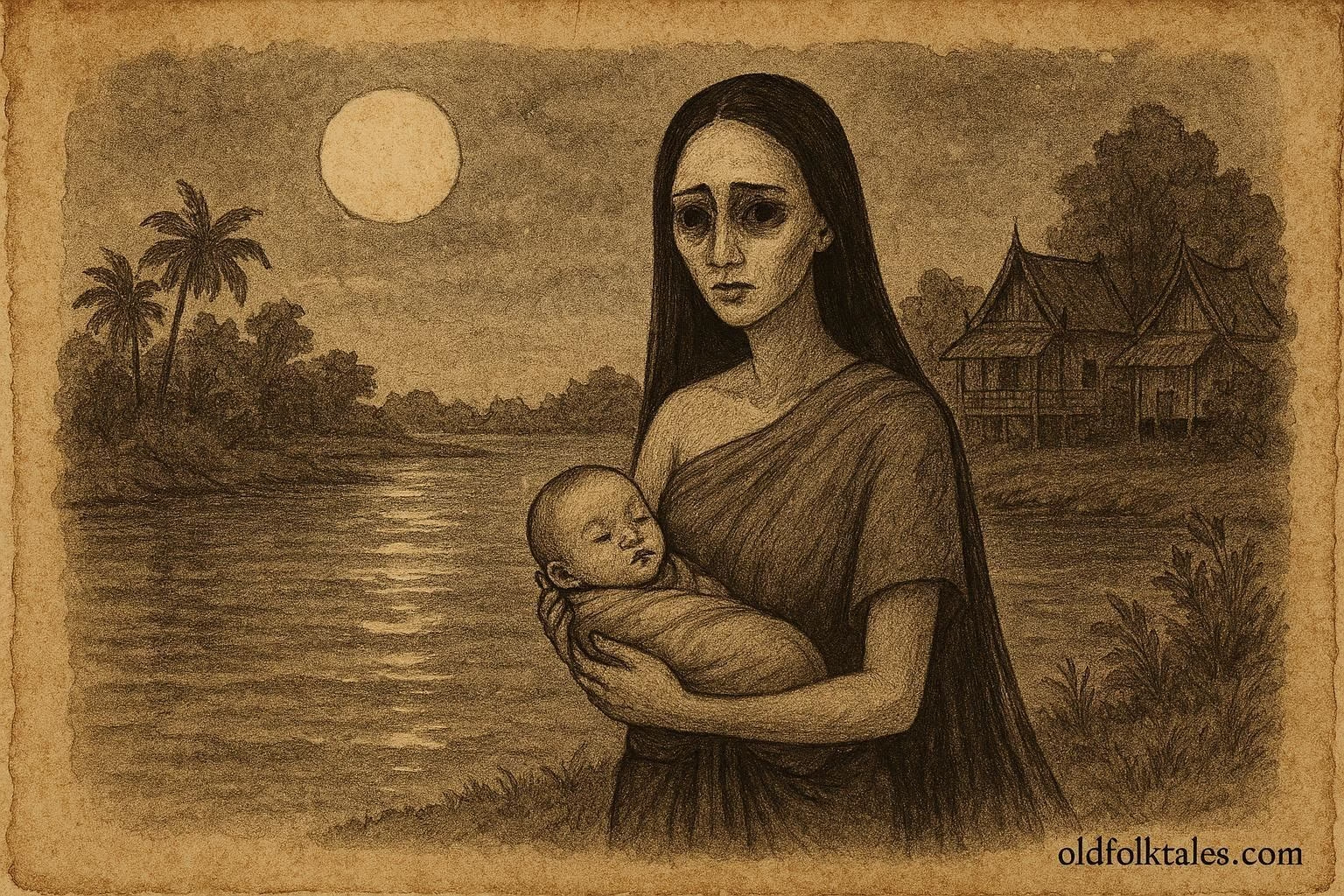
Along the quiet waters of Phra Khanong in old Siam there lived a couple whose love was spoken of across the nearby villages. Mae Nak was gentle and kind, known for her laughter that brightened the riverbank. Her husband Mak was a humble man whose devotion to her never faltered. They lived in a wooden home raised above the water on stilts, and each evening they sat outside to watch the river drift by in soft ripples of gold.
When Mak was called to serve in the distant war, Mae Nak was already expecting their first child. He promised to return before the baby arrived and kissed her forehead with a tenderness that made her smile even as her heart trembled. Days turned into months and the seasons shifted, carrying with them the scent of monsoon winds and the songs of temple bells. Mae Nak waited with patience, speaking to the child within her as if Mak were listening across the distance.
When the birthing pains came, the midwives whispered with worry. The child’s arrival was difficult and before the sun could rise again, tragedy struck. Both Mae Nak and her newborn child slipped from life and entered the stillness of death. Yet the river did not fall silent, and the air did not grow heavy. Instead, a strange calm filled the house as if the world itself refused to accept their passing.
Discover the ceremonies and sacred festivals that honored gods and balanced nature’s powers
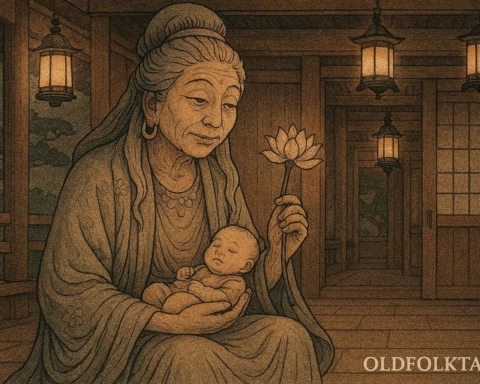
Days later, Mak finally returned. He stepped onto the familiar path toward his home and heard the tender sound of Mae Nak’s voice calling his name. She stood at the doorway with the baby in her arms, smiling as if nothing had changed. Overcome with joy, Mak embraced her, never thinking to question the extraordinary moment.
The villagers, however, saw what Mak could not. They had attended Mae Nak’s funeral. They had laid flowers at her burial place. They whispered warnings to him that the woman in his house was not among the living. But every time one tried to tell him, Mae Nak would appear behind the speaker, her face soft yet filled with chilling authority. Her presence forced silence.
One evening, Mak visited a friend who refused to be frightened. The friend insisted that Mak’s wife was no longer alive and begged him to stay the night. Mak, loyal in his heart, refused. As he walked home through the moonlit path, he heard the soft voice of Mae Nak calling to him. She glided toward him with loving eyes and Mak followed willingly, still unable to see the truth that surrounded her.
Some days later, the veil of illusion broke. Mak saw Mae Nak reach for something on the far side of the house. Her arm stretched in a way no living body could move, bending impossibly to retrieve the fallen object. Mak felt a stone drop through his heart. The truth that he had resisted suddenly surged before him with frightening clarity.
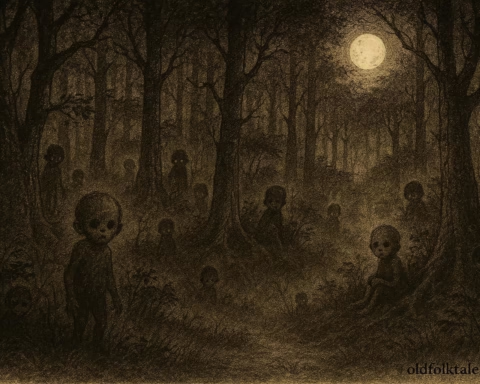
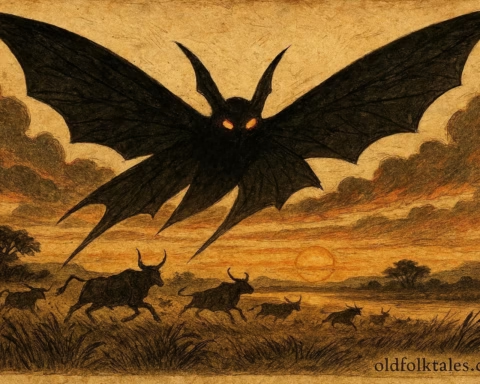
Mak fled from the house in terror and sorrow. Mae Nak cried out after him, her voice filled not with anger but with the deep pain of abandonment. Her sorrow transformed into haunting. Villagers began to hear her wails echoing across the canals. Some claimed she glided over the water at night, searching for Mak with her child held close. Cows refused to drink near the river. Children hid indoors before sunset. Her grief had become a presence that rippled through the entire community.
The monks of the area realized that the suffering had grown too great for any mortal to soothe. A highly respected monk known for his compassionate wisdom came to Phra Khanong. He did not come with weapons or talismans but with prayers and calm understanding. When Mae Nak appeared in her spectral form, her wails rising like the wind through bamboo leaves, the monk bowed with genuine respect.
He spoke to her gently, recognizing her love and her pain. He reminded her that clinging to the living world would only deepen her sorrow. He told her that her devotion was powerful, but the cycle of life and death must continue for every soul. Slowly, Mae Nak’s cries softened. The air around her grew still as she listened. Her form wavered like river mist. The monk promised that she would be cared for in the spiritual world and would never be forgotten among the living.
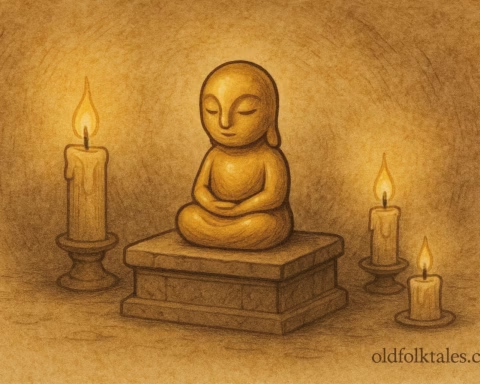
Mae Nak finally released her hold on the world she loved. The village felt the heaviness lift. The river flowed peacefully again. Mak mourned her deeply but found comfort in the knowledge that she had moved on. Over time, a shrine was built in her memory and people continued to bring offerings, honoring the spirit whose love had crossed the boundary between life and death.
Explore the shadows of world mythology, where demons test the soul and spirits watch over mankind
Author’s Note
This tale of Mae Nak reminds us that love has a power that can bridge even the great divide between life and the unseen world. Her story is not one of malice but of devotion that clung too tightly, teaching us that release is also a form of love. Through her journey, we see the value of compassionate guidance and the importance of allowing each soul to move toward peace.
Knowledge Check
1. Who were the two main individuals in the story?
Mak and his wife Mae Nak.
2. What happened to Mae Nak during childbirth?
She and her newborn child passed away.
3. Why did Mak not realize Mae Nak was a spirit?
Her love and presence appeared so real that he could not see the truth.
4. What event caused Mak to finally recognize her ghostly nature?
He saw her arm stretch in an unnatural way.
5. Who helped Mae Nak find peace?
A compassionate monk who guided her with prayer and wisdom.
6. Why is Mae Nak remembered today?
Because her devotion and sorrow became a lasting symbol of love that transcended death.
Source
Adapted from Thai ghost traditions in Siamese Ghosts and Popular Tales by James Low 1912, London: Trübner and Co.