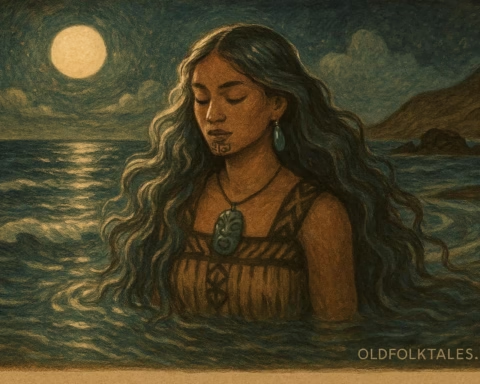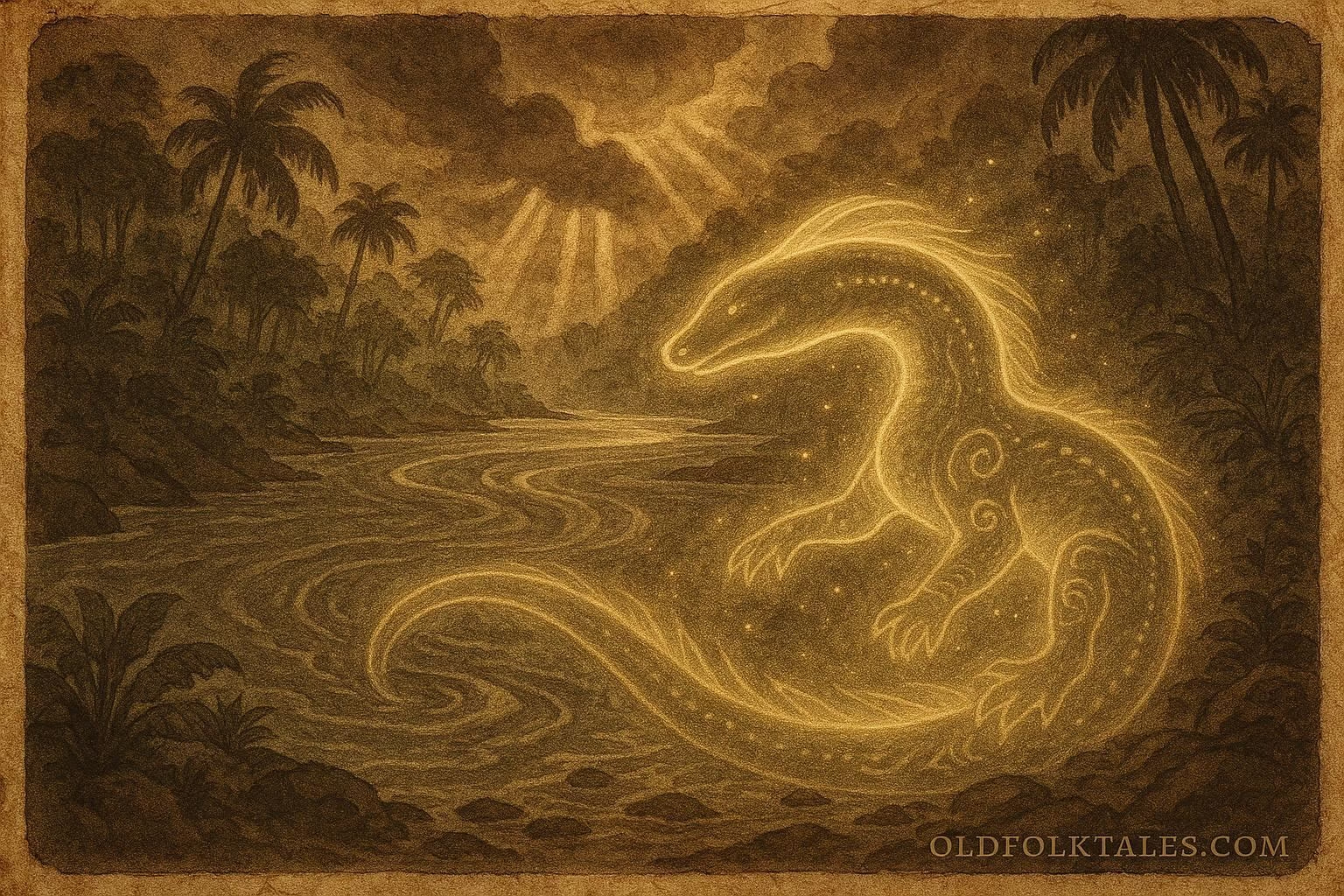
Waka is a multifaceted deity in Hawaiian mythology whose powers, appearance, and behavior are deeply entwined with Polynesian conceptions of guardianship, transformation, and the intersection of human and natural worlds. She is primarily known as a shape-shifter, alternating between forms of a lizard, an eel, and a human woman. Each form carries symbolic weight. Her lizard form evokes vigilance and terrestrial cunning, a creature capable of silently observing and protecting sacred spaces. The eel form, fluid and slippery, represents adaptability, stealth, and her deep connection with water, a vital and sacred element in Hawaiian cosmology. When she emerges as a woman, it is often to teach, protect, or intervene in human affairs.
A central narrative illustrating her powers comes from the Haʻinakolo moʻolelo, in which Waka transforms into a giant eel to block the malevolent figure Lono-kai. Her intervention is not merely defensive; it is also a test of human curiosity, discipline, and respect for sacred spaces. When Lono-kai captures the eel and cuts it open, Waka reveals her true identity as a beautiful woman, demonstrating her mastery over transformation, her connection to divine law, and the interplay between concealment and revelation.
Waka’s forms are not arbitrary: the lizard emphasizes her vigilance on land and protection of domestic and sacred sites, while the eel represents hidden power and her ability to influence waterways and marine life. Her human form underscores the integration of the supernatural with social and ethical life, particularly in her role as protector and teacher of women and chiefs. Across oral histories and genealogical accounts, she remains consistently associated with the safeguarding of important spaces, the enforcement of cultural norms, and the transmission of spiritual knowledge.
Powers and Abilities
- Shape-shifting mastery: Waka seamlessly transitions between lizard, eel, and human forms, demonstrating control over her own appearance and the environment.
- Environmental guardianship: In eel form, she manipulates waterways, blocks intruders, and defends sacred or dangerous locales.
- Divine revelation: Her emergence from eel to woman symbolizes the unveiling of hidden truths and spiritual insight.
- Protector of humans: She safeguards women, chiefs, and sacred lands, intervening in human affairs when necessary.
- Moral enforcer: Waka punishes transgressions, tests human behavior, and encourages respect for sacred customs.
- Teacher of cultural knowledge: By guiding or rescuing humans, she serves as a conduit for ethical, spiritual, and social education.
Waka is a complex figure, neither wholly benevolent nor wholly punitive. Her behavior is governed by adherence to natural and spiritual laws, demonstrating that divine beings operate according to principles rather than personal whim. In this way, she embodies Hawaiian understandings of morality, balance, and respect for sacred order.
Behavior and Myths
Narratives of Waka often depict her as reactive and responsive rather than aggressive. She appears at critical moments: to stop Lono-kai, to reveal lessons to humans, or to protect sacred resources. In some genealogical accounts, her actions also symbolize the hidden potential within nature: a seemingly ordinary eel can contain divine wisdom and power.
Stories emphasize Waka’s duality: she is both a guardian and a tester. Humans who encounter her in eel or lizard form are often unaware of her identity, and only those who act appropriately, with respect, or display cleverness or humility benefit from her intervention. In this way, her mythology serves as both a cautionary tale and a framework for moral instruction, reflecting the close intertwining of natural observation, spiritual understanding, and ethical behavior in Hawaiian culture.
Additionally, her influence extends beyond individual encounters. She is sometimes associated with controlling or calming rivers, ensuring that sacred freshwater sources are respected, and that ecological balance is maintained. This ties her mythic role to a broader Polynesian cosmology, in which supernatural beings govern not just morality, but also the rhythms of the environment.
Cultural Significance
Waka’s narrative is rich in symbolism and serves multiple cultural functions:
- Guardianship of sacred and social order: Waka enforces boundaries, between human and divine, land and sea, sacred and profane, reflecting Polynesian values of respect and restraint.
- Transformation and resilience: Her shape-shifting illustrates adaptability, the hidden complexity of nature, and the necessity of flexibility in navigating spiritual and human challenges.
- Connection with the environment: Through her eel form, Waka symbolizes the sacredness of water and the inseparability of humans and natural resources.
- Transmission of knowledge: She embodies a living memory of customs, ethical conduct, and protective wisdom, especially regarding women and social hierarchies.
- Moral and ethical instruction: Encounters with Waka teach respect, humility, and adherence to ritual or social rules.
- Symbol of latent power: The narrative of her emergence from the eel illustrates that extraordinary potential often lies hidden, a concept resonant in ecological, social, and spiritual dimensions.
Waka thus functions as a bridge between human society and natural-spiritual order, representing the interdependence of ethical behavior, environmental stewardship, and spiritual insight.
Explore the mysterious creatures of legend, from guardians of the sacred to bringers of chaos
Author’s Note
Waka is a quintessential Polynesian guardian archetype. Her narrative demonstrates how shape-shifting deities mediate human behavior and environmental ethics simultaneously. Modern retellings often simplify her story, focusing on the dramatic eel-to-woman transformation, but the full tradition encompasses ecological, ethical, and social instruction. Scholars should approach these myths with sensitivity to place-specific variations and respect for Hawaiian oral traditions. Archival sources, including the Bishop Museum’s moʻolelo records, preserve nuanced versions that foreground her cultural role beyond mere folklore.
Knowledge Check
- Q: What forms can Waka assume?
A: Lizard, eel, and human woman. - Q: What role does Waka play in the Haʻinakolo narrative?
A: She blocks Lono-kai and protects sacred spaces, ultimately revealing her divine identity. - Q: Which groups does Waka primarily protect?
A: Women, chiefs, and sacred domains. - Q: What does her transformation from eel to woman symbolize?
A: Hidden wisdom, spiritual revelation, and divine power within nature. - Q: How does Waka embody Polynesian cultural values?
A: Through guardianship, moral instruction, ecological respect, and the reinforcement of sacred boundaries. - Q: Where can scholars find primary sources on Waka?
A: Craig’s Dictionary of Polynesian Mythology, Bishop Museum moʻolelo archives, genealogical and chant collections.
Source: Craig, Robert D., Dictionary of Polynesian Mythology; Bishop Museum moʻolelo archives; Wikipedia summaries
Origin: Hawaiʻi / Polynesia; traditional oral myths and moʻolelo (stories and genealogies) documented in 19th–20th-century scholarship