In the sun-flooded age when mortals still felt the breath of the gods upon their backs, Croton stood as a citadel of proud warriors and honey-colored fields. And from that city rose Milo, the child whom poets later whispered was touched by Herakles himself. For on the night Milo was born, a thunderless tremor rolled across the southern sky, and the hearth-fires of Croton flared blue. The priestesses of Hera declared it a sign: A champion is come, strength-favored, half sculpted by mortal hands and half by divine design.
As a youth, Milo bore that omen as both laurel and weight. His limbs thickened like the trunks of young oaks, and he could hoist a full-grown calf across his shoulders as though lifting a mewling infant. But he was gentle, curious-eyed, warm to laughter, loyal to his companions. Still, strength breeds expectation, and expectation breeds silence, and Milo learned early that the mighty are rarely asked how they feel beneath their glory.
When he reached manhood, the elders sent him to train under the disciplined masters of Croton’s palaestra. They honed his power into form, breath, and stance until he moved like a thunderbolt shaped by human hands. And as his reputation grew, so too did the challenges. Rival poleis sent their fiercest wrestlers. Foreigners carried tales of monstrous beasts ravaging the countryside and begged for the lion-blooded hero. Priests demanded that he honor his supposed divine parentage. Poets followed him like shadows, eager for his deeds.
Yet Milo, though crowned with six Olympian victories and countless triumphs besides, felt a quiet ache beneath the applause: Am I merely strength? Or am I a man seeking meaning within the roar of destiny?
His greatest test arrived during a season of strange omens. Herds fled from the forests. Hunters vanished. Villagers whispered of a horned beast, half bull, half wolf, haunting the hills of Sybaris. Some called it the Blood-Bull of Typhon, birthed from the remnants of the storm titan’s rage. Others claimed it was a divine judgment upon Croton’s pride. Whatever its nature, the monster left only ruin in its wake.
Milo, carrying no more than a lion-skin cloak and the sacred club carved in imitation of Herakles’, ascended the haunted hills. Night swarmed around him like unvoiced dread. The moon bled red at its edges.
He found the monster at the edge of a ravine, its breath like steam venting from the forge of Hephaestus. Eyes red as furnace coals. Horns curled like scythes. Muscles bunching beneath hide thick as shipwood. And in its gaze Milo saw something terrible: not hatred, but hunger, hunger for dominion, for destruction, for a world ruled by the wild chaos of beastly power.
The hero roared his challenge.
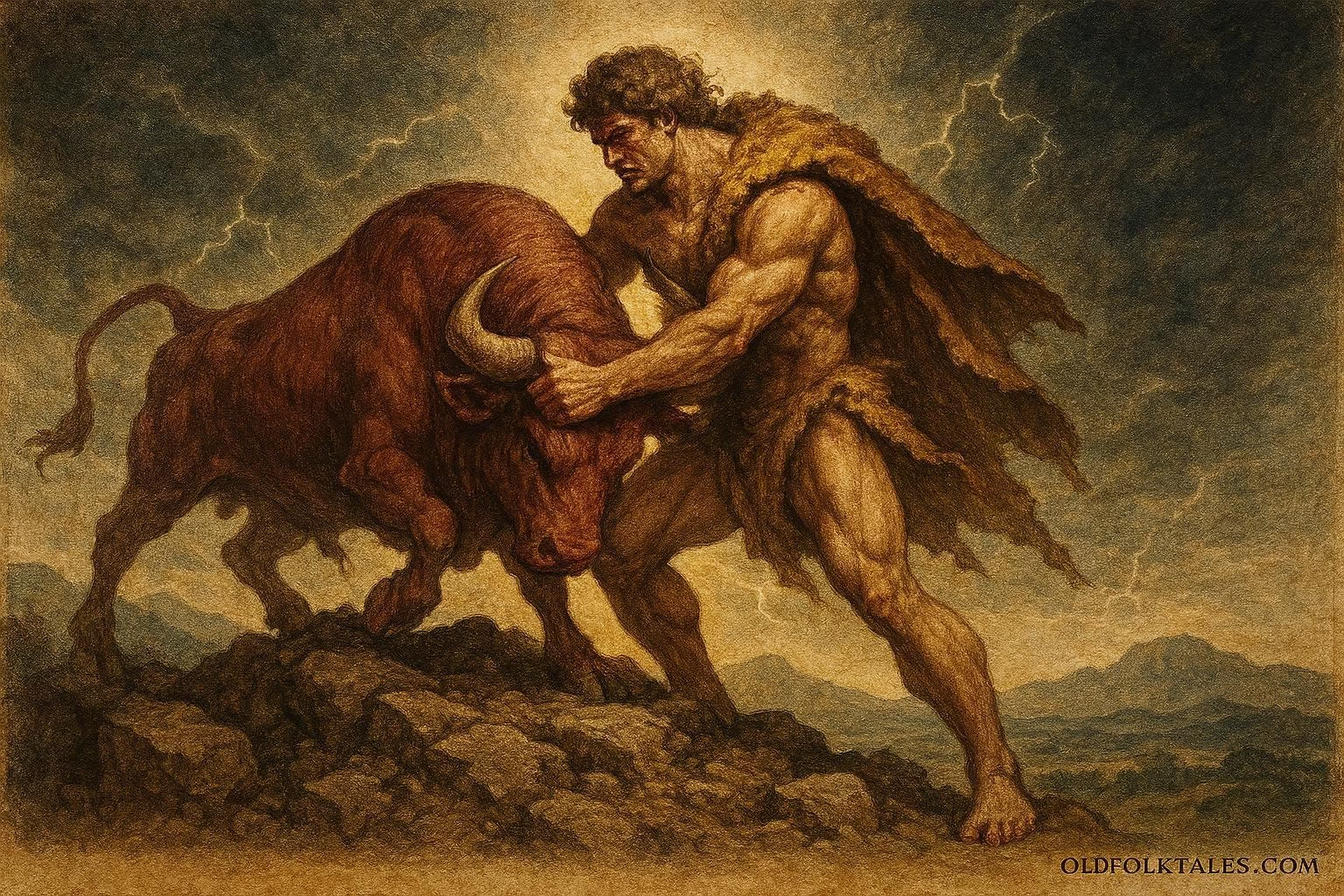
Their battle shook the mountain. Horn crashed against club, hoof against earth. The Blood-Bull’s charge sent boulders flying; Milo’s grip dug trenches into the soil. The sky crackled with unseen lightning as though Zeus himself watched. One misstep could mean death; one weakening of resolve could doom Croton.
At last Milo seized the bull by its horns, straining with every fiber of mortal and divine heritage within him. The beast thrashed, hooves tearing open the ground, breath scorching his skin. Milo felt his strength wavering, the spiraling agony of muscles pushed beyond even their legendary limits.
And here, in that trembling brink between triumph and death, the moral struggle surfaced: Was he fighting for glory, for the songs of poets, or for the fragile lives depending on him? Was he the favored son of a god, or simply a man with a duty to protect?
His answer surged through him like dawn.
“I am Milo of Croton,” he whispered through clenched teeth. “Born of earth and effort. Let strength serve the living, not the legend.”
With a cry that split the night, he heaved the creature sideways, using its own momentum to topple it. The monster crashed to the ground, stunned. Milo struck once, just once, and the hills fell silent. The Blood-Bull’s breath faded to stillness.
But victory carved its price. Milo’s arms trembled, and his chest burned with exhaustion deeper than any collapse. He understood then that divine favor is no shield, only a heavier mantle.
Yet when he returned to Croton, carrying the broken horn of the beast, the people did not greet him with worship but with gratitude. Children brought garlands of olive. Elders placed their hands upon his shoulders. And Milo realized that his true legacy lay not in feats etched onto stone but in lives uplifted by courage.
Years later, when he vanished into the forests he once defended, some say devoured by wolves, others say taken by the gods, the people of Croton did not mourn a fallen idol. They honored a guardian who bore strength with humility.
And so Milo became legend: not merely a hero of sinew, but a symbol of power tempered by purpose.
AUTHOR’S NOTE
Milo of Croton occupies a unique place among Greco-Roman hero traditions, a mortal whose extraordinary strength invited mythic embellishment. In reimagining him as a demi-god-like figure, this tale honors both historical athletics and the timeless human question of what strength is for. His legacy endures as a reminder: might is most divine when it protects, not when it dominates.
KNOWLEDGE CHECK
-
What divine sign accompanied Milo’s birth?
-
What inner struggle does Milo face despite his physical power?
-
What is the Blood-Bull said to be the offspring of?
-
How does Milo ultimately defeat the monster?
-
What realization defines Milo’s understanding of his own strength?
-
How is Milo remembered after his disappearance?
CULTURAL ORIGIN: Greco-Roman heroic legend; Southern Italy (Magna Graecia), 6th–2nd century traditions.
SOURCE: Inspired by later biographical traditions of Milo of Croton, especially references in Pausanias, Description of Greece (2nd century CE), and mythologizing trends in post-classical retellings.