In the old days, when animals walked and talked like men and the boundaries between the natural and supernatural worlds were thinner than spider silk, there lived a forest king named Etim. He ruled over a prosperous kingdom where the people knew abundance and the land yielded generously. But King Etim’s greatest treasure was not gold or jewels or fine cloth. It was a sacred drum, passed down through generations of rulers, a drum that held within it power beyond ordinary understanding.
The kingdom lay in the dense forests of what is now southeastern Nigeria, in the land of the Efik and Ibibio people. The villages clustered together, surrounded by towering trees whose canopies filtered the tropical sun into patterns of light and shadow on the forest floor. The air was thick with humidity and alive with the sounds of countless creatures: the calls of birds, the rustle of leaves, and the distant rhythm of drums that carried messages from village to village.
Click to read all Myths & Legends – timeless stories of creation, fate, and the divine across every culture and continent
King Etim’s palace stood at the center of the largest village, a structure built of strong timber and thatched with palm fronds, its walls decorated with intricate carvings that told the history of his lineage. Inside, carefully guarded and treated with utmost reverence, sat the magic drum.
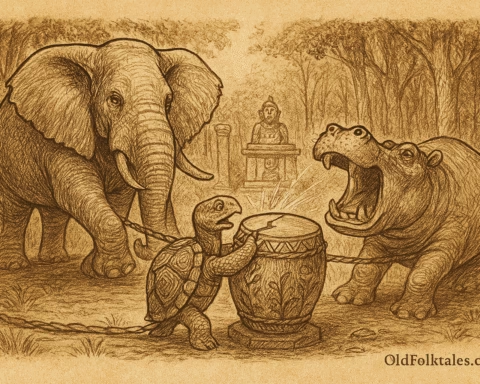
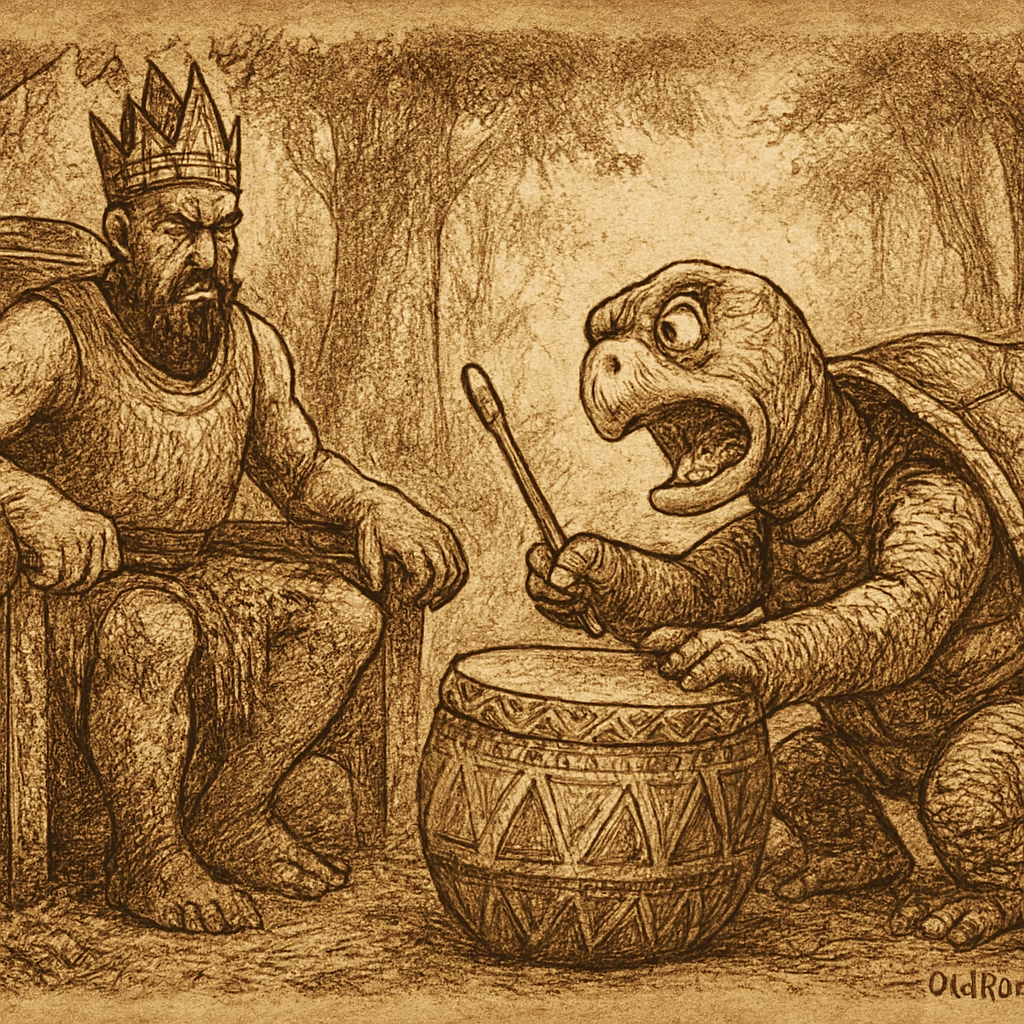
This was no ordinary instrument. The drum had been crafted in ancient times by powerful medicine men who had imbued it with supernatural properties. When beaten correctly, with the proper rhythm and respect, the drum would provide endless food and drink for everyone present. Tables would appear laden with yams and plantains, fish and meat, palm wine and fresh water. No one would go hungry when the sacred drum was played with wisdom and proper intention.
But the drum held a darker power as well. When struck the wrong way, whether through carelessness, disrespect, or improper intention, the drum would not produce feasts but fighters. Warriors would leap forth from the drum itself, armed and angry, and they would beat the offender mercilessly until the lesson of respect had been thoroughly taught.
King Etim understood both aspects of the drum’s power. He used it wisely and sparingly, only for important festivals and ceremonies when the entire community needed to be fed. He treated it with the reverence it demanded, and he kept it closely guarded, for he knew that such power in the wrong hands could bring disaster.
Among the animals of the forest lived Tortoise, known to the Efik people as Ikot Nko. Tortoise was famous throughout the region for his cleverness, but also for his greed and his willingness to use deception to get what he wanted. His shell, in those days, was still smooth and unblemished, for the consequences of his schemes had not yet caught up with him.
When Tortoise heard stories of the king’s magic drum, his mind immediately began spinning with possibilities. Imagine, he thought, possessing such an instrument! He could host magnificent feasts, gain prestige and honor among all the animals, and never have to work for his food again. The drum represented everything Tortoise desired: wealth, status, and an easy life built on the power of a stolen treasure.
But Tortoise was cunning enough to know he could not simply walk into the palace and demand the drum. He needed a plan, a way to get close to it and learn its secrets before stealing it. So he put on his most humble demeanor and requested an audience with King Etim.
When admitted to the palace, Tortoise approached the king with exaggerated shows of respect, bowing low and speaking in honeyed tones. “Great king,” he said, his voice dripping with false admiration, “I have traveled far to see the legendary drum of which all the forest speaks. But I come not to ask for its powers, only to admire its beautiful craftsmanship. As one who appreciates fine artistry, I would be honored simply to look upon such a masterpiece.”
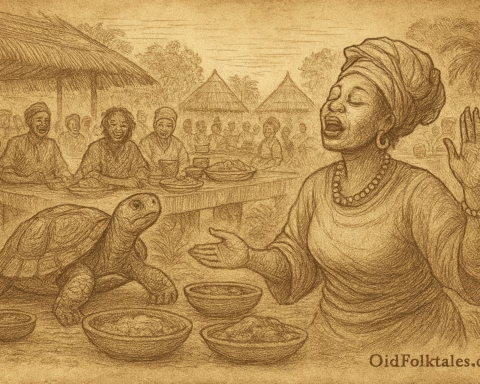
King Etim, who prided himself on his possessions and enjoyed showing them to respectful visitors, agreed to demonstrate the drum. He had the sacred instrument brought forth and, with the proper ceremony and correct rhythm, he struck its surface. Immediately, tables appeared laden with food and drink, more than enough to feed everyone present. Tortoise ate and drank, all the while praising the drum’s beauty and the king’s generosity, but secretly his mind was working, observing, planning.
As the king demonstrated, Tortoise watched carefully, noting the rhythm used to summon the feast, memorizing the pattern of strikes and the way the king held the drumsticks. But he also noticed something the king did not explicitly point out: there seemed to be a warning rhythm, a pattern to avoid, though the king did not strike it during his demonstration.
Over the following days, Tortoise became a frequent visitor to the palace, always bringing small gifts, always offering compliments, slowly building the king’s trust while simultaneously plotting his theft. He studied the movements of the palace guards and servants, learning their routines and schedules.
One afternoon, when he knew the moment was right, Tortoise put his plan into action. He spread rumors among the servants that a magnificent event was happening in a nearby village, something not to be missed. He suggested that surely the king would not mind if they stepped away briefly to witness this once in a lifetime occurrence. The servants, curious and trusting Tortoise’s seemingly friendly advice, left their posts to investigate.
With the drum temporarily unguarded, Tortoise seized his opportunity. He crept into the chamber where the sacred drum was kept, his heart pounding with a mixture of excitement and fear. The drum sat on its ceremonial stand, seeming to pulse with latent power even in silence. Without hesitation, driven by greed that overwhelmed any sense of caution or respect, Tortoise grabbed the drum and ran.
He scurried through the forest as fast as his legs could carry him, the drum clutched against his shell. Behind him, he could hear the alarm being raised in the palace, shouts of anger and disbelief that someone had dared to steal the king’s most precious possession. But Tortoise was already too far ahead, disappearing into the dense undergrowth where larger pursuers could not easily follow.
When he reached his home, Tortoise set up the drum with great ceremony, calling together all the animals to witness his triumph. “Behold!” he announced, his voice swelling with pride and arrogance. “I now control the greatest feast maker in the world! No longer must we rely on the king’s generosity. I, Tortoise, will provide for all of you!”
He struck the drum with the rhythm he had memorized, and to his delight, the magic worked. Food and drink appeared in abundance, just as it had in the king’s palace. The gathered animals ate and celebrated, and Tortoise basked in their admiration and gratitude, his chest swelling with self satisfaction.
But greed, once fed, only grows hungrier. One feast was not enough for Tortoise. He wanted to demonstrate his power again and again, to prove repeatedly that he was now the master of abundance, the controller of plenty. Day after day, he beat the drum, summoning feast after feast, each time growing more confident and less careful.
His technique became sloppy. His respect for the drum’s power diminished. He began to treat the sacred instrument as his personal toy, something to be used whenever he wished to show off or satisfy his appetite. He ignored the warnings implicit in the drum’s dual nature, forgot the caution that should accompany the handling of any powerful object.
Then, inevitably, it happened. In his carelessness and arrogance, drunk on his own sense of power, Tortoise struck the drum improperly. The rhythm was wrong, the intention corrupted by greed and disrespect, the handling careless where it should have been reverent.
The drum’s response was immediate and terrible. Instead of tables laden with food, warriors appeared. They leaped from the drum itself, fierce fighters armed with clubs and staffs, their faces twisted with anger at the violation of the sacred instrument. Before Tortoise could even cry out, before he could run or beg for mercy, the warriors were upon him.
They beat him mercilessly, their clubs striking his shell again and again. Each blow cracked the smooth surface that Tortoise had been so proud of, creating fissures and fractures that spread across his back like lightning across a dark sky. The pain was excruciating, but more than the physical agony was the shame and terror of understanding that he had brought this upon himself through his own greed and disrespect.
The beating seemed to last forever, but finally, when the warriors were satisfied that the lesson had been thoroughly taught, they disappeared back into the drum, leaving Tortoise broken and bleeding, his once smooth shell now permanently scarred with the pattern of cracks that would mark him forever as one who had misused sacred power.
Humbled, in terrible pain, and filled with genuine remorse born of suffering, Tortoise gathered what remained of his strength and carried the drum back to King Etim’s palace. He could barely walk, and every step sent waves of pain through his damaged shell, but he knew he had no choice. The drum had to be returned, and he had to face the consequences of his theft.
King Etim looked down at the broken, scarred Tortoise with a mixture of anger and pity. The drum was returned, but the trust was destroyed, and the smooth shell that had once marked Tortoise as clever was now permanently marked with the consequences of his greed.
“Let this be a lesson,” the king decreed, his voice carrying the weight of judgment and wisdom. “You will bear those scars for the rest of your life, and all who see you will know that you are one who stole sacred things and used them without respect. Never again will you be trusted with anything of power or importance. Your greed has marked you permanently, and that mark will serve as a warning to others who might be tempted to follow your path.”
And so it came to be. From that day forward, all tortoises bore the cracked and patterned shells that marked them as descendants of the one who stole the king’s magic drum. The smooth shell was gone forever, replaced by a permanent reminder that greed, theft, and disrespect for sacred things bring consequences that cannot be undone. Children who saw tortoises would ask about their strange shells, and their parents would tell them the story of Ikot Nko, the clever but greedy tortoise who learned too late that some prices are too high to pay and some lessons are written permanently on the body for all to see.
The Moral Lesson
The tale of the Tortoise and the King’s Magic Drum teaches us profound lessons about greed, respect, and the consequences of our actions. Tortoise’s downfall came not from lack of intelligence but from allowing greed to override wisdom and caution. His cleverness, which could have been used for good, was corrupted by desire for unearned wealth and status. The story shows us that sacred things, whether objects, traditions, or relationships, demand respect and proper handling.
Knowledge Check
Q1: What was the magic drum and what were its two powers?
A: The magic drum was a sacred instrument possessed by King Etim, crafted by ancient medicine men and passed down through generations of rulers. When beaten correctly with proper rhythm and respect, it provided endless food and drink for everyone present, summoning tables laden with yams, plantains, fish, meat, palm wine, and fresh water. However, when struck the wrong way, whether through carelessness, disrespect, or improper intention, the drum produced fierce warriors who would leap forth and beat the offender mercilessly.
Q2: How did Tortoise gain access to the king’s drum?
A: Tortoise used cunning deception to steal the drum. He first visited the king pretending to admire the drum’s beautiful craftsmanship, gaining the king’s trust through false humility and compliments. He carefully observed how the drum worked during demonstrations. Then he spread rumors among the palace servants about a magnificent event in a nearby village, luring them away from their posts. When the drum was left unguarded, Tortoise seized it and ran home through the forest.
Q3: What motivated Tortoise to steal the sacred drum?
A: Tortoise was driven by greed for honor, wealth, and an easy life. He desired to host magnificent feasts without working, gain prestige and status among all the animals, and control what he saw as the greatest feast maker in the world. His ambition was not to serve others but to elevate himself and satisfy his own appetites while basking in the admiration of others. His greed was so strong it overwhelmed any sense of caution or respect for the drum’s sacred nature.
Q4: Why did the drum eventually turn against Tortoise?
A: After stealing the drum, Tortoise initially used it successfully to create feasts. However, his greed made him beat the drum again and again to repeatedly demonstrate his power. His technique became sloppy, his respect for the drum’s sacred nature diminished, and he began treating it as his personal toy rather than a powerful sacred object. Eventually, in his carelessness and arrogance, he struck the drum improperly with the wrong rhythm and corrupted intention, triggering its punishment mechanism.
Q5: What permanent consequence did Tortoise suffer and what does it symbolize?
A: The warriors who emerged from the drum beat Tortoise so severely that his once smooth shell became permanently cracked and scarred with the pattern that all tortoises bear today. This permanent marking symbolizes how the consequences of greed, theft, and disrespect cannot be undone. The scars serve as a visible, lasting reminder of his transgression, marking him forever as one who misused sacred power and ensuring that all who see him know he cannot be trusted with important or sacred things.
Q6: What is the cultural significance of this story in Efik and Ibibio tradition?
A: This folktale serves multiple purposes in Efik and Ibibio culture. It explains the physical appearance of the tortoise (why its shell is cracked and patterned), teaches children about the consequences of greed and theft, emphasizes the importance of respecting sacred objects and traditions, and warns against the misuse of power. The story reinforces cultural values of honesty, proper respect for authority and sacred things, and the understanding that cleverness without wisdom and integrity leads to downfall. It also demonstrates that some consequences are permanent and visible, serving as warnings to others.
Source: Adapted from Elphinstone Dayrell’s Folk Stories from Southern Nigeria (1910), specifically the story “The King’s Magic Drum,” collected from Efik and Ibibio narrators in Calabar and Itu, southeastern Nigeria.
Cultural Origin: Efik and Ibibio peoples, Cross River State and Akwa Ibom State, southeastern Nigeria, West Africa