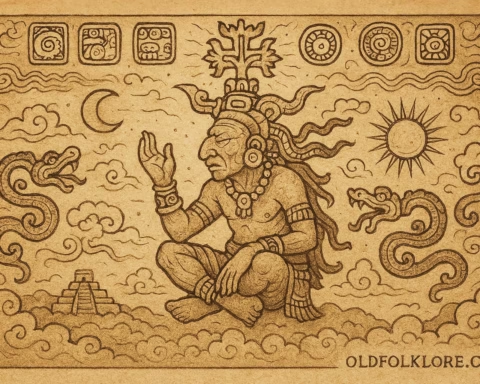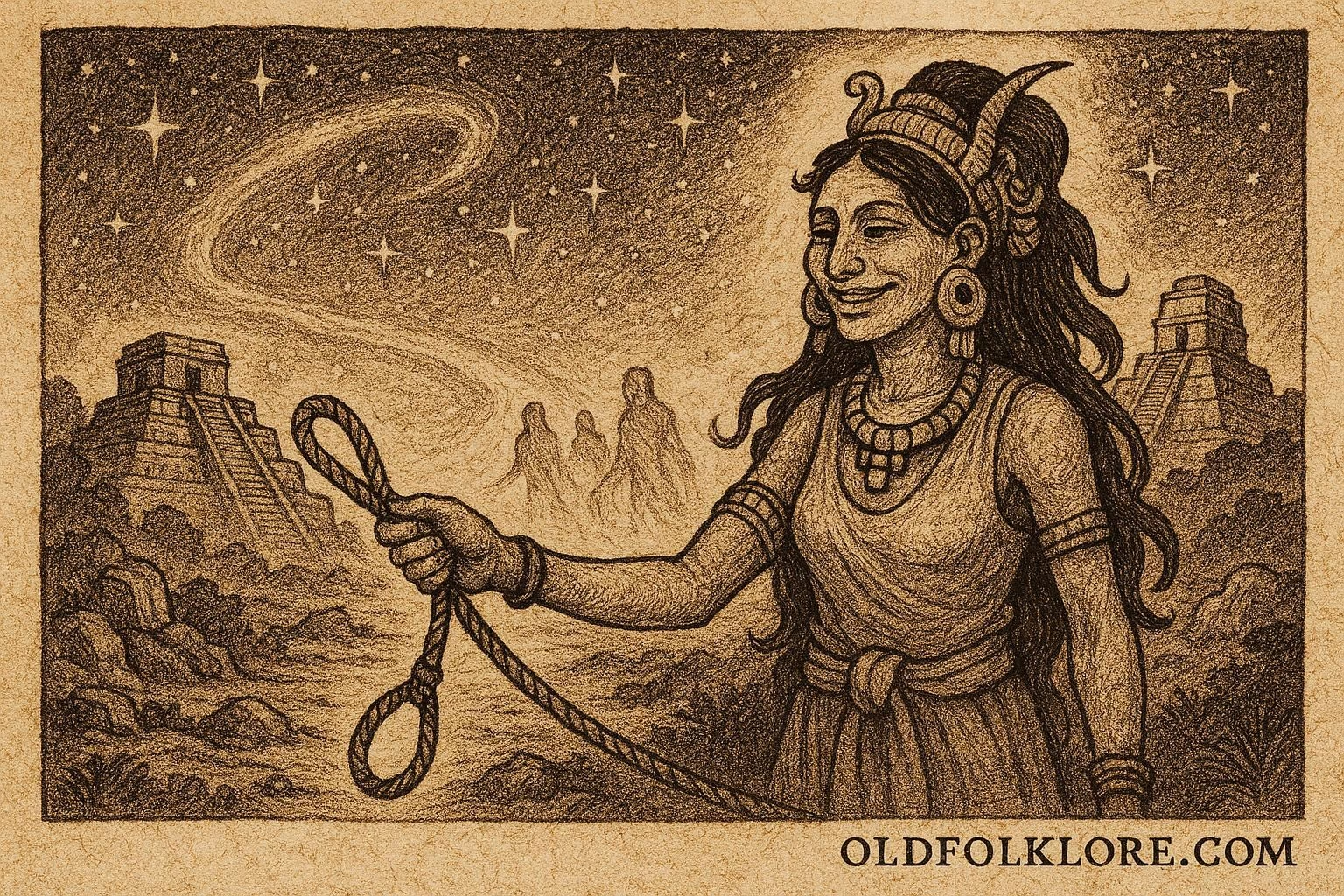
Ixtab is the Maya goddess of the rope, death, and celestial guidance, serving as a psychopomp who ensures that those who die by hanging are led peacefully to paradise. She embodies compassion, mercy, and the belief that certain deaths, particularly those associated with honor, sacrifice, or fate, deserve divine care in transition. Ixtab is typically depicted with a smiling face, a noose or rope over her shoulder, and sometimes seated or floating in the heavens.
Her worship is attested in Maya codices and ceremonial stelae, where her image reminds the living of the sacredness of life and the inevitability of death. Ixtab’s temples and altars were simple, often marked by rope motifs or carvings depicting her in guidance of souls. She complements other underworld deities, maintaining cosmic balance by receiving those whose lives ended in this particular manner, ensuring their journey is neither frightening nor abrupt.
Mythic Story
In the great cities of the Maya, where temples pierced the sky and the ceiba trees touched the clouds, the people revered life but accepted death as an integral passage. Among the divine beings governing life and the afterlife, Ixtab’s presence was unique, gentle, reassuring, and intimately involved in the destiny of souls. She was the one who took the hands of those departing by hanging, guiding them from the earthly realm into the vast, luminous afterlife.
The myth recounts a time when a young scribe, Ajawel, faced an unthinkable dishonor. Accused falsely by jealous rivals, he chose the rope over public disgrace, seeking a death that preserved his dignity. As the rope tightened, he felt no fear. For Ixtab had been watching from the heavens. With a smile both tender and solemn, she descended, her form glowing like moonlight over the pyramids, and caught his soul before it could falter. She whispered words of reassurance, promising safe passage and a place among the honored dead.
The people of his city, although saddened, understood that Ixtab’s mercy sanctified his transition. They crafted a small shrine, placing a carved depiction of the goddess with her rope and serene countenance, reminding all that even death by rope need not be lonely or terrifying. Ixtab became a beacon of hope for those who faced the inevitability of mortality, teaching that honor and dignity were preserved in her guidance.
Ixtab’s role extended beyond individuals. She was invoked by rulers and scribes when deciding matters of justice and sacrifice. Her influence was considered when choosing offerings to the gods or acknowledging fateful deaths in battle or ritual. The Maya believed that she ensured balance, that the rope, an instrument of both justice and misfortune, could be transformed into a passageway rather than a punishment.
One tale tells of a high priest who, during a severe drought, performed a ritual that demanded the hanging of a ceremonial victim. As the victim’s life ended, Ixtab appeared to guide the soul, her presence visible in the trembling light that danced across the temple walls. Those watching saw not terror but serenity, and they understood that the goddess’s touch turned a feared death into a sacred transition, bridging earthly sorrow with divine compassion.
Astronomically, Ixtab was associated with certain stars and constellations that marked the cycles of the heavens. Her connection to celestial navigation reflected the Maya understanding of the cosmos: death was not an end, but a journey guided by divine forces along predetermined paths. By linking her to the stars, the Maya emphasized that the universe itself maintained order, with Ixtab as a faithful escort through the dark corridors of the afterlife.
In art and ceremony, she is portrayed smiling, her rope symbolic of both the human experience and the divine protection that transforms mortality into transcendence. Her myth underscores the Maya view of death not as punishment, but as a sacred, guided journey. Life and death are interwoven, and Ixtab’s intervention ensures that even those whose lives ended in tragic or abrupt ways are embraced by the cosmos, reaching a place of honor and peace.
Through these stories, Ixtab embodies the paradox of death as both an ending and a beginning. Her myth reassures the living, instills moral responsibility, and reflects the cosmic order maintained by deities. By honoring her, the Maya acknowledged that compassion and mercy are as essential as strength and courage, even in the face of inevitable mortality.
Learn the ancient stories behind deities of light, storm, and shadow from cultures across the world
Author’s Note
Ixtab teaches that death, though feared, can be an honorable and guided passage. Her compassion highlights the balance between fate and mercy, encouraging humans to recognize dignity in life and in its conclusion. She reminds us that even the darkest moments are attended by divine guidance, linking human experience with cosmic harmony.
Knowledge Check
Q1: What domain does Ixtab govern in Maya mythology?
A: Death, the rope, and celestial guidance for souls.
Q2: How is Ixtab typically depicted?
A: With a smiling face and a rope, sometimes floating or seated.
Q3: Who does Ixtab guide in the afterlife?
A: Those who die by hanging, ensuring a peaceful passage.
Q4: Which Maya texts depict Ixtab?
A: The Codex Dresdensis and ceremonial stelae.
Q5: How does Ixtab reflect cosmic order?
A: She is linked to stars and constellations, guiding souls along heavenly paths.
Q6: What moral lesson does Ixtab’s myth teach?
A: Death can be honorable and guided, showing mercy and dignity even in mortality.
Source: Maya Codices and Classic Maya Oral Traditions, Mesoamerica.
Origin: Classic Maya, Mesoamerica