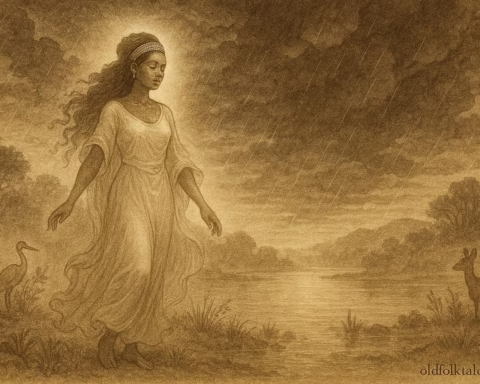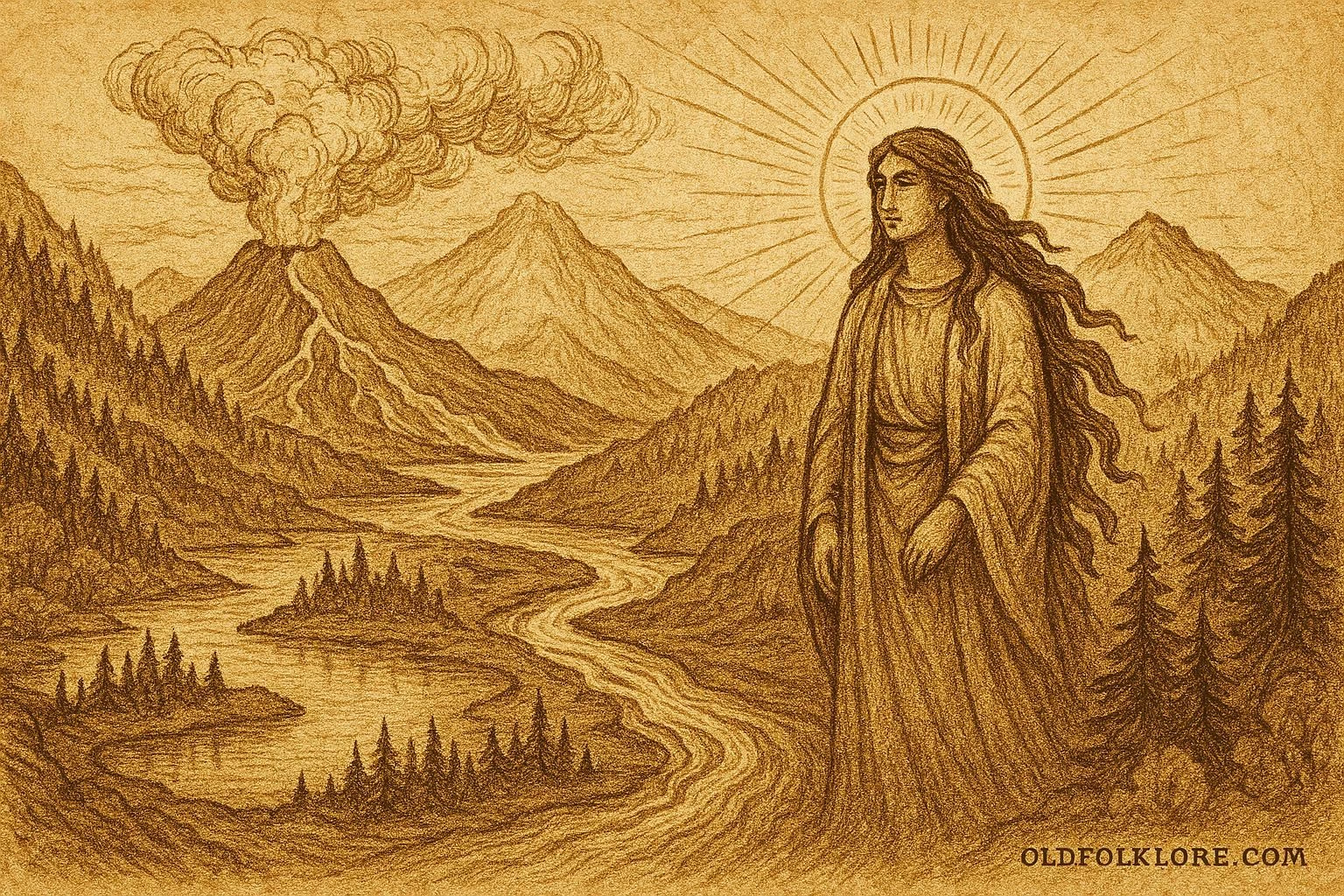
Dzalarhons is the powerful guardian spirit of lakes, rivers, and volcanoes among the Tlingit peoples. She embodies both creation and destruction, controlling natural hazards while safeguarding communities, particularly women and travelers. Her dominion encompasses freshwater bodies, volcanic landscapes, and surrounding ecosystems. Fishermen, hunters, and canoe travelers historically invoked her protection, offering gifts or performing chants before venturing into unpredictable waters.
She is sometimes depicted anthropomorphically, with human features signifying wisdom and authority, and in other accounts as a force of nature, her presence manifesting through the rumble of volcanoes or the calm and turbulence of lakes. Dzalarhons teaches the Tlingit that survival and prosperity depend on respect for natural forces and the guidance of protective spirits. Her myths reinforce the moral imperative of communal care, environmental mindfulness, and reverence for powerful unseen forces.
Discover the ceremonies and sacred festivals that honored gods and balanced nature’s powers
Mythic Story
Long before the mountains and rivers took their present forms, Dzalarhons walked the lands of the Tlingit, a spirit of awe and caution, neither entirely visible nor wholly intangible. The people revered her for her dual nature: she could bestow abundance, guiding fish into nets and keeping waterways navigable, yet she could summon fierce storms or volcanic fury if disrespected.
One spring, a village nestled along the edge of a wide, glimmering lake faced a severe drought. The riverbeds cracked, salmon did not return, and the land turned dry and cracked under the relentless sun. The elders gathered, remembering that only Dzalarhons could restore the waters. Canoes were filled with offerings, carved wooden figures, polished stones, and sacred herbs, and the villagers paddled to the deepest part of the lake, chanting prayers that echoed across the silent waters.
Dzalarhons appeared at the lake’s edge, a shimmering form blending human features with the shifting reflections of water. Her eyes, deep as the abyss, surveyed the villagers. “Why do you seek my aid?” her voice rumbled like distant thunder. The eldest spoke of famine, the missing fish, and the threat to the community. The spirit listened, silent yet commanding, and then raised her arms. Water swirled and rose in a spiraling dance, bringing rain to the parched land and fish leaping once more into the nets. The village rejoiced, understanding that Dzalarhons’ blessing came with recognition: she demanded respect and care for the waters and lands she governed.
Another tale tells of her role in guarding women and travelers. In the dense forests near volcanic slopes, a young woman named Ayasha journeyed alone to visit kin across a mountain pass. Shadows lengthened, mist rose from hidden crevices, and the path became treacherous. Remembering the stories of Dzalarhons, Ayasha whispered prayers and left small offerings by a sacred stone. From the fog emerged a protective presence: Dzalarhons, her form a silhouette of strength, guided Ayasha past dangerous cliffs, moving silently as if part of the wind. When Ayasha reached safety, she turned to thank the spirit, but Dzalarhons had vanished, leaving only the gentle ripple of a nearby creek as a sign of her passage.
Dzalarhons’ myth also warns of volcanic power. One summer, Mount Saint Elias rumbled violently, threatening the villages below. Elders interpreted the tremors as Dzalarhons’ displeasure with human hubris: hunters had taken more than needed, fishermen had disrespected seasonal boundaries. The villagers assembled, performing dances and chants to honor the spirit, offering the first catch and carved totems to restore balance. Gradually, the tremors subsided, the volcano’s wrath abated, and the Tlingit learned again that prosperity relied on adherence to natural law and respect for Dzalarhons’ guardianship.
Her stories emphasize a profound connection between humans and nature, illustrating that survival depends not only on skill and courage but also on humility, ethical behavior, and awareness of invisible forces that shape life. Dzalarhons embodies both nurturing and cautionary aspects: she provides safety and abundance while reminding people that disregard for her domains carries consequences. Through oral transmission, her presence continues to influence Tlingit practices, ceremonies, and environmental stewardship, fostering a moral and spiritual framework intertwined with ecological mindfulness.
Dzalarhons’ enduring influence extends beyond her immediate environment. Canoe travelers still invoke her guidance, elders retell her tales to children, and ceremonial practices honor the rhythm of her protection. She remains a timeless figure, a guardian whose dual nature demands respect, teaches vigilance, and celebrates harmony between humans and the powerful natural world of the Pacific Northwest.
Discover the gods, goddesses, and divine spirits who ruled the heavens and shaped human fate
Author’s Note
Dzalarhons teaches that safety, abundance, and harmony are gifts earned through respect, ethical conduct, and awareness of natural forces. Her duality, both protective and fearsome, reflects the interdependence of humans and the environment, emphasizing communal responsibility, reverence for nature, and mindfulness in navigating both physical and spiritual realms.
Knowledge Check
Q1: What domains does Dzalarhons govern?
A: Water, lakes, rivers, volcanoes, and the protection of women and travelers.
Q2: How did villagers seek her aid during a drought?
A: By offering carved figures, stones, and herbs, while chanting prayers on the lake.
Q3: What lesson does Dzalarhons’ guidance of Ayasha teach?
A: That respect, prayer, and offerings ensure protection in dangerous journeys.
Q4: How does Dzalarhons respond to human disrespect?
A: Through natural disturbances such as volcanic tremors or disrupted waters.
Q5: How is Dzalarhons depicted in Tlingit mythology?
A: Sometimes anthropomorphically, sometimes as an embodiment of natural forces.
Q6: Why do the Tlingit continue to honor Dzalarhons?
A: To maintain safety, prosperity, and harmony with nature and the spiritual world.
Source: Tlingit Oral Traditions and Ethnographies, Pacific Northwest Coast, USA.
Source Origin: Tlingit Peoples, Pacific Northwest Coast, North America