Mélusine is one of the most enduring supernatural women of medieval Europe, part fairy, part water-spirit, part dynastic ancestress. Her legend, most fully preserved in the 14th-century prose romance Le Livre de Mélusine by Jean d’Arras, blends pre-Christian motifs of transformative water beings with chivalric romance, genealogy, and moral instruction. Mélusine’s story illustrates both the enchantment and fragility of unions between mortals and the supernatural, and it served for centuries as the foundational myth for noble European families who claimed her as their ancestress.
Appearance
In most medieval versions, Mélusine appears outwardly as a breathtakingly beautiful noblewoman:
- Golden or pale hair, often described as falling to her knees
- Eyes bright as water under moonlight
- A dignified, courtly bearing
- An aura of enchantment or otherworldliness, even when in human form
Follow the paths of legendary warriors, kings, and demigods who defined ancient honor
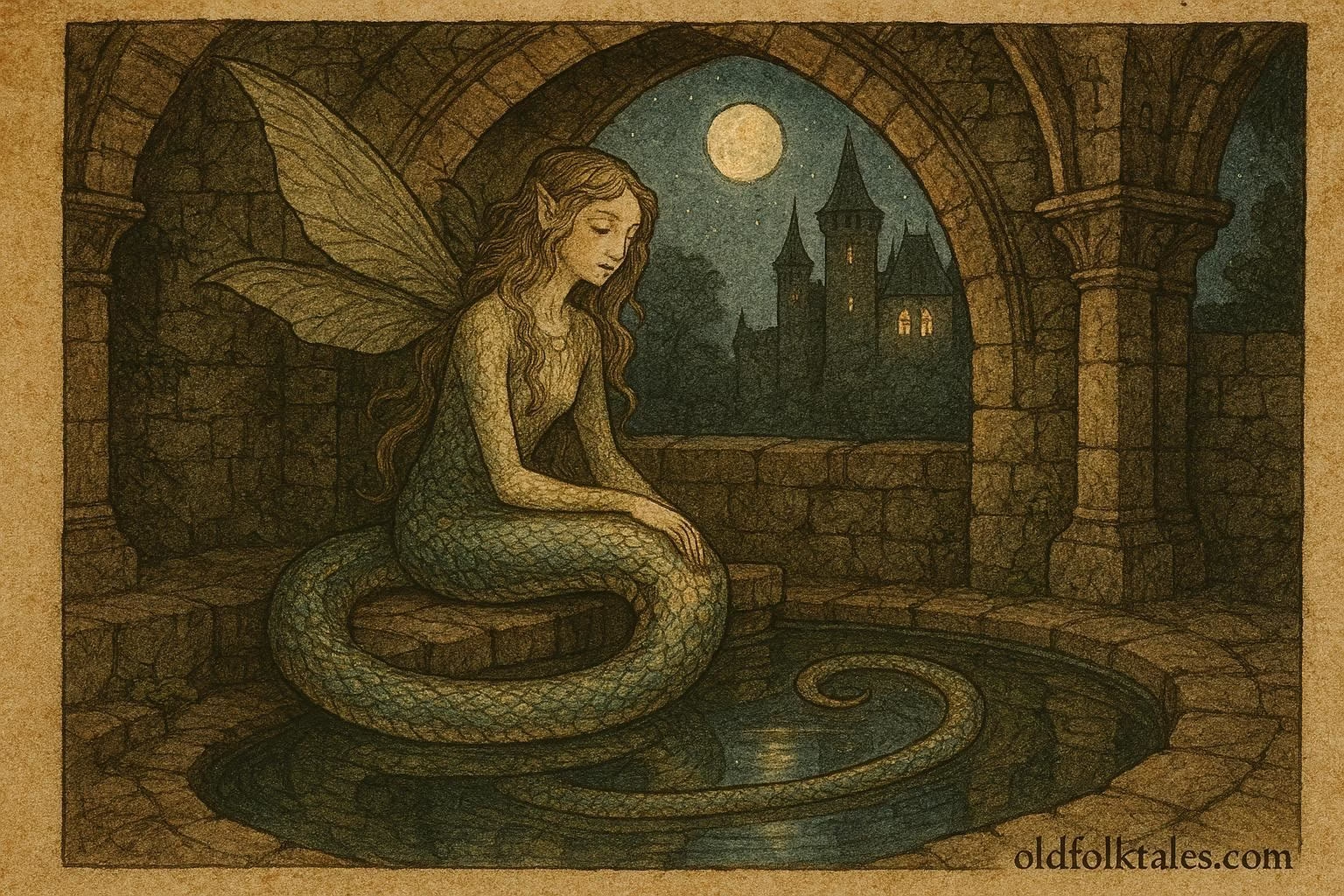
However, her true form is revealed only on the forbidden day, usually Saturdays, when she retreats to her bath. In these scenes she becomes:
- A woman from the waist up, unchanged and elegant
- From the waist down: a massive serpent’s tail, scaled and gleaming, coiled in the water
- In some variants: two intertwined serpent tails, or a dragon-like lower body with fins or wings
A few later medieval redactions describe her transforming nightly or during pregnancy, but the definitive image remains the serpent-woman bathing in secret.
Behavior and Abilities
Mélusine is not a malevolent monster. She is intelligent, beneficent, and capable of miraculous works. In Jean d’Arras’ romance, she marries Raymondin, a nobleman, after rescuing him from a desperate situation. Under her guidance, the couple builds cities, fortifies castles, enriches their lands, and bears many remarkable children.
Her supernatural powers include:
- Construction miracles: She builds towers, towns, and fortifications overnight, including the legendary Lusignan Castle, often tied to her name.
- Prosperity enchantments: Wherever she settles, prosperity follows; fields flourish, wealth increases, and lineages rise.
- Ancestral protection: In some traditions, Mélusine appears as a weeping or winged serpent circling Lusignan Castle whenever a descendant is about to die, an omen of lineage and fate.
- Longevity and transformation: She lives far longer than mortals and can shift between human and serpent forms as the narrative requires.
The Forbidden-Day Motif
Central to the Mélusine myth is the marriage taboo: she requires her mortal husband never to look upon her on a specific day, typically Saturday, when she must bathe in private. This motif parallels widespread European folklore involving selkies, swan-maidens, and other faerie brides who depend on secrecy to maintain the marriage bond.
Raymondin violates the taboo, spurred by suspicion and outside pressure. When he spies on her and sees her serpent form, the fragile trust collapses. The breaking point occurs when, in a moment of public rage, he calls her a “Serpent” before the court. Betrayed, Mélusine transforms into a winged serpent and flies away, returning only intermittently to mourn or to protect her children.
Myths & Narrative Themes
The story weaves together several cultural strands:
- The supernatural bride: Mélusine’s role as a fairy-wife echoes older traditions: a powerful feminine being who elevates a mortal family through marriage. Her supernatural origins link her to water-spirits, lake-maidens, and liminal beings who embody fertility and transformation.
- Genealogy and dynastic prestige: Medieval noble houses, including the Lusignan family, adopted Mélusine as their mythical ancestress. This lent glamour and divine favor to their lineage, linking their rise to a supernatural protector who shaped lands and built strongholds.
- Trust and taboo: The forbidden-day motif functions as a moral allegory: the breaking of trust, especially between spouses, invites disaster. Mélusine’s departure symbolizes the irreversible consequences of betrayal.
- Ambiguity of the feminine supernatural: Mélusine is neither wholly angelic nor wholly monstrous. Her serpent form represents liminality: the blending of human and otherworld, beauty and fear, civilization and wildness.
Cultural Role
Mélusine functions symbolically across several layers of medieval thought:
Protector of Lineage: Her appearances as a weeping serpent above castle towers signify her ongoing connection to her descendants, even after departure. She embodies ancestral guardianship, a supernatural matriarch whose presence foretells both glory and tragedy.
Builder and Civilizer: Rather than haunting or terrorizing, Mélusine constructs cities and strengthens realms. She is a culture-bringer, an architect of medieval order.
Feminine Power with Conditions: Her marriage and her conditions emphasize how medieval romances negotiated the idea of female power. She is powerful but requires loyalty; once betrayed, her gifts cannot be reclaimed.
Nature, Water, and Transformation: Her serpent aspect reflects the fluidity of water, the cycles of fertility, and the hidden depths of the natural world. She symbolizes the untamable, magical aspects of rivers and springs that medieval people both depended upon and feared.
Symbolism
Across Europe, Mélusine serves as an embodiment of:
- Liminality(between human and supernatural)
- Prosperity mixed with fragility
- The consequences of broken oaths
- Feminine creative and destructive potential
- Ancestral identity and dynastic power
Her serpent form emphasizes both danger and regeneration, serpents shed their skins, symbolizing rebirth and hidden truth.
Modern Interpretations
Today, Mélusine appears in literature, art, feminist analysis, and pop-culture reinterpretations. But her medieval identity remains rooted in the works of Jean d’Arras and the genealogical legends that flourished across France and beyond.
Encounter dragons, spirits, and beasts that roamed the myths of every civilization
Author’s Note
To create this entry, I worked from Jean d’Arras’ primary 14th-century romance, avoiding modern fantasy reinterpretations that dramatically alter Mélusine’s medieval character. Her story is essential for understanding how medieval Europe blended folklore with aristocratic myth-making.
Knowledge Check
- What is Mélusine’s main secret form?
A serpent-tailed woman, revealed on her forbidden bathing day. - Who authored the primary medieval romance of Mélusine?
Jean d’Arras, in the 14th century. - What taboo does Raymondin break?
He spies on heron the day he is forbidden to look. - What major structure is Mélusine said to have built?
Lusignan Castle, constructed with supernatural speed. - Why did noble families claim descent from her?
Her story enhanced dynastic prestigeand linked them to supernatural ancestry. - What symbolizes her return to protect her lineage?
A winged serpentcircling the castle during times of family crisis.
Source: Jean d’Arras, Le Livre de Mélusine (14th century), public-domain editions via Project Gutenberg
Origin: Medieval French Romance Tradition