Grindylow, also known regionally as Jenny Greenteeth, Peg Powler, or Nelly Longarms, is one of England’s most enduring and eerie pond and river bogey-figures. Though lacking a single canonical medieval or literary source, the figure is consistently attested in folklore collections from northern England and appears in ethnographic studies of nursery-lore and cautionary tales. Her principal role in folk consciousness is as a water-dwelling child-safety warning: parents told stories of her lurking in ponds, rivers, and slow-flowing streams, ready to drag unwary children underwater.
Appearance
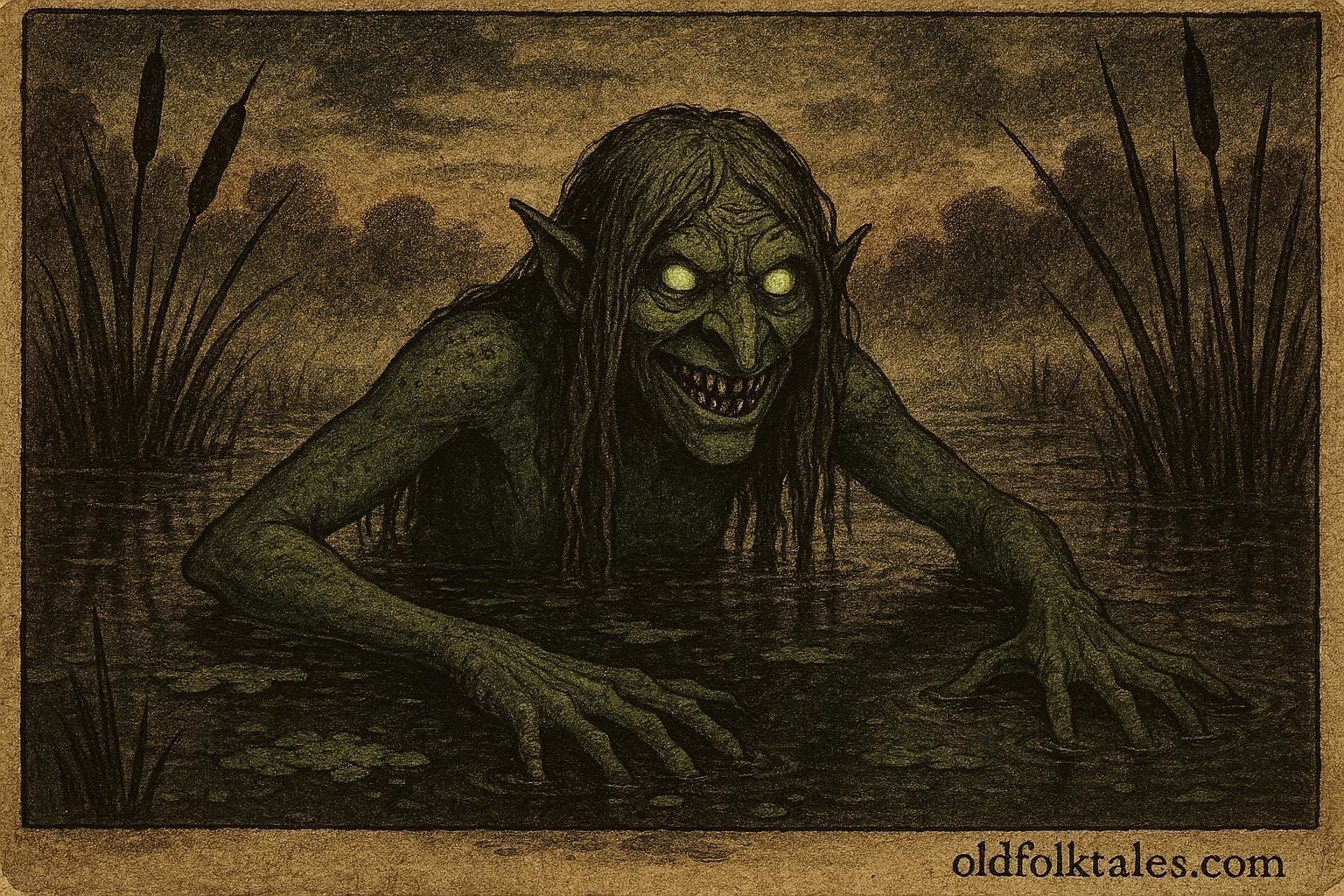
Descriptions of Grindylow vary by region and source, but certain features recur:
- Green skin, sometimes described as slimy or algae-covered, reflecting her watery environment.
- Long, sinewy arms, often exaggerated to reach out of the water for unsuspecting victims, hence the local name “Nelly Longarms.”
- Iron or sharp teeth, used in legend to devour children, livestock, or careless fishermen.
- Small stature or hunched figure, sometimes blending with aquatic plants like duckweed or reeds, aiding concealment.
- In some local descriptions, she is said to have webbed fingers or fins, highlighting her affinity with water.
Discover the ceremonies and sacred festivals that honored gods and balanced nature’s powers
The variety of names often corresponds to subtle differences in depiction: Jenny Greenteeth tends to appear as a sinister but humanoid woman, while Grindylow in Yorkshire folklore is more monstrous and less humanlike. Peg Powler, specifically associated with the River Tees, often has local narrative ties to disappearance spots, such as whirlpools or deep river pools.
Behavior and Powers
Grindylow is primarily a predator of humans and livestock who venture too close to dangerous waters:
- Child-targeting: Her legends explicitly functioned to frighten children into obedience, warning against playing near rivers or ponds.
- Submergence: The most common narrative is that she drags victims beneath the water, drowning them. This often extends metaphorically to livestock or even mischievous adults.
- Ambush and concealment: She lurks beneath the surface or among aquatic plants, rising suddenly to grab prey.
- Connection with natural hazards: Folklorists note that her presence often coincides with treacherous spots, deep pools, whirlpools, or overgrown pond edges, indicating an early form of environmental hazard warning.
Despite the grim nature of her attacks, Grindylow is rarely depicted as morally “evil” in folklore: she embodies the danger of water rather than human vice. Her acts are cautionary, reinforcing cultural norms about respect for natural forces.
Myths and Narrative Themes
Grindylow occupies a marginalized yet socially potent role in English folklore:
- Nursery-bogey figure: As documented by Katharine Briggs and later scholars, her stories are told primarily to children as behavioral guidance: stay away from ponds, do not wander near dangerous water bodies, obey parental supervision.
- Regional diversity: The character takes different forms in Yorkshire, Lancashire, and Tees regions. For example, Peg Powler specifically enforces rules around the River Tees, while Jenny Greenteeth becomes a general cautionary figure in multiple northern rivers.
- Naming and plant association: Some names overlap with aquatic flora. “Jenny Greenteeth” can refer both to the hag and to duckweed, emphasizing her blending into the environment.
- Evolving motif: Modern reinterpretations often cast her as a general river spirit or a supernatural guardian, but early versions emphasize her predatory, fearsome aspect.
Cultural Role
Grindylow/Jenny Greenteeth functions on multiple levels:
- Safety and Socialization: She primarily operates as a pedagogical tool:
- Stories instruct children to heed safety rules and respect water.
- Adults use the narrative to enforce boundaries near hazardous river sections.
- Moral and Natural Symbolism: She represents:
- Natural danger personified: an embodiment of the unpredictable and potentially deadly qualities of water bodies.
- Cultural vigilance: an enduring warning that disobedience or carelessness has real-world consequences.
- Local Identity: Her legends are deeply tied to specific communities, such as those near the River Tees, Wharfe, and Lancashire rivers. Localized names, stories, and features (e.g., “Peg Powler’s pool”) reinforce regional folklore identity.
- Continuity and Adaptation: Though originating in oral traditions, the Grindylow motif persists in:
- Nursery rhymes and children’s tales
- Scholarly compendia such as Briggs’ Dictionary of Fairies
- Folkloristic analysis of English water spirits
- Modern media as a mythic or supernatural figure in games, literature, and local storytelling
Symbolism
Grindylow encapsulates several themes:
- Fear of nature: Water is dangerous and unpredictable; personifying it makes it tangible.
- Child safety and obedience: The bogey-hag reinforces societal norms.
- Regional specificity: Names and descriptions tether myth to physical landscapes.
- Blurring boundaries: Between human, plant, and water, showing how folklore blends natural observation and moral instruction.
Variant Notes
- Grindylow (Yorkshire): More monstrous, emphasizes ambush, iron teeth, and claw-like hands.
- Jenny Greenteeth (multiple rivers): Slightly more human, commonly green-faced, associated with drowning.
- Peg Powler (River Tees): Localized bogey figure; may feature folklore tunnels or river whirlpool legends.
- Nelly Longarms: Emphasizes the exaggerated reach and arms of the hag.
Authenticity Assessment
- Primary attestations: Folklore society collections, oral tradition, regional fieldwork, 18th–19th-century printed nursery warnings.
- Secondary scholarship: Katharine Briggs, S. Young, and later folklorists analyze her function, regional variants, and societal meaning.
- Consistency: Multiple sources confirm the motif as a genuine local bogey figure with pedagogical function.
- Persistence: Legends survive into the modern era, demonstrating enduring cultural resonance.
Transcription / Translation Notes
- All names appear in English variants; local spelling depends on county dialect (e.g., Peg Powler in Tees, Grindylow in Yorkshire).
- No translation issues arise for primary sources; the folklore has been consistently recorded in English.
Explore the mysterious creatures of legend, from guardians of the sacred to bringers of chaos
Author’s Note
This entry synthesizes oral folklore, nineteenth-century regional publications, and scholarly analysis. While lacking a single literary text, Grindylow and Jenny Greenteeth serve as a window into English pedagogical folklore, environmental hazard awareness, and regional mythic identity. The cautionary-hag motif is comparable to other European water spirits, yet locally adapted.
Knowledge Check
- Where is Grindylow primarily found?
Northern England, rivers and ponds in Yorkshire, Lancashire, Tees, and surrounding areas. - What is the primary purpose of Jenny Greenteeth legends?
Child-safety cautionary tales, warning of drowning and dangerous waters. - Name three regional variants of the water-hag.
Grindylow, Jenny Greenteeth, Peg Powler, Nelly Longarms. - What physical features are consistently attributed to the creature?
Green skin, long arms, iron teeth, aquatic adaptations. - Which scholar wrote In Search of Jenny Greenteeth?
S. Young, analyzing folklore sources and field material. - How does the hag symbolize natural danger?
She embodies the unpredictability and lethality of rivers/ponds, making the environment tangible for children and communities.
Source: Regional folklore collections; Katharine Briggs, Dictionary of Fairies; S. Young, In Search of Jenny Greenteeth
Origin: Northern England (Tees, Yorkshire, Lancashire rivers), oral tradition, 18th–19th century onwards