Camazotz (Kʼicheʼ Maya, often glossed as “Death Bat”) is one of the most striking and fearsome beings in Maya cosmology. Unlike modern fictional retellings that portray Camazotz as a single monstrous vampire-bat, traditional sources present a far more complex figure: a lethal underworld entity, part animal and part supernatural executioner, who personifies the terrors of night, sacrifice, blindness, and the unknown spaces between life and death.
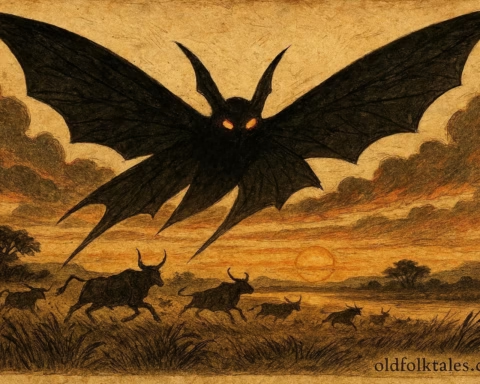
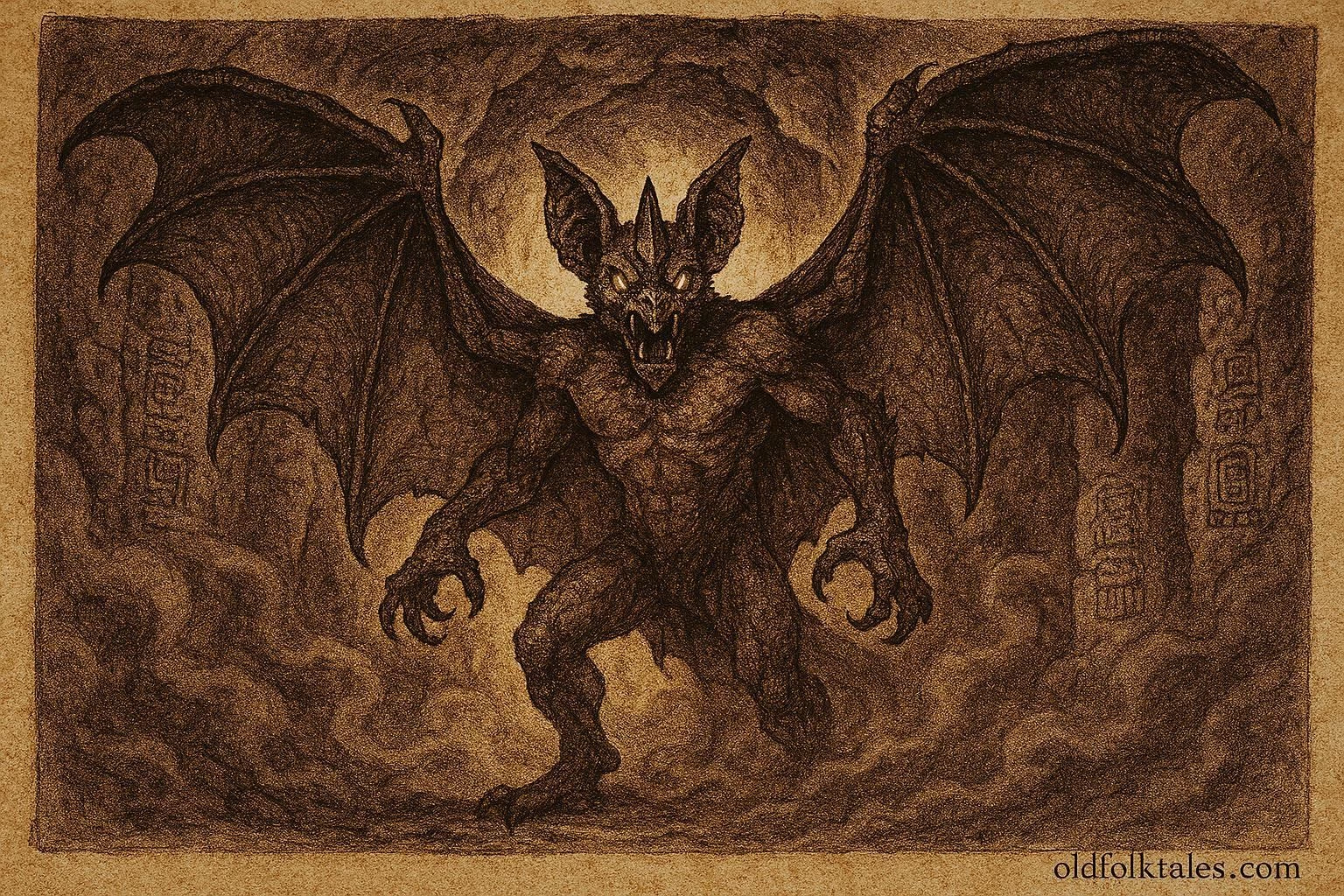
The core appearance of Camazotz combines human-like posture and intelligence with bat-like features, including leathery wings, an elongated snout, sharp fangs, and often a stone-blade nose used for cutting or decapitating. In Classic Maya pottery and carved scenes, bat-headed beings appear with ceremonial jewelry, loincloths, weapons, and even dance postures, indicating a cultural persona beyond simple animality. Their wings fold like cloaks, casting shadows associated with disease, darkness, and ritual thresholds.
Discover the ceremonies and sacred festivals that honored gods and balanced nature’s powers
In the Popol Vuh’s most famous episode, Camazotz is encountered not as a lone creature but as a powerful bat-spirit within the House of Bats, one of the deadly tests of Xibalba, the Maya underworld. These bat-spirits dwell in a cavern described as pitch-black and echoing with shrieks, a symbolic mirror of caves throughout Mesoamerica, which were regarded as entrances to the otherworld. Camazotz, as both a singular executioner and a category of underworld beings, embodies liminality: the space between night and dawn, death and rebirth, mortal and divine.
Behavior and Powers
Camazotz’s powers are tied to the night, caves, sacrifice, and the transition between worlds. In Maya thought, bats were not simply nocturnal animals but spiritual beings that navigated boundaries inaccessible to humans: caves, darkness, blood, and the underworld.
Traditional attributes include:
- Decapitation / Sacrificial Execution: Camazotz is infamous for decapitation, a sacred act in Mesoamerican cosmology, symbolizing the release of the soul, agricultural renewal, and cosmic cycles. In the Popol Vuh, one bat-spirit of the House of Bats severs the head of Hunahpu, one of the Hero Twins, when he lifts his head from a protective shelter. This is not merely violence but ritual execution, echoing elite Maya rituals involving decapitation as renewal.
- Night Vision and Underworld Perception: Camazotz can see through total darkness and navigate supernatural spaces with ease. The darkness is not merely environmental, it is cosmological, representing the hidden truths of the underworld.
- Shape, Shadow, and Disguise: Though not always emphasized in popular retellings, ancient depictions hint that bat-spirits may shift between full-animal, humanoid, or shadow-like forms. Their wings often represent cloaks of invisibility or spiritual concealment.
- Disease and Breath / Poison: Some interpretations, based on iconographic parallels and ethnohistoric sources, suggest that bat-spirits could spread disease or afflict communities, especially during certain seasonal cycles. Their breath or shriek sometimes symbolizes illness or death.
- Guardianship of Underworld Thresholds: Camazotz does not wander aimlessly, he is stationed at a liminal checkpoint, a spiritual guardian enforcing cosmic law. Those who enter the House of Bats must demonstrate courage, ritual knowledge, and supernatural protection.
Myth and Cultural Context
Camazotz’s most detailed mythic appearance occurs in the Popol Vuh, where the Hero Twins, Hunahpu and Xbalanque, undergo a series of trials imposed by the Lords of Xibalba. The House of Bats is one of these perilous tests. The text describes:
- A cavern inhabited by fierce bat-spirits
- Creatures with blades for noses
- Constant shrieking and deadly flight
- A need for shelter or spiritual protection
When Hunahpu peers out too soon, a bat-spirit decapitates him instantly. This moment is crucial: it reflects the Maya understanding of divine trial, the necessity of cleverness and ritual knowledge, and the inevitability of death’s touch within the cosmic cycle.
Yet the story is not simply tragic, the Twins ultimately triumph, demonstrating that even death can be overcome or transformed. Thus Camazotz symbolizes the necessary ordeal that stands before enlightenment, rebirth, or victory.
Beyond the Popol Vuh, bat-spirits appear in:
- Classic Maya vase paintings (Late Classic period), where bat-headed beings engage in ritual acts
- Glyphs and murals representing bats as night deities or underworld messengers
- Cave shrines across Mesoamerica where bats naturally dwell and where rituals involving bloodletting or divination took place
Some scholars argue that earlier interpretations mistakenly conflated Camazotz with the Vampire Bat (Desmodus rotundus), projecting modern associations of blood-sucking onto ancient belief. But archaeological and iconographic evidence shows that Maya bat imagery predates any vampiric framing, instead emphasizing ritual death, nocturnal power, cave guardianship, and cosmic renewal.
Cultural Symbolism
Camazotz embodies several key Maya worldview themes:
- Death & Sacrifice: Not as punishment, but as part of cosmic cycles of growth, renewal, and divine order.
- Darkness & Trial: True knowledge is not gained without descending into darkness, physical, moral, and spiritual.
- Caves as Cosmological Portals: Caves were sacred since they connected the human world to Xibalba; the bat, a cave-dweller, naturally became an underworld agent.
- Transformation: The decapitation of Hunahpu leads to transformation and eventual triumph, a metaphor for cyclical rebirth.
- Liminality: Camazotz is not purely evil; he represents the necessary thresholds between worlds that even gods must respect.
Modern Misinterpretations
Modern pop culture reframes Camazotz as:
- A giant vampire-bat monster
- A bloodthirsty demon
- A singular villain
These traits have little grounding in ancient Maya cosmology. Traditional accounts treat Camazotz not as a villainous creature but as a cosmic enforcer, integral to the balance between worlds.
Encounter dragons, spirits, and beasts that roamed the myths of every civilization
Author’s Note
This summary is based on respected Maya sources and archaeological scholarship, focusing on the original Kʼicheʼ traditions of the Popol Vuh rather than modern reinterpretations. Care was taken to avoid pop-culture distortions and to present Camazotz within its authentic cultural and mythological context.
Knowledge Check
- Where does Camazotz appear most famously?
In the Popol Vuh, within the House of Bats in Xibalba. - What is Camazotz’s signature act?
Decapitation, symbolizing ritual execution and cosmic transition. - Is Camazotz a single being or a class of spirits?
Both, one bat-spirit decapitates Hunahpu, but “Camazotz” also refers to underworld bat entities. - What does bat imagery symbolize in Maya thought?
Night, caves, death, sacrifice, and liminal thresholds. - Does Camazotz drink blood in traditional myths?
No, vampiric traits are mostly modern reinterpretations. - What period contains bat-spirit iconography?
Classic Maya period (200–900 CE) into colonial-era Kʼicheʼ literature.
Sources: Popol Vuh (Kʼicheʼ Maya), Brady & Coltman (2016), Caracol Archaeological Project notes, FLAAR Mesoamerica iconographic reports
Origin: Highland Maya (Kʼicheʼ); Classic Maya iconography (200–900 CE); Colonial-era transcription of the Popol Vuh (16th century) from earlier oral tradition