In the misty highlands of Honduras, where the mountains rise as sleeping giants draped in clouds and the forests breathe with ancient secrets, the Lenca people have long known of a protector who walks the night roads. They call him El Cadejo Blanco, the White Cadejo, and he is no ordinary creature but a spirit guardian whose presence brings safety to those who wander alone in the darkness.
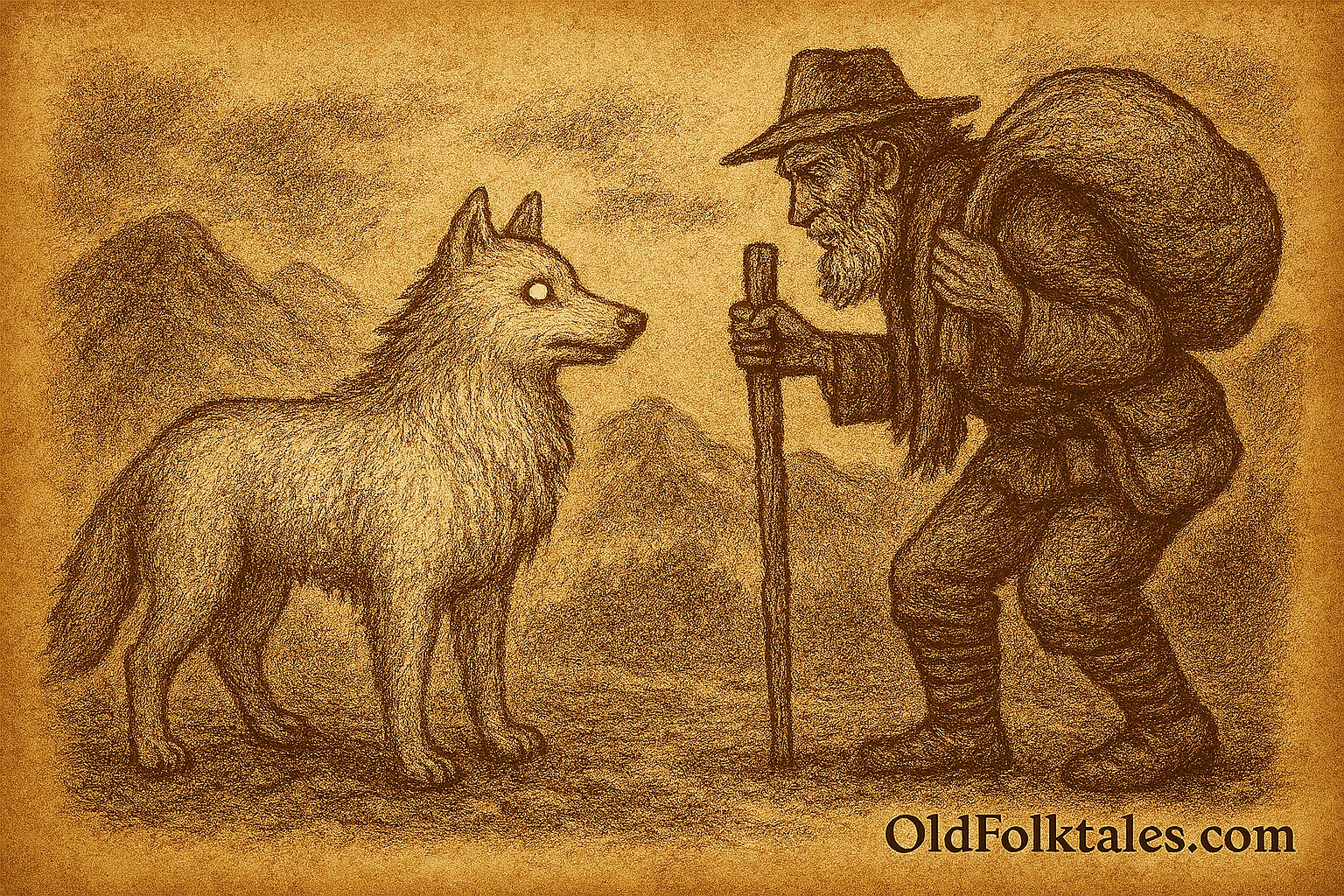
The legend tells that El Cadejo appears as a magnificent dog, larger than any mortal hound, with fur as white as fresh mountain snow that seems to glow with an inner luminescence when the moon is hidden. But it is his eyes that truly mark him as something beyond the natural world. They shine with an otherworldly light, like stars captured and set into a living form, gleaming silver and bright enough to pierce the deepest shadows. When those eyes appear on a lonely mountain path, travelers know they are no longer alone.
The Lenca elders say that El Cadejo Blanco is an ancestral spirit, perhaps the soul of a great protector from generations past who chose to remain in the world of the living to watch over his people. Others whisper that he is older still, a guardian spirit placed by the gods themselves to maintain the balance between the world of humans and the realm of dangerous supernatural forces that lurk in the dark places.
The highlands of Honduras are beautiful but treacherous, especially after the sun descends behind the western peaks and shadows pool in the valleys like dark water. The roads twist through dense forest where jaguars prowl and venomous snakes coil beneath fallen logs. Cliffs drop away suddenly into invisible depths. Streams swell without warning during the rainy season, their currents strong enough to sweep away the unwary. And beyond these natural dangers, the night holds other threats, darker things that have no place in the daylight world.
It is then that El Cadejo Blanco emerges from wherever he rests during the bright hours. Some say he sleeps within the hollow hearts of ancient ceiba trees, those sacred giants whose roots reach deep into the earth and whose branches stretch toward the heavens. Others believe he dwells in caves high in the mountains, places where the mist never fully clears and where the boundary between the physical and spiritual worlds grows thin as spider silk.
When night falls and the White Cadejo begins his vigil, he seeks out those who need his protection. His keen senses, far beyond those of mortal dogs, can detect a lost traveler miles away. He knows when someone has strayed from the safe path, when a villager stumbles homeward after too much celebration, their steps uncertain and their judgment clouded. He knows when a young person walks alone through dangerous territory, or when an elder travels after dark from necessity rather than choice.
The White Cadejo comes to them silently, his paws making no sound on the rocky paths, leaving no tracks in the soft earth. One moment the traveler is alone, heart pounding with fear at every shadow and strange sound. The next moment, they sense a presence beside them. They turn and see those luminous eyes, that ghostly white form moving parallel to their path, close enough to protect but not so close as to frighten.
Those who have been accompanied by El Cadejo describe a profound sense of peace that settles over them like a warm blanket. The forest sounds that seemed threatening moments before become merely the natural chorus of the night. The shadows lose their menacing quality. The path ahead, which had seemed impossibly dark and dangerous, becomes somehow navigable. It is as if the White Cadejo carries with him a sphere of safety, an invisible barrier that evil cannot cross.
And indeed, the legends say that no harm can come to someone under El Cadejo Blanco’s protection. Wild animals that might otherwise attack turn aside when they sense his presence. The black jaguar, whose amber eyes glow in the darkness and whose claws can tear through flesh like paper, will not approach. The fer-de-lance, the deadly viper whose bite means certain death, slithers away into the undergrowth. Even the supernatural threats, the malevolent spirits and dark entities that seek to lead travelers astray or steal their souls, cannot touch those who walk with the White Guardian.
Some stories tell of his counterpart, a dark cadejo with black fur and red eyes that glow like embers from hell’s own fires. This Black Cadejo represents evil and misfortune, seeking to lead the unwary into danger, driving them mad with fear or luring them toward cliffs and ravines where they will fall to their deaths. But when the White Cadejo is present, the dark one cannot approach. The two are eternal opposites, locked in an endless struggle, and where the white one stands guard, the black one must retreat.
The drunk villager who took too much chicha at a celebration and now weaves uncertainly along the mountain road might not even realize the White Cadejo walks beside him, keeping him from stumbling off the path’s edge, gently herding him toward home like a shepherd with a wayward lamb. The young woman traveling alone to reach her family in a distant village feels the weight of unseen eyes watching her from the forest, hears sounds that make her heart race, but then she catches a glimpse of white moving through the trees, and somehow she knows she will arrive safely.
The lost child who wandered too far from home while chasing butterflies and now finds himself alone as darkness falls, crying with fear and cold, suddenly hears a soft whuffing sound and feels warm breath on his cheek. The enormous white dog sits beside him, and the child, too young to fear what he does not understand, wraps his arms around the creature’s neck and buries his face in that glowing fur. The White Cadejo leads him home, taking paths the child could never have found on his own, and delivers him to his parents’ door before vanishing back into the night.
But no one can capture El Cadejo Blanco, cannot collar him or claim him as their own. He is wild and free, bound to no mortal master, answering only to his eternal duty. Those who have tried to follow him, hoping to discover where he goes when his night’s work is done, find that he simply dissolves into the mist. One moment his white form is visible ahead on the path, the next moment there is only fog, thick and swirling, and the traveler stands alone as the first light of dawn begins to paint the eastern sky.
For El Cadejo Blanco only walks the night. When the sun rises over the Honduran highlands, burning away the mist that clings to the valleys and illuminating the mountain peaks, the White Guardian returns to whatever realm he inhabits during the day. He leaves no evidence of his passage, no paw prints in the mud, no disturbed leaves or broken branches. It is as if he exists in a space slightly apart from the physical world, solid enough to provide protection but too spirit-like to leave lasting marks upon the earth.
The Lenca people teach their children about El Cadejo Blanco, telling them not to fear if they see glowing eyes and white fur on a dark road, for it means their ancestors are watching over them still. They teach respect for the spirits, gratitude for protection, and the understanding that they are never truly alone in the darkness. The White Cadejo walks still, and will walk forever, an eternal guardian of the highlands, protecting the lost, the vulnerable, and the frightened until the end of time itself.
Click to read all Myths & Legends – timeless stories of creation, fate, and the divine across every culture and continent
The Moral of the Story
The legend of El Cadejo Blanco teaches profound lessons about protection, guidance, and the enduring connection between the living and the spirits of ancestors. It reminds us that even in our darkest, most frightening moments, we may have guardians we cannot see watching over us. The White Cadejo represents the positive spiritual forces that exist to protect the innocent and vulnerable, showing that good and evil are in constant balance and that benevolent powers work to shield us from harm.
Knowledge Check
Q1: What is El Cadejo Blanco and what does he look like?
A: El Cadejo Blanco is a guardian spirit that appears as a large white dog with glowing, luminous eyes that shine like stars. His white fur seems to glow with inner light, and he is larger than any ordinary dog. He is a supernatural protector who walks the night in the Honduran highlands.
Q2: Who does the White Cadejo protect and why?
A: The White Cadejo protects lost travelers, drunk villagers, lonely wanderers, children, elders, and anyone vulnerable who travels at night. He appears to those in danger, guiding them safely home and shielding them from both natural dangers like wild animals and supernatural threats like evil spirits.
Q3: What is the relationship between the White Cadejo and the Black Cadejo?
A: The White Cadejo and Black Cadejo are eternal opposites. While the White Cadejo represents protection and goodness, the Black Cadejo (with black fur and red eyes) represents evil and misfortune, seeking to lead travelers into danger. When the White Cadejo is present protecting someone, the Black Cadejo cannot approach.
Q4: What happens to El Cadejo Blanco at dawn?
A: At dawn, when the sun rises over the highlands, El Cadejo Blanco vanishes into the mist. He leaves no tracks or physical evidence of his presence, dissolving back into the spirit realm. He only walks during the night and returns to his unknown dwelling place during daylight hours.
Q5: What do the Lenca people believe about the White Cadejo’s origins?
A: The Lenca elders believe El Cadejo Blanco is an ancestral spirit, possibly the soul of a great protector from past generations who chose to remain in the living world to watch over his people. Others say he is an ancient guardian spirit placed by the gods to maintain balance between the human world and supernatural forces.
Q6: What cultural values does the White Cadejo legend teach?
A: The legend teaches respect for ancestral spirits, trust in divine protection, and the belief that benevolent forces watch over the vulnerable. It emphasizes the connection between the living and the dead, the balance between good and evil, and the importance of not living in fear because protection is always present for those who need it.
Source : Adapted from “Pueblos Indígenas de Honduras” by Ramón D. Rivas, and broader Central American indigenous oral traditions documented by various folklorists and anthropologists.
Cultural Origin: Lenca people, Honduras