In the quiet villages of the Ewe peoples, night has a presence of its own. When the sun melts into the horizon and the evening drums fall silent, the shadows of the huts stretch long across the red earth. Families draw close to their hearths, whispering evening blessings, while elders speak softly of the things that move unseen between one heartbeat and the next. Among these whispered stories, none is feared and respected as much as the Adze.
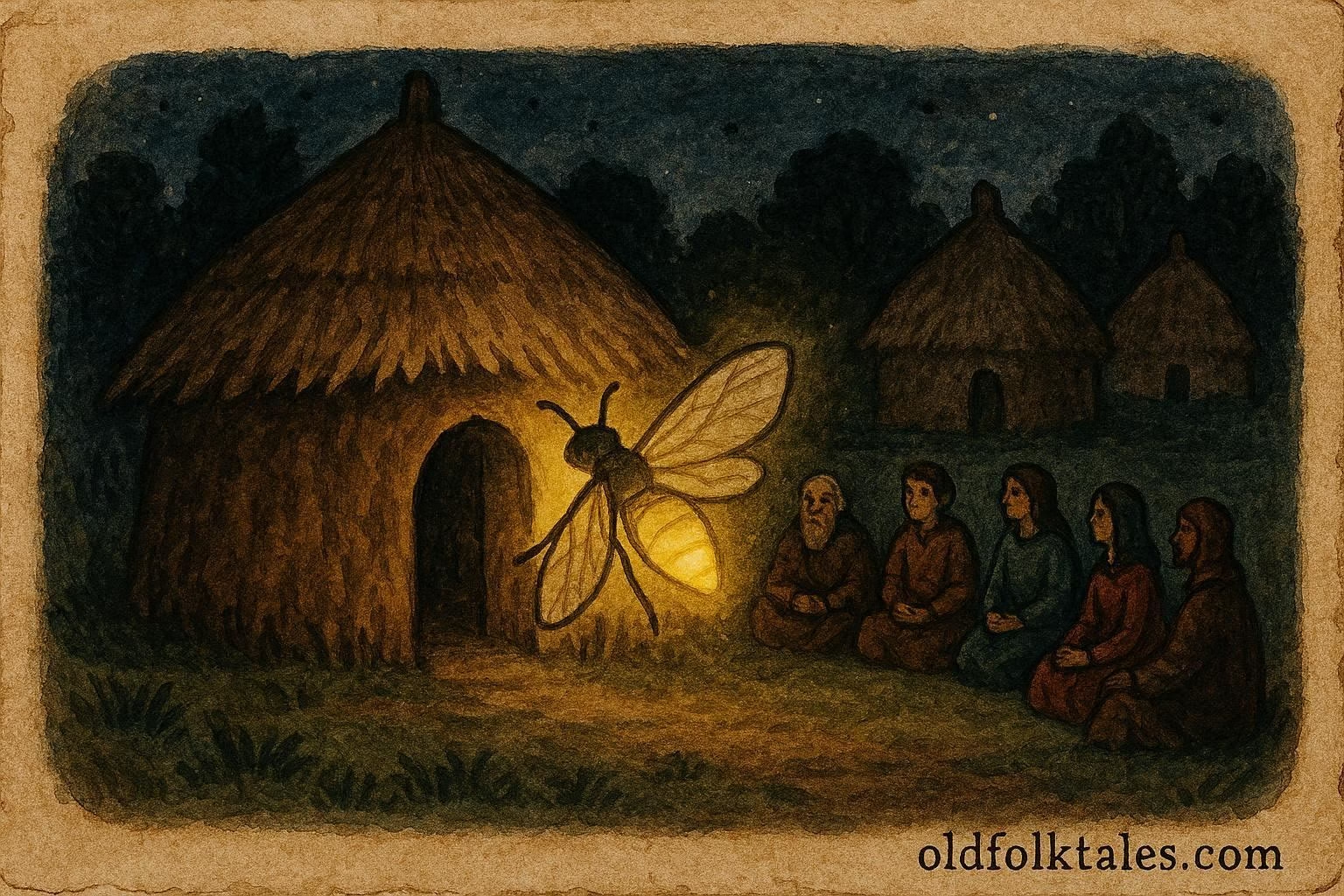
The Adze is a spirit that takes the shape of a small firefly. Its wings shimmer with an eerie glow, brighter than any insect of the night. It flits through the air like an ember breaking free from a flame. Yet this faint form hides a hungry being that does not hunt flesh but spiritual strength. The Adze enters villages when harmony weakens and slips through tiny openings in the walls of huts, searching for the scent of discord.
In one village upon the coastal plains, the Adze became the test of a people who had long forgotten the weight of jealousy. The village of Kpando had been known for weaving the finest cloths in the region. Colorful striped garments hung proudly in the markets, each thread telling a story of family, pride, and ancestral blessings. Yet beneath this beauty, a quiet bitterness was beginning to stir.
Encounter dragons, spirits, and beasts that roamed the myths of every civilization
Two weavers lived at the heart of this trouble. Adanu, the elder, had woven for decades and was respected for her calm spirit. Sesevi, young and ambitious, admired Adanu but grew jealous of how everyone praised the older woman’s skill. In her heart, she whispered that she should be the most gifted weaver, that the elders should speak her name first, that she deserved the honor given to Adanu. The bitterness grew like a hidden root twisting through the soil.
It was during one of these restless evenings that the Adze felt the shift in the village. The spirit rose from the dark edges of the forest, wings humming softly, drawn by the taste of jealousy drifting through the air. It drifted over the rooftops until it reached Sesevi’s hut. Through a small crack in the mud wall, it slipped inside.
Sesevi lay asleep, her loom resting in the corner. The glow of the Adze circled her head like a restless ember. The spirit sensed her troubled thoughts and fed on the weakened harmony in her heart. With each whisper of envy that lived in her dreams, the Adze grew stronger. By morning, Sesevi awoke tired, not from work but from a strange heaviness in her spirit.
Night after night the Adze returned, slipping through her window, feeding on the growing disharmony. The more it fed, the more jealous and irritable Sesevi became. Her weaving lost its balance. Threads tangled. Colors clashed. Still she blamed Adanu, insisting the elder was trying to overshadow her. The bitterness spread from Sesevi to her friends, then to their families. Small arguments erupted in the marketplace, and laughter grew rare in the once lively village.
The Adze thrived.
But not all were blind to its presence. Adanu, wise and observant, noticed the change in the village. She saw the exhaustion beneath Sesevi’s eyes, the bitterness replacing her once lively spirit. She recognized the signs the elders had taught in her youth, the signs of a community losing its unity. When harmony breaks, the Adze enters. When hearts turn against one another, the spirit finds a home.
One evening, Adanu approached the village council. She spoke of the old teachings that the elders had passed down. She reminded them that the Adze never attacks the united, only the divided. If jealousy had seeped into their village, then it was the cracks in their hearts that had invited the spirit inside. Her words stirred memory and concern among the council.
At dusk, the elders gathered the villagers around the central fire. Adanu stepped forward and addressed them gently. She spoke of the danger they faced and the importance of rebuilding their unity. She did not name Sesevi, for the elders taught that calling out a single person only deepened discord. Instead she spoke of the village as a whole, of their shared responsibility and their shared strength.
Moved by her honesty, the villagers agreed to perform a cleansing ritual at sunrise. Drums were prepared, herbs gathered, and prayers woven into the air like threads of light.
That night, the Adze returned once more to Sesevi. It flickered above her bed, expecting to feed as always. But something had changed. The atmosphere of the village had shifted. Though jealousy still clung to Sesevi, a new energy filled the air. The unity of the village was rising.
At dawn, the elders gathered everyone around the fire. They sang old songs of harmony and purification. The rhythmic beats echoed through the huts and into the forest beyond. The Adze, sensing the rising strength of the village, could no longer linger. Its glow dimmed as the air thickened with communal unity. With a burst of fading light, the spirit fled back into the shadows of the forest.
When the ritual ended, Sesevi approached Adanu with trembling hands. She admitted her jealousy and the harm it had brought. Adanu embraced her, lifting the weight from her heart. The village forgave her, and together they restored the peace the Adze had tried to unravel.
From that day onward, the people of Kpando remembered the lesson. The Adze was not merely a monster but a reminder that communities fall only when they divide themselves. Unity was their shield, and harmony their greatest strength.
Explore the shadows of world mythology, where demons test the soul and spirits watch over mankind
Author’s Note
This story reflects Ewe teachings on the importance of collective harmony. The Adze acts as a mirror of inner disorder, showing how spiritual danger grows when communities let jealousy and conflict take root.
Knowledge Check
-
What form does the Adze take when entering villages?
Answer: It appears as a glowing firefly. -
Why was the Adze drawn to the village of Kpando?
Answer: The rising jealousy and disharmony attracted it. -
Which young weaver struggled with envy?
Answer: Sesevi. -
What weakened Sesevi each morning?
Answer: The Adze fed on her spiritual energy. -
How did the village drive the Adze away?
Answer: By restoring unity through a cleansing ritual. -
What lesson did the villagers learn?
Answer: Unity protects communities from spiritual harm.