In the quiet lands of Igbo country there are stories that the elders speak softly when the sun disappears and the mist begins to rise. Among these stories is the tale of Ogbunabali the Night Walker whose steps are said to fall only after the world has grown still. He is remembered not as a god of creation or a guardian of harvests but as a presence that moves through darkness seeking those who hide their wrongdoings beneath silence.
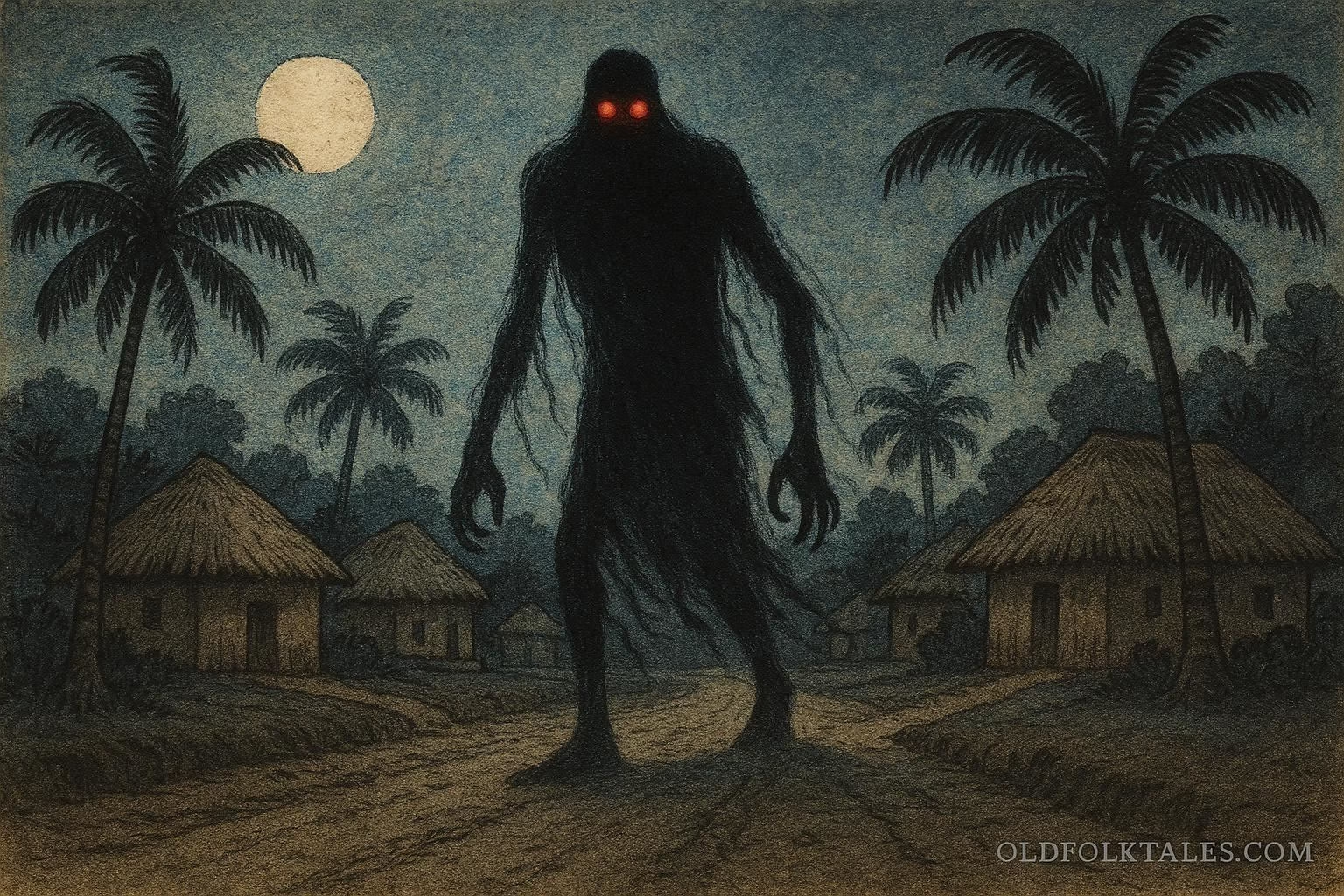
Long ago a village near the edge of the forest lived in constant fear of secrets. Not because people were wicked but because they believed that secrets carried a weight that could harm the community. When someone in the village committed an act that stained the harmony of the land a strange stillness would fall at night. The cicadas would stop singing. The dogs would not bark. Even the wind held its breath as though the world waited for something to step into it. This was when Ogbunabali was believed to walk.
One night a young man named Obinna returned from a distant market. His mind was troubled by something he had done. He had taken what did not belong to him thinking no one would notice. His guilt followed him like a shadow heavier than his load. When he reached the village gate the guards refused to let him pass. Not because they knew what he had done but because they sensed the strange quiet that floated around him.
Discover the gods, goddesses, and divine spirits who ruled the heavens and shaped human fate
Obinna brushed off their warnings and hurried home. He hoped the darkness would hide him and that morning would wash away his fear. But the night had already changed. The moon hid behind thick clouds and the air felt sharp like a whisper of cold stone. As Obinna lay on his mat he heard footsteps far too slow and heavy to belong to any living person. They echoed along the clay path as though each step carried the weight of a judgment already formed.
His heart drummed in his chest. He remembered the stories told by elders who had seen the Night Walker. Ogbunabali never chased people during the day and never punished without cause. His presence was the judgment itself. Those who met him were said to fall not from his hands but from the crushing force of their own guilt made real.
The footsteps stopped outside his door.
Obinna held his breath. The hut grew colder. A shadow darker than the night pressed against the thatched entrance. It did not speak. It did not move. It simply existed like a boundary between truth and falsehood. Obinna’s body trembled as his wrongdoing rose in front of his eyes. Every moment of deception every selfish choice every whispered lie filled the room until he could no longer bear it.
He cried out for forgiveness. And in that moment the shadow faded. The cold lifted. The footsteps dissolved into nothing. When morning came the village found Obinna sitting upright outside his home. He was alive but changed. He confessed everything before the community and returned what he had taken. The elders did not punish him. They believed Ogbunabali had already done what needed to be done.
From that day Obinna lived with honesty and humility. He became a reminder to the village that the Night Walker was not only a bringer of fear but a keeper of balance. People began to understand that the stories of Ogbunabali existed not to terrify them but to protect the harmony that tied every life together.
To this day children in some Igbo communities still hear the name of Ogbunabali whispered by grandmothers during evening storytelling. He is the shadow that reveals the truth the watcher who reminds the living that no wrongdoing remains hidden forever and that integrity is the light that keeps darkness at a distance.
Author’s Note
This story presents Ogbunabali as he appears in modern Igbo folkloric retellings and literary references. In Elechi Amadi’s The Great Ponds Ogbunabali is mentioned as a supernatural night figure associated with sudden death. The story above is adapted from these contemporary interpretations and should be understood as a creative folkloric narrative rather than a historical religious account.
Knowledge Check
1. What is Ogbunabali known for in modern Igbo folklore?
He is a night figure who seeks out hidden wrongdoing and restores moral balance.
2. Why did Obinna fear the footsteps outside his door?
Because he believed Ogbunabali had come to confront him for his secret wrongdoing.
3. What happened when the shadow of Ogbunabali appeared at Obinna’s hut?
The room filled with the weight of Obinna’s guilt until he confessed and sought forgiveness.
4. How did the village respond after Obinna confessed his actions?
The elders forgave him because they believed Ogbunabali had already delivered the judgment.
5. What lesson did the village learn from Obinna’s experience?
They learned that the story of Ogbunabali encourages honesty and protects community harmony.
6. How is Ogbunabali introduced to modern readers today?
Through modern Igbo folklore retellings and literary references such as Elechi Amadi’s The Great Ponds.