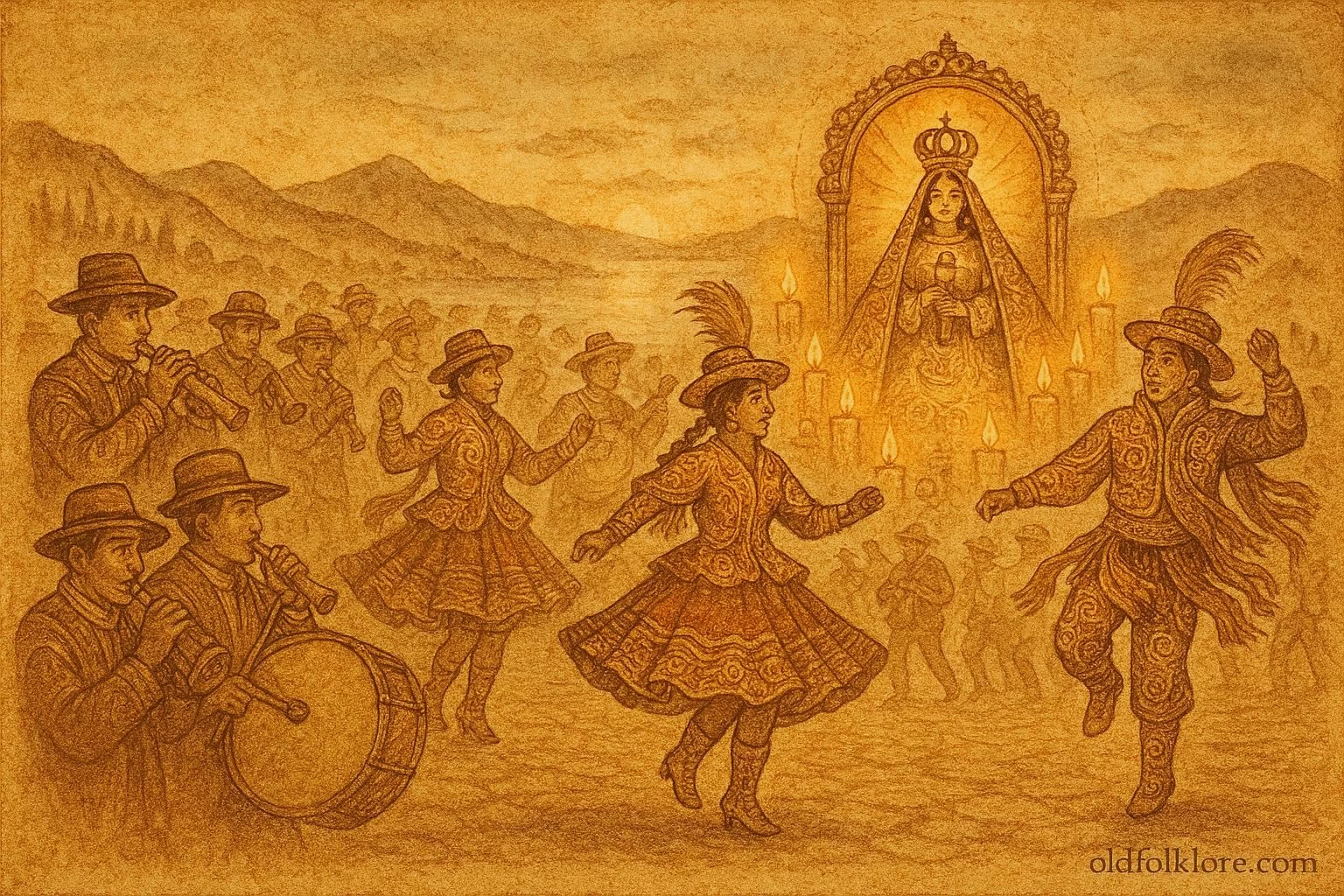
The Fiesta of the Virgen de la Candelaria is one of the most important religious and cultural celebrations in the Andes. Centered in the city of Puno, near the sacred waters of Lake Titicaca, the festival blends Catholic devotion to the Virgin Mary with deep-rooted Aymara and Quechua cosmologies. Its foundations stretch back to colonial evangelization, when Indigenous communities reinterpreted the Candlemas celebration through their own understanding of light, fertility, water, and the cyclical renewal of Earth. Over centuries, the festival evolved into a unique expression of Andean identity, where Catholic liturgy and Indigenous ritual aesthetics coexist.
The Virgin of Candelaria became the patroness of Puno during the eighteenth century, yet the festival’s power rests in older Andean principles. The Virgin’s light is understood as a continuation of pre-Hispanic solar symbolism. Her protective presence parallels Indigenous notions of Pachamama (Mother Earth) and the mountain spirits known as apus. Thus, Candelaria came to represent not only Christian devotion but also a sacred bridge linking heaven, earth, waterways, and ancestors.
UNESCO recognizes the festival as Intangible Cultural Heritage due to its extraordinary integration of faith, ritual, dance, and community identity. Each year, tens of thousands gather in Puno to honor the Virgin while simultaneously celebrating Indigenous worldviews that survived and adapted through syncretism.
Description
The festival unfolds over several weeks, combining solemn Catholic rites with vibrant Indigenous ceremonies. It begins with novenas, church masses, and processions in honor of the Virgin, whose image is carried through the streets. Musicians accompany the procession with traditional wind instruments, echoing ancient Andean soundscapes that once called upon ancestors and nature spirits.
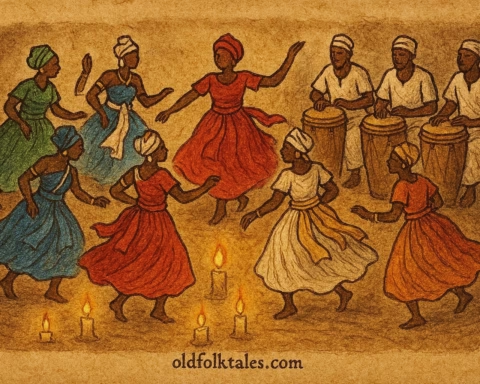
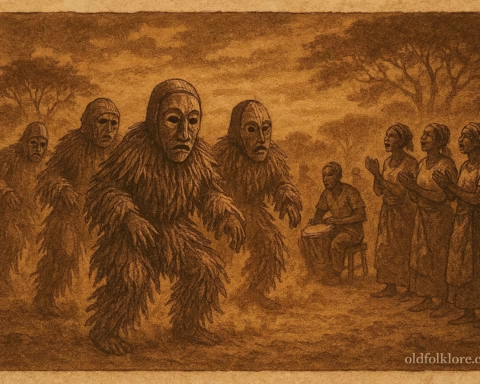
What follows is one of the largest dance festivals in South America. More than 40,000 dancers and musicians participate in elaborate, choreographed performances representing centuries of Andean tradition. Troupes wear ornate costumes reflecting both historical and mythic elements: masked figures from agricultural myth, characters representing Andean deities, and dramatizations of colonial encounters. The diablada, morenada, caporales, and tinkus are among the many dances, each expressing a social or spiritual message.
Alongside the festivities, offerings are made to Pachamama and Lake Titicaca. These offerings, often coca leaves, flowers, or symbolic foods, acknowledge the lake as a sacred origin place in Andean mythology. Such acts remind participants that the Virgin is not celebrated in isolation but through a cosmology that venerates earth, water, ancestry, and reciprocity.
Community feasts, street parades, and musical competitions fill the city with movement and sound. Families prepare special foods, invite guests, and reaffirm social bonds. Meanwhile, the candle symbolism of Candlemas resonates throughout the celebrations. Light represents purification, renewal, and guidance, values present in both Catholic and Indigenous traditions.
Although Puno hosts the most famous version, other Andean regions hold their own Candelaria festivals with local dances, costumes, and ceremonial forms. Each variation reflects the community’s history and ancestral memory, demonstrating how the festival shifts and adapts while preserving its sacred essence.
Mythic Connection
At its heart, the Fiesta of the Virgen de la Candelaria expresses a profound relationship between divine light and the living world. Catholic Candlemas celebrates the presentation of Jesus and the purification of Mary. In Andean interpretation, this moment aligns with seasonal renewal, agricultural preparation, and the blessing of the natural world.
The Virgin becomes a guardian of fertility and protection, roles once associated with Andean goddesses and the earth itself. Her candles mirror the sun’s life-giving radiance and the earth’s cycles of rebirth. In many Indigenous interpretations, the Virgin’s light harmonizes with Pachamama and the apus, allowing Andean communities to maintain spiritual continuity despite dramatic cultural change.
The dance traditions also hold mythic layers. Masked performers often embody figures tied to cosmological stories: spirits of mountains, agricultural guardians, or symbolic animals that taught early humans how to survive. Through dance, these beings return to the human realm, blessing the community and renewing ancient bonds.
Thus, the festival becomes a space where Catholics pray to the Virgin while Indigenous participants honor ancestral forces. The result is not conflict but coexistence, a spiritual harmony shaped by centuries of adaptation. The festival shows how myth, ritual, and faith sustain a people even as history transforms their world.
Author’s Note
This article reflects the Fiesta of the Virgen de la Candelaria as a living system of meaning, one that unites Indigenous cosmology with Catholic devotion. Its dances, offerings, and ceremonies illuminate how Andean communities preserve ancient relationships with nature, ancestors, and divine light. The festival stands as one of the clearest examples of cultural endurance in the Andes.
Knowledge Check
1. What cultures shaped the Candelaria festival?
A blend of Catholic, Aymara, and Quechua traditions.
2. Why is the Virgin associated with light?
Her symbolism aligns with Candlemas and older Andean solar beliefs.
3. What role do dance troupes play?
They reenact mythic figures, social histories, and ancestral stories.
4. How do offerings connect to Andean cosmology?
They honor Pachamama, ancestors, and Lake Titicaca as sacred forces.
5. Why is Puno’s celebration the most well-known?
Because of its scale, heritage status, and long-standing community participation.
6. How does the festival express cultural resilience?
It preserves Indigenous worldview through syncretism and ceremonial continuity.