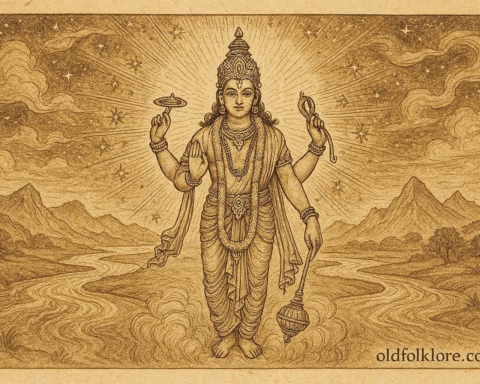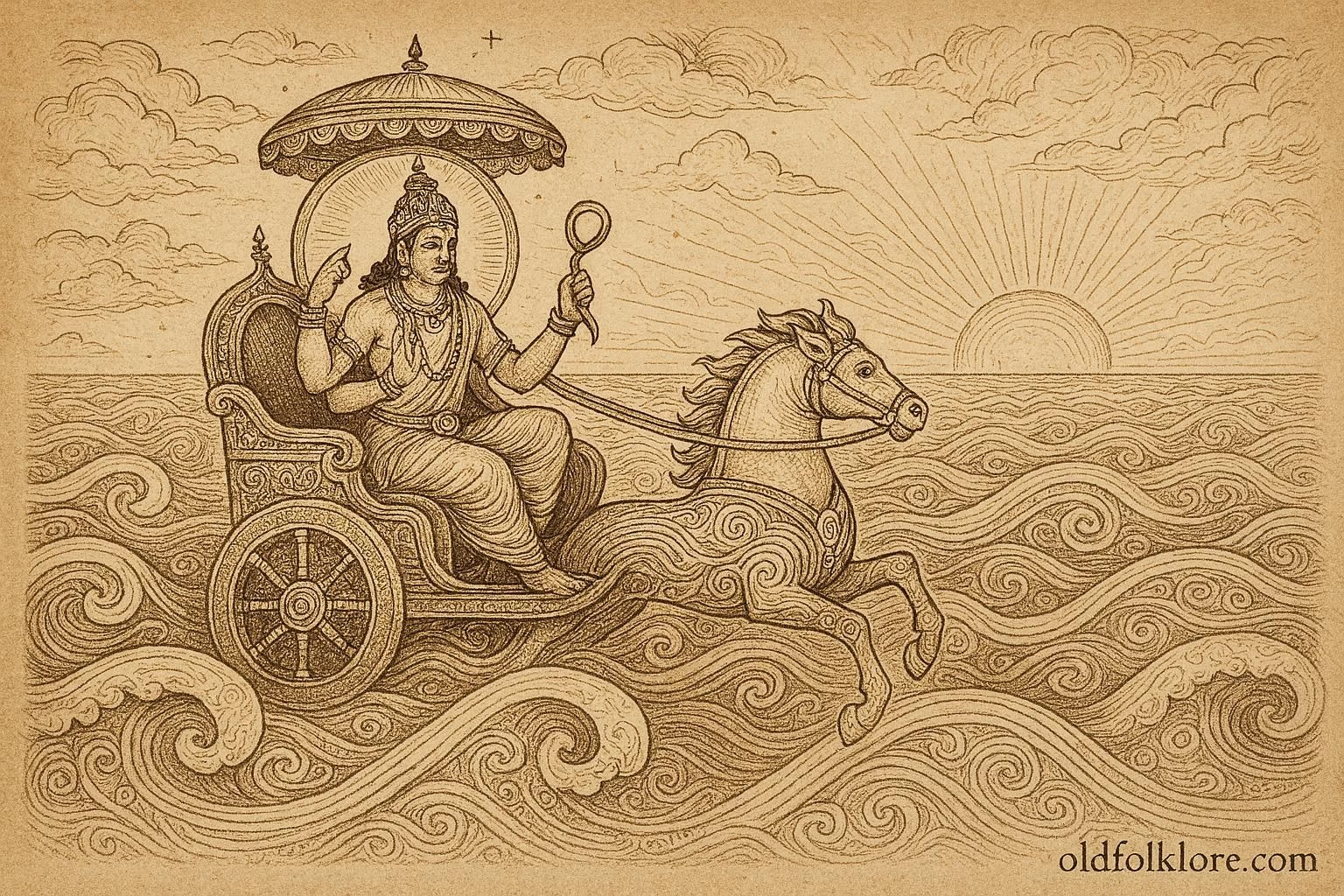
Varuna is the ancient Vedic god of cosmic order (Ṛta), the oceans, morality, and divine law. As the guardian of truth and justice, he observes human deeds, rewards righteousness, and punishes transgression. His authority spans both physical waters and moral realms, reflecting a universe bound by order, balance, and sacred law.
Varuna is often depicted riding a mythical sea creature or celestial chariot, traversing the oceans to maintain the harmony of the cosmos. His symbols include the noose or cord, which represents his power to capture wrongdoers, and the waters themselves, signifying purification and moral clarity. In the pantheon, Varuna is considered one of the Adityas, a group of solar deities, holding supreme oversight over both gods and humans in early Vedic tradition.
Explore the mysterious creatures of legend, from guardians of the sacred to bringers of chaos
Worship practices in ancient India included ritual offerings into rivers, hymns invoking justice, and sacrifices (yajñas) to honor Varuna’s role in maintaining cosmic and social balance. He was invoked not only for physical well-being but also for moral guidance, ensuring that both rulers and commoners acted in accordance with dharma and Ṛta.
Mythic Story: Varuna and the Moral Order
In the earliest Vedic hymns, Varuna’s gaze encompasses the heavens, the oceans, and the hidden thoughts of men. His eyes pierce the veil of deceit, seeing not only deeds but intentions, and his noose hangs ready to bind the unrighteous. The Rigveda recounts that Varuna rewards those who uphold truth and dharma, while misdeeds call forth his judgment, sometimes gentle correction, other times fierce retribution.
One tale tells of a king whose arrogance and greed led him to oppress his people and hoard water from the sacred rivers. Crops began to fail, and the earth itself seemed to murmur its distress. Varuna, riding the waves of the great ocean, sent forth a storm that rose like a living serpent, threatening to flood the kingdom. Yet even in this, his justice was tempered by mercy. A sage, wise in the ways of Ṛta, pleaded with Varuna on behalf of the people. Seeing genuine remorse and willingness to restore balance, Varuna withdrew the storm but demanded restitution and the king’s promise to govern rightly.
In another hymn, Varuna’s cosmic oversight is depicted as weaving the strands of heaven and earth, ensuring that day follows night, rivers flow, and stars maintain their courses. Humans, like fish in the vast ocean, swim within the boundaries he sets. To defy these limits is to invite both natural and moral consequence. Even the gods respect Varuna, offering homage and seeking his counsel in disputes, for his judgment embodies the eternal law that governs all existence.
Varuna’s influence also extends to the seas, which he governs with gentle vigilance. Sailors and fishermen revered him, offering prayers before voyages, for he could calm turbulent waters or summon storms if wronged. This duality, protector and punisher, illustrates the inseparable nature of morality and order: justice is both shield and sword, binding the cosmos together.
Through these narratives, Varuna emerges not merely as a god of oceans or law but as a living embodiment of balance, reminding humans that freedom carries responsibility, and that every action resonates through the web of creation. His presence is invisible yet omnipotent, guiding the moral compass of the Vedic world.
Discover the gods, goddesses, and divine spirits who ruled the heavens and shaped human fate
Author’s Note
Varuna teaches that cosmic order and human morality are intertwined. His myths remind us that justice is not abstract but intimately connected to everyday actions, from leadership to personal conduct. The god’s oversight of both waters and morality reflects a universe where nature and ethics are inseparable, and where true harmony depends upon respect for universal law.
Knowledge Check
Q1: Who is Varuna, and what domains does he oversee?
A: Varuna is a Vedic deity of cosmic order, the oceans, morality, and divine justice.
Q2: What symbols are associated with Varuna?
A: The noose (representing justice) and waters (signifying purification and moral clarity).
Q3: How does Varuna respond to wrongdoing?
A: He punishes wrongdoing, either through natural consequences or divine intervention, but may show mercy when remorse and restitution are offered.
Q4: Which group of deities does Varuna belong to?
A: The Adityas, a group of solar deities in Vedic tradition.
Q5: How is Varuna’s influence depicted in the Rigveda?
A: He is portrayed as overseeing both human and divine actions, binding the cosmos with Ṛta, and ensuring moral and natural order.
Q6: What broader lesson does Varuna convey?
A: That morality, justice, and cosmic order are interconnected, and human actions resonate through both the natural and ethical world.
Source: Rigveda, Vedic India
Source Origin: Vedic India