The Baci, known in Lao as Su Kwan (“calling of the kwan”), is one of the most widespread and cherished ceremonies among Lao-Tai cultures. Practiced in Laos, Isan, and parts of Northern Thailand, it predates Buddhism and reflects ancient Austro-Tai beliefs about the human soul. Traditionally, each person is said to possess thirty-two kwan, life-forces or guardian spirits that govern physical and emotional well-being. If these kwan wander, weaken, or flee, a person becomes vulnerable to illness, misfortune, or spiritual imbalance. The Baci ritual calls these spirits back and secures them through symbolic binding with white cotton threads.
Over time, the ceremony merged with Buddhist teachings, village customs, and social life. Today, it is performed for almost every major life event: births, weddings, house blessings, illness recovery, travel, returns from afar, and even diplomatic welcomes. Its endurance reveals how deeply khwan cosmology shapes the Lao understanding of harmony, community, and the sacred.
Description
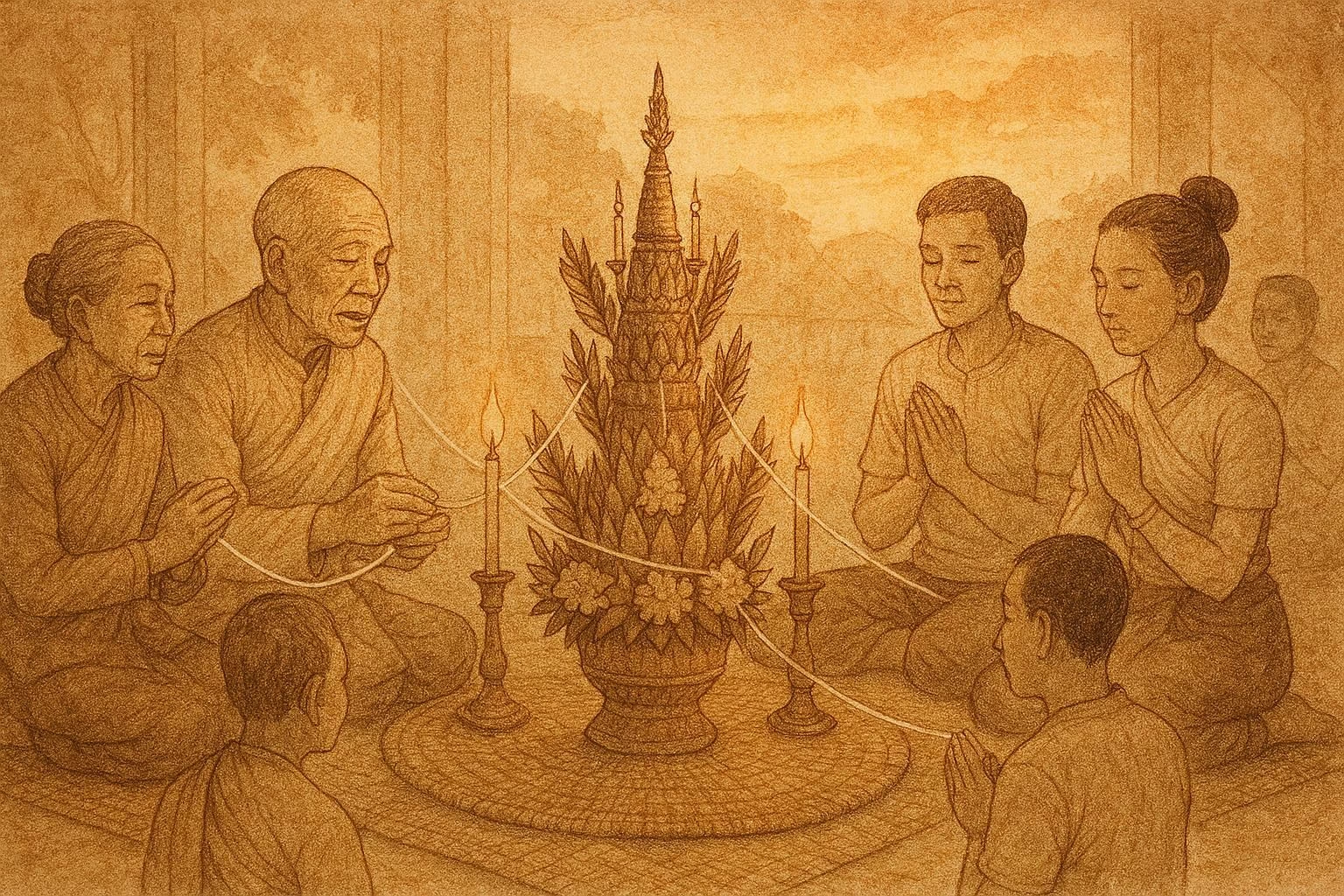
A traditional Baci begins with the preparation of the pha khuan, a ritual centerpiece crafted from banana leaves, flowers, silver bowls, candles, and sacred threads. It represents a cosmic axis, the place where human intention meets divine protection. The mophal, an elder, monk, or respected ritual specialist, presides over the ceremony.
Participants gather in a circle, sitting on mats around the pha khuan. Candles are lit, incense rises, and a quiet expectancy fills the room. As the ceremony begins, the mophal chants invocations, calling the kwan of each person present to return from wherever they have wandered. These chants vary by region, but their purpose is constant: to restore unity within the self.
Next comes the tying of the white threads. Elders, family members, or guests gently loop the threads around each participant’s wrist, tying three soft knots while speaking blessings “May you be healthy,” “May your spirit be strong,” “May your journey be safe.” The strings must remain on for at least three days; some people keep them longer, allowing the blessing to “settle.”
Food offerings are then shared. Sticky rice, fruits, eggs, sweets, and local dishes are arranged on ceremonial trays. The communal meal seals the ritual’s purpose: healing through togetherness. In Lao thought, spiritual harmony is not achieved alone; it is shaped and protected by the community.
Although many Baci ceremonies are intimate family gatherings, others occur on a grand public scale. Weddings feature elaborate pha khuan towers, musicians performing traditional mor lam melodies, and extended kin networks joining in. State functions welcoming foreign dignitaries often include a formal Baci to honor guests with Lao hospitality. Whether private or public, the ritual delivers the same message: “You belong here. Your spirit is whole.”
Mythic Connection
At the heart of the Baci lies the ancient Lao belief in the khwan, spiritual components that guard the body’s organs and essence. These entities are not souls in the Western sense; they are more like protective energies that ensure a person’s equilibrium. When frightened, fatigued, or emotionally shaken, a person’s kwan may slip away. Losing too many kwan was traditionally believed to cause illness or emotional distress.
The mythic worldview behind this ritual imagines humans as part of a larger cosmic order. The khwan, though associated with individuals, move in response to environmental forces, ancestral spirits, and unseen powers. A person whose kwan are unsettled is not simply “unwell”, they are out of balance with the spiritual currents that flow through the world.
Calling the kwan home is therefore an act of cosmic restoration. The binding of threads symbolizes “tying” the soul-energies in place, protecting them from wandering again. The color white represents purity, blessing, and the cleansing of misfortune.
As Buddhism spread throughout the region, monks incorporated Baci practices without erasing their animist roots. Khwan cosmology aligned naturally with Buddhist emphasis on compassion, intention, and the interdependence of all beings. Today, the Baci stands as one of the clearest examples of how Lao-Tai spirituality merges animism and Buddhism into a harmonious cultural system.
Above all, the ceremony reflects the deep belief that spiritual strength is relational: we are held together by our communities, our ancestors, and the forces that animate the world.
Author’s Note
This article examines the Baci as a central Lao-Tai ritual that unites ancient khwan beliefs with Buddhist and communal values. It highlights how the ceremony restores spiritual balance, strengthens social bonds, and expresses a worldview in which human well-being depends on harmony between body, community, and unseen forces.
Knowledge Check
1. What are “khwan”?
They are protective life-spirits believed to guard a person’s health, emotions, and spiritual balance.
2. Why is white thread tied around the wrist?
It symbolizes blessing, protection, and the binding of the returning kwan to the body.
3. What is the pha khuan?
A decorated ritual centerpiece representing the cosmic axis where blessings gather and are distributed.
4. When is the Baci performed?
During major life transitions such as births, weddings, travels, returns, illness recovery, or important welcomes.
5. How does Buddhism influence the Baci?
Buddhist chants and values merge with older animist beliefs, creating a harmonious ritual tradition.
6. What does the ceremony ultimately seek to restore?
Personal and communal harmony, achieved by calling back the kwan and strengthening social connection.