In the rugged heart of the Carpathian Mountains, where dense forests clung to steep slopes and morning mists wrapped around ancient peaks like ghostly scarves, there lived during the early eighteenth century a young man whose name would become synonymous with justice and rebellion. Juraj Jánošík was born into a world of harsh inequality, where wealthy nobles lived in magnificent estates while common folk struggled beneath the crushing weight of feudal oppression and poverty.
The Slovak lands of that era groaned under the rule of Hungarian aristocrats who treated the mountain people as little more than property. Taxes squeezed families until they had nothing left, cruel bailiffs enforced unjust laws with iron fists, and those who protested found themselves in chains or worse. The forests and mountain passes became dangerous places, not because of wolves or bears, but because desperation drove honest men to desperate acts.
Click to read all Myths & Legends – timeless stories of creation, fate, and the divine across every culture and continent
Young Jánošík grew up witnessing these injustices firsthand. His father was a simple man, hardworking and honest, who taught his son the value of dignity and the importance of standing against wrong. But words and good intentions meant little against armed soldiers and corrupt magistrates. When Jánošík came of age, he faced a choice that would define his destiny: submit to the crushing system that ground his people into dust, or rise against it, no matter the cost.
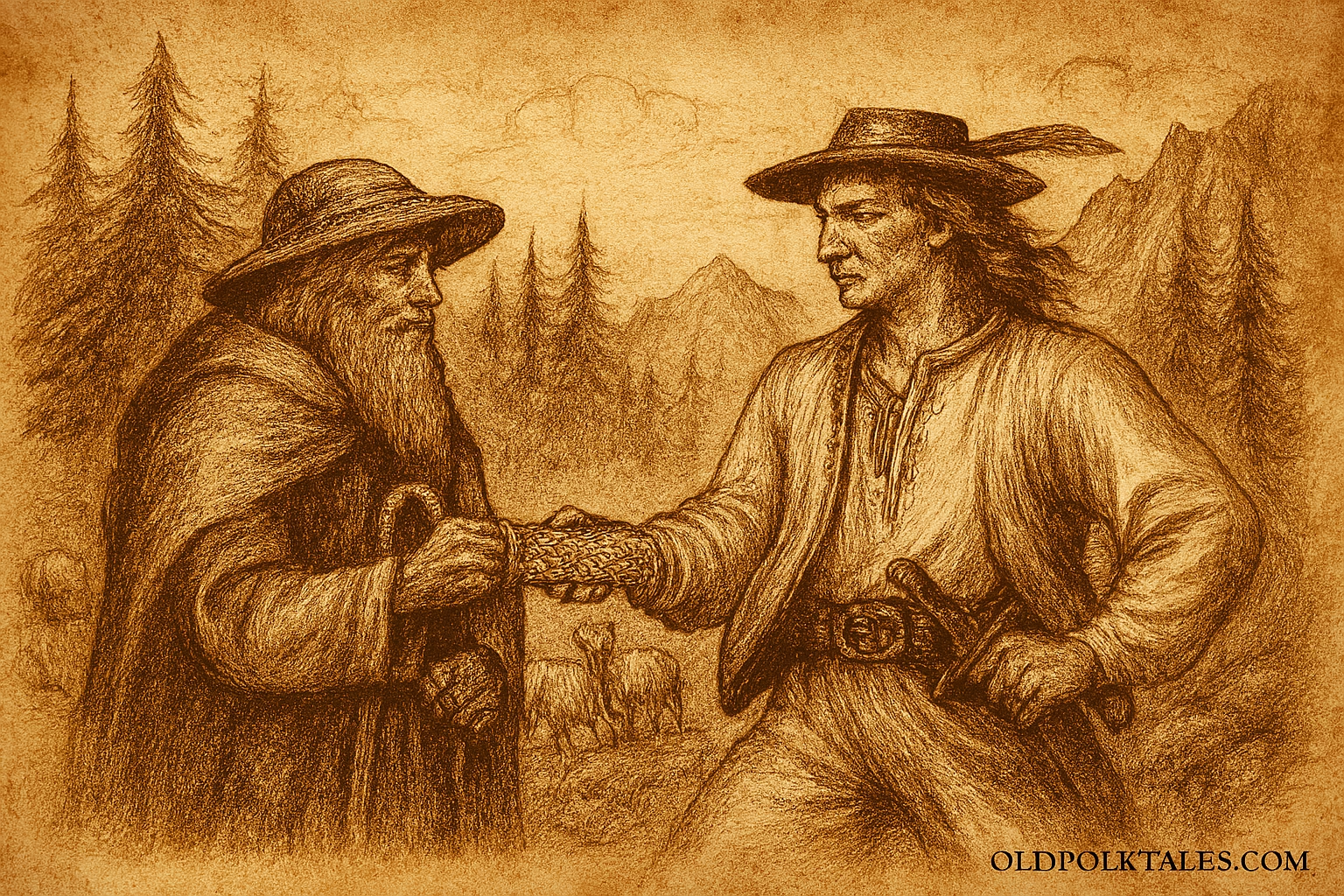
The turning point came when Jánošík encountered a mysterious old shepherd in the high mountain pastures, where sheep grazed among wildflowers and eagles circled overhead. This was no ordinary shepherd, but a wise man who knew the ancient secrets of the mountains, the old magic that still flowed through the Carpathian peaks like underground rivers. The shepherd saw in young Jánošík a pure heart and fierce courage, qualities rare enough to be precious as gold.
From beneath his weathered cloak, the shepherd produced a strange object: a magical belt with an enchanted hook attached to it. This was no ordinary hook, but an artifact of great power, forged in times when the boundary between the mortal world and the realm of spirits was thin as morning dew.
“This belt will make you invincible,” the old shepherd said, his eyes gleaming with knowledge of things beyond mortal understanding. “No blade can harm you while you wear it. No chains can hold you. You will be able to leap across valleys and scale cliffs that would kill ordinary men. But remember, such power comes with responsibility. Use it to serve justice, not yourself, or the magic will turn against you.”
Jánošík accepted the gift, feeling its power coursing through him like liquid fire. He gathered around him a band of fellow outlaws, men who had also suffered under noble oppression, who had lost family members to starvation or seen their homes burned for unpaid taxes. Together, they made the deep forests their home, sleeping under the stars, living free as the wind that whistled through the pine trees.
Their targets were always the same: the wealthy nobles who traveled through mountain passes with coffers full of gold extorted from poor villagers, the corrupt tax collectors whose purses bulged with coin taken from families who could barely afford bread, the cruel bailiffs who enforced unjust laws with savage enthusiasm. Jánošík and his men would appear as if from nowhere, materializing from the forest shadows like avenging spirits.
With his magical belt, Jánošík could perform feats that seemed impossible. He would leap from cliff to cliff across dizzying chasms, his body defying gravity itself. When soldiers tried to surround him, he would scale sheer rock faces as easily as walking up stairs, or spring over their heads in bounds that covered dozens of feet. Swords and muskets proved useless against him; blades that should have cut deep merely glanced off as if striking stone, and bullets seemed to veer away from their target as if guided by invisible hands.
But Jánošík’s true power lay not in his invincibility, but in his sense of justice. Unlike common bandits who grew fat on their stolen wealth, he and his men kept only what they needed to survive. The rest they distributed to the poor villages scattered throughout the mountains. A widow who could not pay her taxes would find a small purse of coins on her doorstep. Children who went to bed hungry would wake to discover bread and meat waiting outside their homes. Families about to be evicted would find exactly the amount they needed, delivered mysteriously in the night.
The people called him their protector, their champion. In villages throughout the Slovak highlands, mothers sang ballads about Jánošík to their children, stories of how he outwitted cruel nobles and made fools of the authorities. The forest itself seemed to aid him; hunters swore they saw him speaking with woodland spirits, calling upon ancient powers that dwelled in the deepest groves and highest peaks.
The nobles, of course, raged against him. They doubled the patrols, increased the rewards for his capture, and hired the most cunning trackers in the kingdom. But how do you catch a man who can jump over armies, who cannot be wounded, who seems to vanish into the forest like smoke? The soldiers returned again and again with empty hands and tales that sounded more like myths than reports.
Yet even magical protection has its limits, and every hero’s story must reach its end. According to the legends, Jánošík’s downfall came not through superior force but through betrayal and trickery. Some say a traitor among his own band revealed the secret of his magical belt. Others claim that a cunning noble’s daughter seduced him, learning his weaknesses through false love. Still others whisper that he was captured only when he removed his enchanted belt to bathe in a mountain stream, placing his trust in the wrong person for a single fatal moment.
When they finally took him, the authorities knew they could not hold him with ordinary chains. They called upon priests to bind him with blessed iron, and some stories say they even summoned dark powers to counter the forest magic that protected him. Even then, the legends speak of how Jánošík called upon the forest spirits one last time, how the trees groaned and animals howled the night before his execution, as if nature itself mourned the loss of its champion.
His historical execution could not kill the legend. In the centuries that followed, Jánošík became more than a man; he transformed into a symbol of Slovak resistance against oppression, a reminder that even in the darkest times, heroes can rise to challenge injustice. His story was passed down through generations in songs and ballads, each telling adding new details, new miracles, until the historical outlaw and the mythical hero became inseparable.
Even today, when travelers walk through the Carpathian forests, some claim they can still feel his presence in the shadows between the trees, a guardian spirit watching over the land and people he loved so fiercely that not even death could sever that bond.
The Lesson
The legend of Jánošík teaches us that true heroism lies not in power itself, but in how that power is used. It reminds us that standing against injustice, even when the odds seem impossible, can inspire generations and create change that outlasts any single lifetime. Most importantly, Jánošík’s story shows that the greatest magic is not invincibility or supernatural strength, but the courage to fight for others, the wisdom to share rather than hoard, and the integrity to remain true to justice even when it leads to personal sacrifice.
Knowledge Check
Q1: Who was Juraj Jánošík in Slovak folklore and history?
A: Juraj Jánošík was an eighteenth century Slovak outlaw who became his nation’s greatest folk hero. In legend, he was a Robin Hood figure who robbed wealthy, cruel nobles and gave to the poor. He possessed magical powers from an enchanted belt that made him invincible and allowed him to perform impossible feats, becoming a symbol of resistance against feudal oppression in the Carpathian Mountains.
Q2: What magical powers did Jánošík’s enchanted belt give him?
A: The magical belt with its enchanted hook made Jánošík invincible to weapons, meaning no blade could harm him and no chains could hold him. It also gave him supernatural physical abilities, allowing him to leap impossible distances across valleys, scale sheer cliffs easily, and perform feats that defied normal human limitations. The belt was given to him by a mysterious shepherd who recognized his pure heart.
Q3: Why did Jánošík become an outlaw instead of living a normal life?
A: Jánošík became an outlaw because he witnessed the crushing oppression and injustice that wealthy Hungarian nobles inflicted upon common Slovak people in the Carpathian region. Rather than submit to a system where cruel aristocrats exploited poor families through excessive taxes and brutal enforcement, he chose to fight back, using his gifts to rob from the rich and give to those who suffered under feudal tyranny.
Q4: How did Jánošík help the poor people of Slovakia?
A: Jánošík and his band of outlaws would ambush wealthy nobles, tax collectors, and corrupt bailiffs traveling through the mountain passes, taking their ill gotten gold. Unlike common bandits, they kept only what they needed to survive and distributed the rest to poor villages. Families would mysteriously find coins, food, and exactly what they needed to pay unfair taxes or avoid eviction, delivered secretly in the night.
Q5: What role do forest spirits play in the Jánošík legend?
A: Forest spirits in the legend represent the ancient magical powers of the Carpathian Mountains that aided Jánošík in his quest for justice. Stories tell of him calling upon these woodland spirits for help, and the forest itself seemed to protect him. When he was finally captured, legends say the trees groaned and animals howled in mourning, suggesting his deep connection to the natural and spiritual forces of the mountains.
Q6: Why does Jánošík remain important in Slovak culture today?
A: Jánošík remains Slovakia’s national folk hero because he symbolizes resistance against oppression, courage in fighting injustice, and the spirit of helping those in need. His legend has been preserved for centuries through Slovak oral ballads and folk tales, representing Slovak identity, independence, and the enduring belief that even ordinary people can stand up against tyranny and become extraordinary defenders of justice.
Source: Adapted from Slovak oral ballads and folk tales.
Cultural Origin: Slovakia