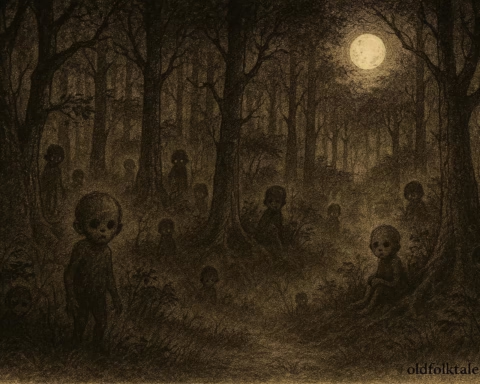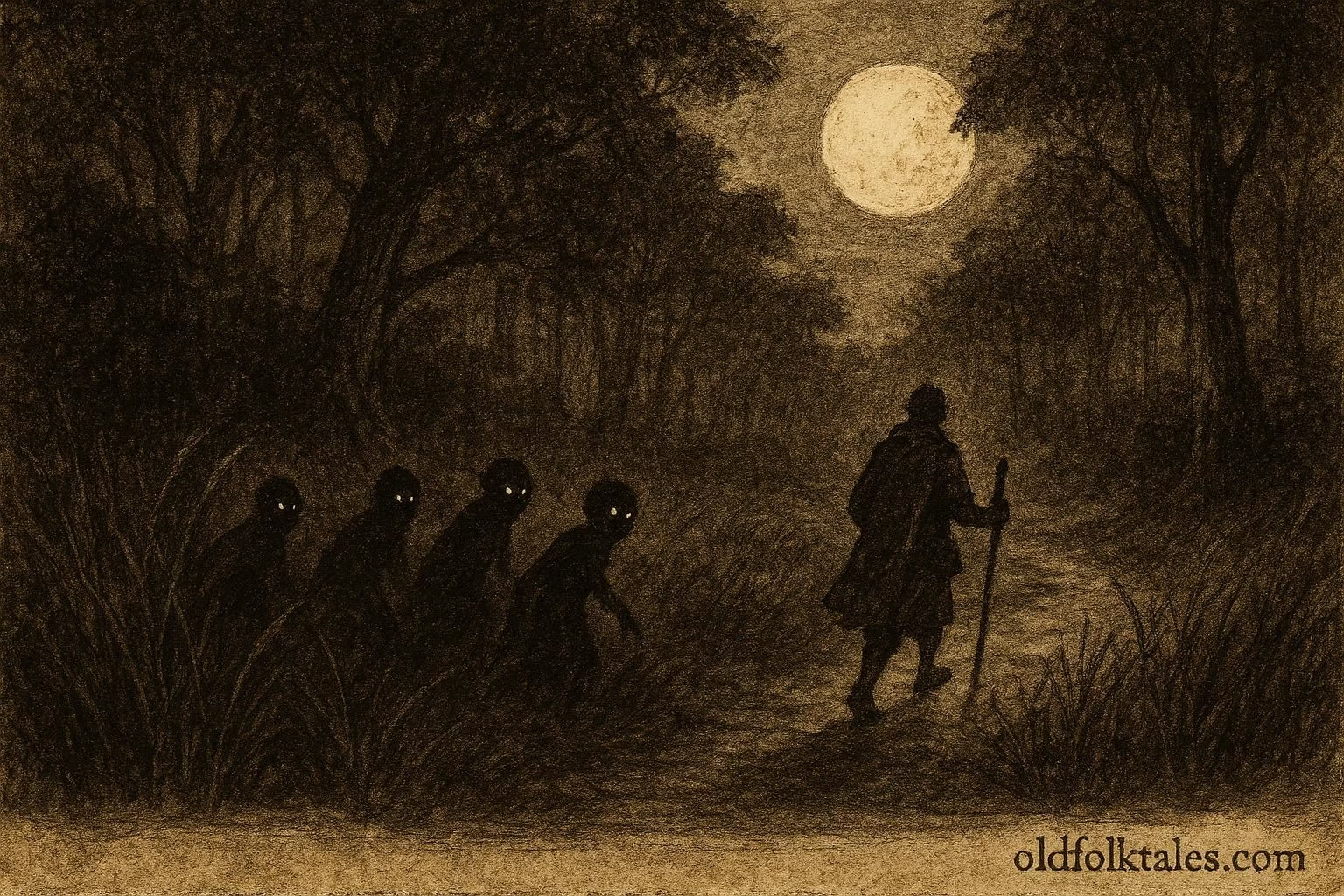
Among the Lugbara people, the Adroanzi occupy a mysterious and paradoxical place in spiritual belief: they are both protectors and destroyers, guardians of the night whose blessing or wrath depends entirely on human discipline. Widely described as small, shadowy figures, neither fully human nor fully spirit, they move silently behind travelers who walk alone after dusk. Their bodies are said to be thin, elongated, and fluid, sometimes shimmering like moonlit smoke. Elders describe them as shadows detached from their owners, or as the children of Adroa, the Lugbara supreme deity.
The Adroanzi appear only at night, often along forest paths, riverbanks, tall grasslands, and village outskirts. Stories say they walk single file, gliding rather than stepping, never announcing their presence. Some accounts insist they resemble small children made of darkness, others that they appear as miniature adults with oversized eyes, but all testimonies agree: they do not like to be seen.
The core belief surrounding their behavior is simple but terrifyingly strict:
If a traveler senses the Adroanzi following and turns to look at them, the spirit kills the traveler instantly.
But if the traveler continues forward without looking back, the Adroanzi guard them faithfully until they reach their destination.
Thus they are both deadly stalkers and selfless protectors, bound by a rule that places the responsibility entirely on the human.
Adroanzi are also said to oversee natural places: groves, streams, springs, tall termite mounds, and ancestral paths. Some elders describe them as fertility spirits, nurturing crops and protecting domestic animals from unseen dangers, especially at night. When angered, however, they can dry fields, cause invisible sickness, or lure disobedient wanderers into the dark.
Their powers include:
-
Shadow traversal, the ability to move within darkness faster than humans can run
-
Invisibility or semi-visibility, especially when they do not wish to be perceived
-
Life protection, especially for the respectful
-
Instant killing of those who violate their single rule
-
Natural guardianship, influencing vegetation, animals, and the spiritual balance of the land
The Adroanzi occupy a unique category within Lugbara cosmology, a category that blurs guardian spirits, nature beings, and ancestral watchers.
Cultural Role
The Adroanzi reflect foundational Lugbara values concerning respect, discipline, humility, and proper conduct in liminal spaces.
1. Morality of Self-Control: The primary lesson they embody is restraint. In Lugbara storytelling, a person who panics, acts impulsively, or disobeys instruction brings misfortune upon themselves. To travel safely at night, one must trust what cannot be seen, maintain calm, and resist curiosity. This teaches children and adults alike that survival depends not only on physical strength but on character.
2. Protection in Vulnerable Spaces: Night travel is dangerous in many African landscapes. The idea that benevolent spirits follow you, so long as you behave correctly, helps people feel secure without denying natural dangers. The Adroanzi represent the belief that the spiritual world watches over humans, especially in darkness where ancestors and spirits are closest.
3. Custodians of Nature: Many stories portray the Adroanzi as guardians of sacred places. They protect water sources, forests, and groves from human greed or disrespect. This reinforces the Lugbara ethic of ecological responsibility, to misuse land, pollute waters, or violate sacred paths invites spiritual consequences.
4. Symbol of Liminality: The Adroanzi embody the uncertain space between life and death, seen and unseen, danger and safety. They guide travelers across thresholds—paths, borders, times of day—and symbolize the broader Lugbara understanding that existence is layered, with visible and invisible forces constantly interacting.
5. Social Order and Community Guidance: Parents use the Adroanzi as cautionary figures:
-
Children should not wander alone at night.
-
Travelers must not panic or behave foolishly.
-
Respect for land and spirits is essential.
Thus the Adroanzi help maintain social discipline, using fear and reassurance in equal measure.
Ultimately, they symbolize the Lugbara concept that all things contain dual possibilities, protection and danger, blessing and curse. Human behavior determines which path unfolds.
Explore the mysterious creatures of legend, from guardians of the sacred to bringers of chaos
Author’s Note
The Adroanzi are a striking example of how African spiritual traditions integrate morality, natural landscape, and the unseen world. They are neither demons nor angels in the Western sense but complex beings whose relationship with humans depends on conduct. Their duality reflects the Lugbara worldview: the world is balanced by forces that respond to human behavior, not random chaos. In researching this entry, I relied on Lugbara oral accounts, anthropological studies, cultural field notes, and the testimonies of elders recorded in regional folklore collections.
Knowledge Check
1. Q: What do the Adroanzi do when a traveler does not look back?
A: They walk behind the traveler and protect them until they reach safety.
2. Q: What is the consequence of looking back at an Adroanzi?
A: The traveler is instantly killed by the spirit.
3. Q: What natural areas are Adroanzi associated with?
A: Streams, groves, tall grasses, forest paths, and sacred natural sites.
4. Q: What moral lesson do the Adroanzi symbolize?
A: Self-control, discipline, and trust in the unseen.
5. Q: Are Adroanzi considered evil spirits?
A: No, they can protect or harm depending on human behavior.
6. Q: How are the Adroanzi connected to Lugbara cosmology?
A: They are regarded as children or servants of Adroa, the supreme deity.
Source: Lugbara Oral Tradition (Uganda & Democratic Republic of Congo)
Origin: Lugbara ethnic communities of northwestern Uganda and northeastern DRC