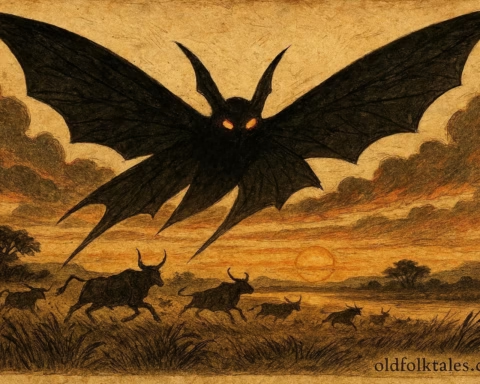
In the scattered jewels of the Torres and Banks Islands, where volcanic peaks rise from sapphire waters and the night sky blazes with stars undimmed by any earthly light, there once lived a being who walked between worlds. His name was Tokosik, and though he appeared in the form of a flying fox those magnificent fruit bats with wingspans wide as a man’s outstretched arms he was far more than any ordinary creature. Tokosik was an ancestral being, carrying within him the wisdom of ages and the sacred knowledge that would shape the lives of the island people for generations to come.
Tokosik’s form was a wonder to behold. His fur gleamed like polished volcanic stone in the moonlight, and his wings, when spread, seemed to capture the very essence of the night sky. His eyes held an intelligence that went beyond animal instinct they reflected understanding, compassion, and the deep awareness of one who sees both the visible world and the unseen forces that move through it. The people of the Torres and Banks Islands recognized immediately that Tokosik was no common flying fox. He was a teacher, a guide, an ancestor who had chosen to manifest in this form to walk among them and share the knowledge they would need to thrive.
In those early days, the people struggled to coax abundance from the volcanic soil. They planted their gardens haphazardly, without understanding the rhythms of the earth or the proper ways to encourage growth. They worked hard but saw little reward for their efforts, and hunger was a constant companion in many households. Tokosik observed their struggles with wise, knowing eyes, and he understood that the time had come to share the sacred knowledge of cultivation.
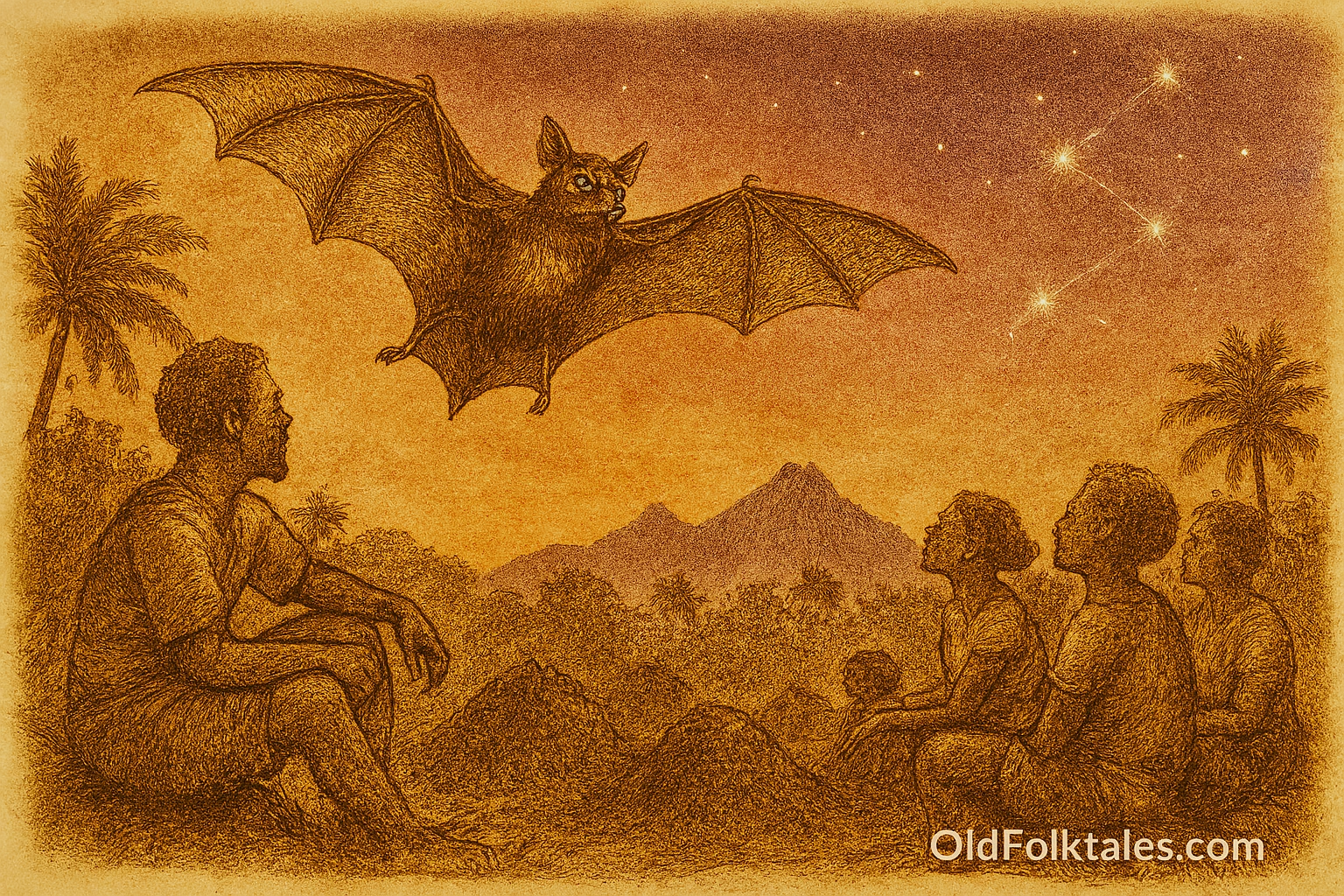
As twilight painted the sky in shades of orange and purple, Tokosik would emerge from the forest canopy and glide down to where the people gathered. His voice, when he spoke, carried the rustling of leaves and the whisper of wind through branches, but his words were clear and filled with patient instruction. He taught them which crops to plant and when to plant them, following the cycles of the moon and the patterns of the stars. He showed them how to prepare the soil, how to create mounds that would drain properly during the heavy rains, and how to arrange their gardens so that plants would support and strengthen one another.
“The earth is alive,” Tokosik explained, his wings folded like a cloak around his body as he perched on a low branch. “She breathes, she gives, and she requires respect. When you plant, speak to the soil. Thank it for its gifts. When you harvest, leave offerings. Never take more than you need, and always remember that the land feeds your children and your children’s children.”
But gardening was not the only knowledge Tokosik shared. He taught the people about taboos those sacred prohibitions that maintain balance between the human world and the spirit realm. He explained which places were sacred and must not be disturbed, which times were appropriate for certain activities and which were not, which foods could be eaten freely and which required ritual preparation. These taboos were not arbitrary rules but rather guidelines that protected both the people and the delicate web of spiritual forces that surrounded them.
“When you observe taboos,” Tokosik said, his dark eyes reflecting the firelight as the people gathered to listen, “you show respect to the ancestors, to the spirits, and to the natural order that sustains all life. Break these sacred observances carelessly, and you risk not just your own wellbeing but that of your entire community.”
Perhaps most remarkable of all was Tokosik’s teaching about night navigation. As a flying fox who traversed the darkness with ease, he understood the night in ways that humans could not naturally comprehend. He taught the islanders to read the stars, to recognize constellations and use them as guides when traveling between islands or fishing in distant waters. He showed them how to observe the winds, how to interpret the behavior of seabirds even in darkness, and how to find their way home when the night seemed endless and disorienting.
“The night is not your enemy,” Tokosik assured them, spreading his magnificent wings to demonstrate how he rode the air currents. “The night is when the ancestors are closest, when the stars shine brightest to guide you, and when the ocean reveals secrets hidden during the bright day. Learn to move through darkness with confidence, and you will never be lost.”
Under Tokosik’s patient guidance, the people of the Torres and Banks Islands flourished. Their gardens grew abundant, producing yams and taro that filled their food houses to overflowing. They observed the taboos he had taught them, and they found that their relationship with the spirit world became harmonious and balanced. They learned to navigate by starlight, traveling safely between islands to trade, visit relatives, and fish in the richest waters, no longer bound by the limitations of daylight.
The people loved Tokosik deeply, for he had given them not just practical knowledge but a way of living that honored both the physical and spiritual aspects of existence. Children grew up hearing his teachings, and elders passed down his wisdom with reverence. Tokosik had become woven into the very fabric of their culture.
But as with all beings who walk between worlds, Tokosik’s time in physical form was limited. The day came when he gathered the people together one final time. The sun was setting, and the first stars were beginning to appear in the darkening sky. Tokosik perched on the highest branch of an ancient banyan tree, his form silhouetted against the emerging constellations.
“I have taught you all that you need to know,” he said, his voice carrying both sadness and hope. “Now my time in this form has ended. But I will not leave you truly. Watch the sky tonight, and you will see where I go.”
As the people watched in reverent silence, Tokosik spread his wings one final time. But instead of gliding down to the forest floor or soaring toward the distant mountains, he rose upward, higher and higher into the darkening sky. His form began to shimmer and transform, no longer solid flesh and fur but becoming pure light, pure essence, pure spirit. He ascended beyond the reach of earthly winds, beyond the highest clouds, until he merged with the stars themselves.
And there, in the vast tapestry of the night sky, Tokosik took his place as a constellation. The people below could see his form wings spread wide, forever frozen in flight shining down upon them. From that moment forward, travelers and fishermen would look up at Tokosik’s constellation and feel protected, knowing that their ancestral teacher watched over them still, guiding them through darkness just as he had taught them to do.
To this day, when the people of the Torres and Banks Islands look up at the night sky, they can see Tokosik among the stars. When they plant their gardens, they remember his teachings about respect and balance. When they observe taboos, they honor the wisdom he shared. And when they navigate by starlight, they travel under the watchful gaze of their flying fox ancestor, who loved them enough to teach them, and who loved them still enough to remain as their eternal guardian in the heavens above.
Click to read all Myths & Legends – timeless stories of creation, fate, and the divine across every culture and continent
The Moral Lesson
The legend of Tokosik teaches us that true wisdom comes from those who bridge different worlds and perspectives, offering knowledge that encompasses both practical skills and spiritual understanding. The story emphasizes that learning must be accompanied by respect for the earth, for sacred traditions, and for the natural and supernatural forces that shape our lives.
Knowledge Check
Q1: Who was Tokosik in Vanuatu tradition?
A1: Tokosik was an ancestral being from the Torres and Banks Islands of Vanuatu who took the form of a flying fox (fruit bat). He was a sacred teacher who shared essential knowledge about gardening, taboo observances, and night navigation with the island people before ascending to the sky to become a protective constellation.
Q2: What practical skills did Tokosik teach the island people?
A2: Tokosik taught the people how to cultivate gardens properly by following lunar and stellar cycles, preparing soil correctly, and arranging crops for mutual support. He also taught them night navigation using stars, winds, and seabird behavior, enabling them to travel safely between islands and fish in distant waters after dark.
Q3: What are taboos in the context of Tokosik’s teachings?
A3: In Tokosik’s teachings, taboos are sacred prohibitions that maintain balance between the human world and the spirit realm. They include rules about which places are sacred, appropriate times for activities, and proper food preparation. Observing taboos shows respect to ancestors and spirits while protecting the community’s wellbeing.
Q4: How did Tokosik become a constellation?
A4: When Tokosik’s time in physical form ended, he gathered the people together at sunset and ascended into the sky rather than returning to earth. His form transformed from solid flesh into pure light and spirit, rising beyond the clouds until he merged with the stars and took his place as a constellation that would forever watch over travelers and fishermen.
Q5: Where in Vanuatu does the Tokosik legend originate?
A5: The Tokosik legend originates from the Torres and Banks Islands in the northern region of Vanuatu. These islands are characterized by volcanic peaks, rich marine environments, and strong ancestral traditions that emphasize the connection between celestial navigation, agricultural practices, and spiritual observances.
Q6: What does Tokosik’s constellation symbolize in island culture?
A6: Tokosik’s constellation symbolizes eternal guidance, ancestral protection, and the enduring presence of wise teachers even after physical death. It represents the idea that knowledge and love transcend mortality, and that ancestors continue to watch over and guide their descendants. For travelers and fishermen, the constellation provides both practical navigation assistance and spiritual comfort.
Source: Adapted from Vanuatu Kaljoral Senta (VKS) Traditional Mythology Archives.
Cultural Origin: Torres and Banks Islands, Northern Vanuatu, Melanesia