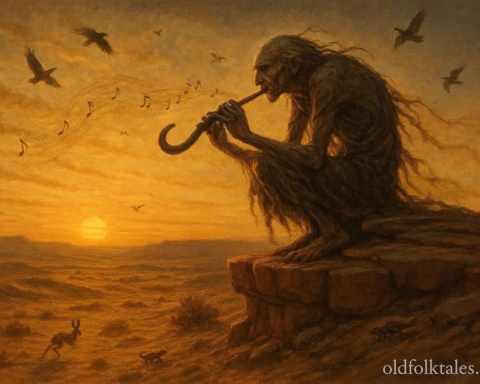
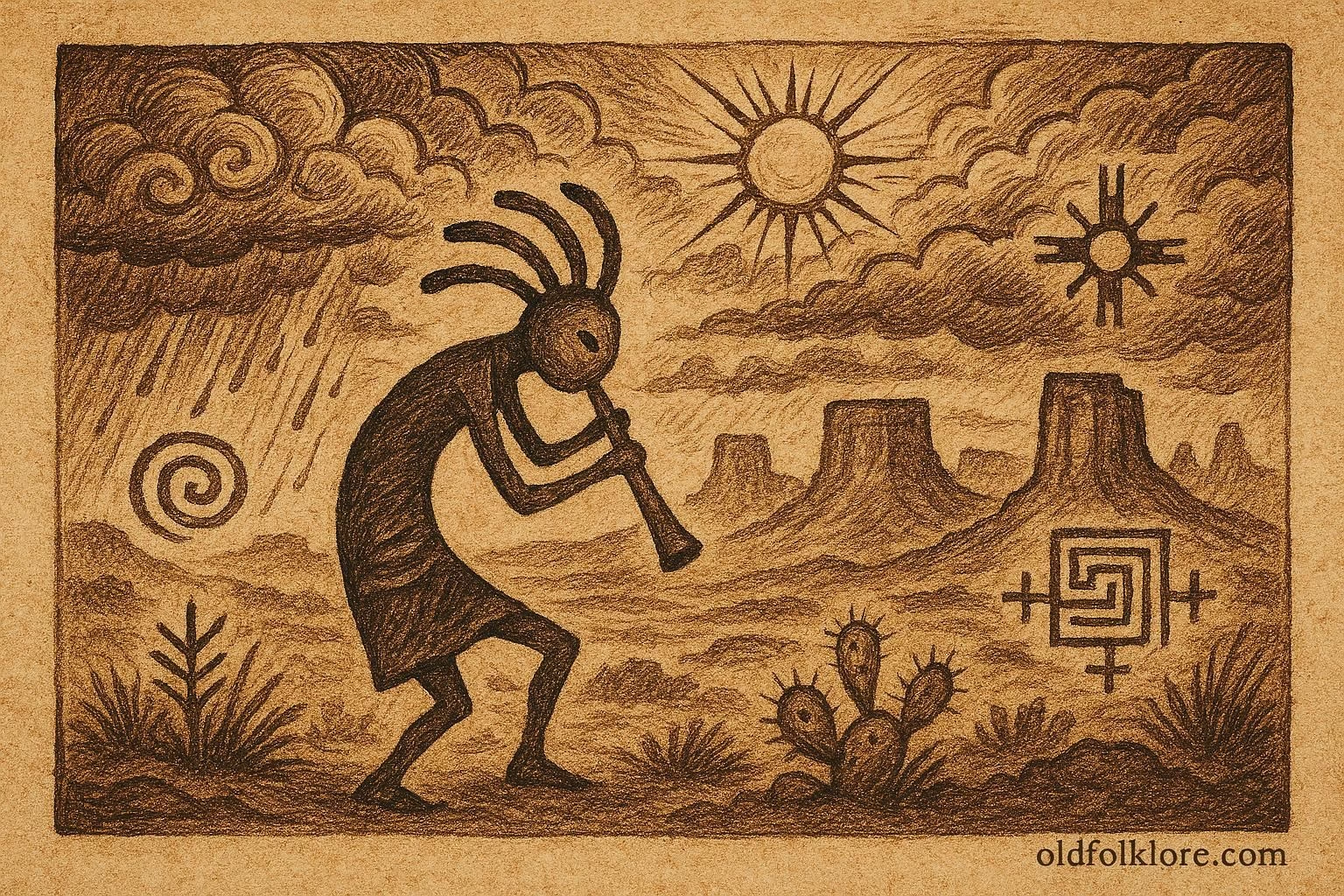
Kokopelli is one of the most recognizable and beloved figures in the mythology of the Hopi and other Pueblo peoples of the American Southwest. Depicted as a humpbacked flute player, he embodies fertility, rain, agriculture, music, creativity, and the playful intelligence of a trickster. Kokopelli’s image appears across petroglyphs, rock carvings, pottery, and woven arts dating from 1000-1500 CE, marking him as a spirit of enduring cultural continuity.
His hump is often interpreted as a sack of seeds, stories, or gifts carried from village to village. His flute represents the life-giving breath that awakens the world: seeds sprout, spirits stir, and even human hearts find renewed joy under the sound of his melodies. In many communities, he is seen as a bringer of rain clouds, a vital blessing in the desert landscapes of the Southwest.
Kokopelli acts as both fertility deity and trickster spirit, blending benevolence with playful mischief. He blesses families with children, encourages bountiful crops, and inspires artistic creativity. His arrival in a village, sometimes imagined through the sudden sound of a distant flute, signals good fortune, laughter, and renewal. While depictions vary across Pueblo groups, his core attributes remain consistent: movement, joy, life, and the sacred energy of creation.
Mythic Story
In the time before pathways were formed across the high desert, when the red stone mesas still whispered only to the wind, the people of the Pueblo villages lived in close rhythm with the seasons. They tended their fields, watched the skies for rain, and listened for the stories carried on the breeze. Among all sacred beings who walked the world, none was awaited with as much delight, and curiosity, as Kokopelli, the humpbacked flute player whose song stirred the desert itself to life.
It is said that Kokopelli did not travel like ordinary beings. Sometimes he appeared at twilight, a silhouette perched atop a cliff with the sky glowing gold behind him. Other times he came dancing along dusty trails, his lean figure swaying, his flute raised high as a river of music flowed from its wooden mouthpiece. Wherever he walked, seeds in the earth trembled, ready to awaken.
One evening, during a season of drought, the Hopi people gathered outside their kivas to watch the horizon. Days had passed without a single cloud. Their cornfields thirsted beneath the sun, and the young plants bent as though bowing to an unseen burden. The village elders prayed, burning fragrant cedar, hoping the spirits would hear and bring relief.
Then, just as the first stars emerged, a soft melody drifted across the valley. It was a simple tune, playful yet ancient, like laughter woven into moonlight. Children stopped their games. Women paused in their weaving. The elders lifted their heads.
Kokopelli had come.
He approached with a spring in his step, his humped back swaying rhythmically, the feathers on his head fluttering gently. He played as he walked, low notes that rolled like distant thunder, high notes that shimmered like starlight. The villagers greeted him with smiles, for his presence was a blessing.
“Flute Player,” the chief said, bowing respectfully, “our fields are thirsty, and the rains hide from us.”
Kokopelli lowered his flute, tilting his head as though listening to a secret spoken by the wind. Then, with a mischievous grin, he tapped the chief’s staff, causing it to sway lightly as if touched by invisible hands. “The sky listens,” he seemed to say without words. “Let us prepare the earth.”
He strode into the fields, playing a melody that rolled out across the cornrows. As he walked, the villagers noticed the leaves lifting ever so slightly, their wilted edges straightening. Seeds that had lain dormant beneath the soil stirred. Even the dry air felt cooler, as though carrying the memory of rain.
Then Kokopelli began to dance.
His feet traced spirals in the dust. His back bent and stretched with fluid grace. The flute’s music rose like a river climbing its banks. Children joined his steps, laughing as they tried to follow his unpredictable twirls. Adults, too, found themselves smiling, an emotion they had not felt in weeks.
As the dance continued, the western horizon darkened. Clouds gathered where the sky had been empty. A breeze swept through the village, carrying the scent of distant moisture. Kokopelli tilted his head back, playing a long, rising note that seemed to call the clouds forward.
Thunder answered.
The first drops of rain landed on the soil like blessings. The villagers cheered, raising their hands to the sky. The cornfields rustled as if sighing with relief.
Kokopelli continued to play, but now his tune was gentler, steady, soothing, guiding the rain rather than summoning it. The villagers watched as the water flowed between the rows, soaking into the earth. Their fields revived before their eyes.
When the rain settled into a soft drizzle, Kokopelli walked to the edge of the village. The chief approached to offer him food and gifts, but Kokopelli simply tapped his flute against the chief’s hand, a gesture of thanks, and began to walk away.
“Will you stay, Flute Player?” someone called.
Kokopelli paused but did not turn. He lifted his flute and played a sly, descending note that made the children giggle. It was his way of saying, “I go where I am needed, and where I am welcomed.”
As dawn spread across the sky the next morning, Kokopelli’s tracks had vanished. Yet his presence lingered in the laughter of children, the freshness of the fields, and the creative energy that filled the village. The people sang new songs, painted new designs, and told stories late into the night. For wherever Kokopelli travels, he leaves gifts not only of rain and fertility, but of imagination, joy, and connection to the sacred rhythm of life.
Author’s Note
Kokopelli’s myth teaches that creativity and life are inseparable. His playful spirit reminds us that renewal comes not only through effort, but through joy—through music, storytelling, and the openness to receive what nature offers. In his wandering presence, he embodies the mysterious generosity of the world.
Knowledge Check
Q1: What cultures honor Kokopelli?
A: The Hopi and other Pueblo peoples of the American Southwest.
Q2: What is Kokopelli’s primary symbol?
A: The humpbacked flute player.
Q3: What domains does he govern?
A: Fertility, rain, music, creativity, and trickster energy.
Q4: What effect does his flute playing have?
A: It awakens seeds, inspires creativity, and calls forth rain.
Q5: How is Kokopelli commonly depicted in ancient art?
A: In petroglyphs, pottery, and carvings dating from 1000–1500 CE.
Q6: What moral theme emerges from his stories?
A: Renewal comes through joy, cooperation, and creative spirit.
Source: Hopi and Pueblo Oral Traditions, American Southwest.
Source Origin: Hopi and Pueblo Cultures, American Southwest (USA)