Among the deeply wooded valleys and rolling river gorges of the Eastern Cape lives one of the more elusive beings of Xhosa mythology: the Mamose, sometimes called Amamose in plural. These forest-dwelling spirits are remembered primarily for their eerie ability to mimic the cry of a human infant. In a land where forests once stretched thickly between homesteads, the sudden wail of a baby from the undergrowth was enough to stop any traveler in their tracks, and to remind them that not all voices come from the living.
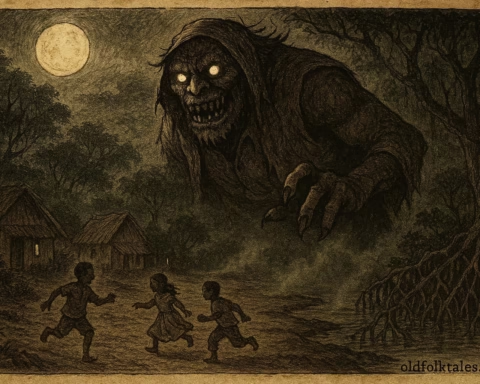
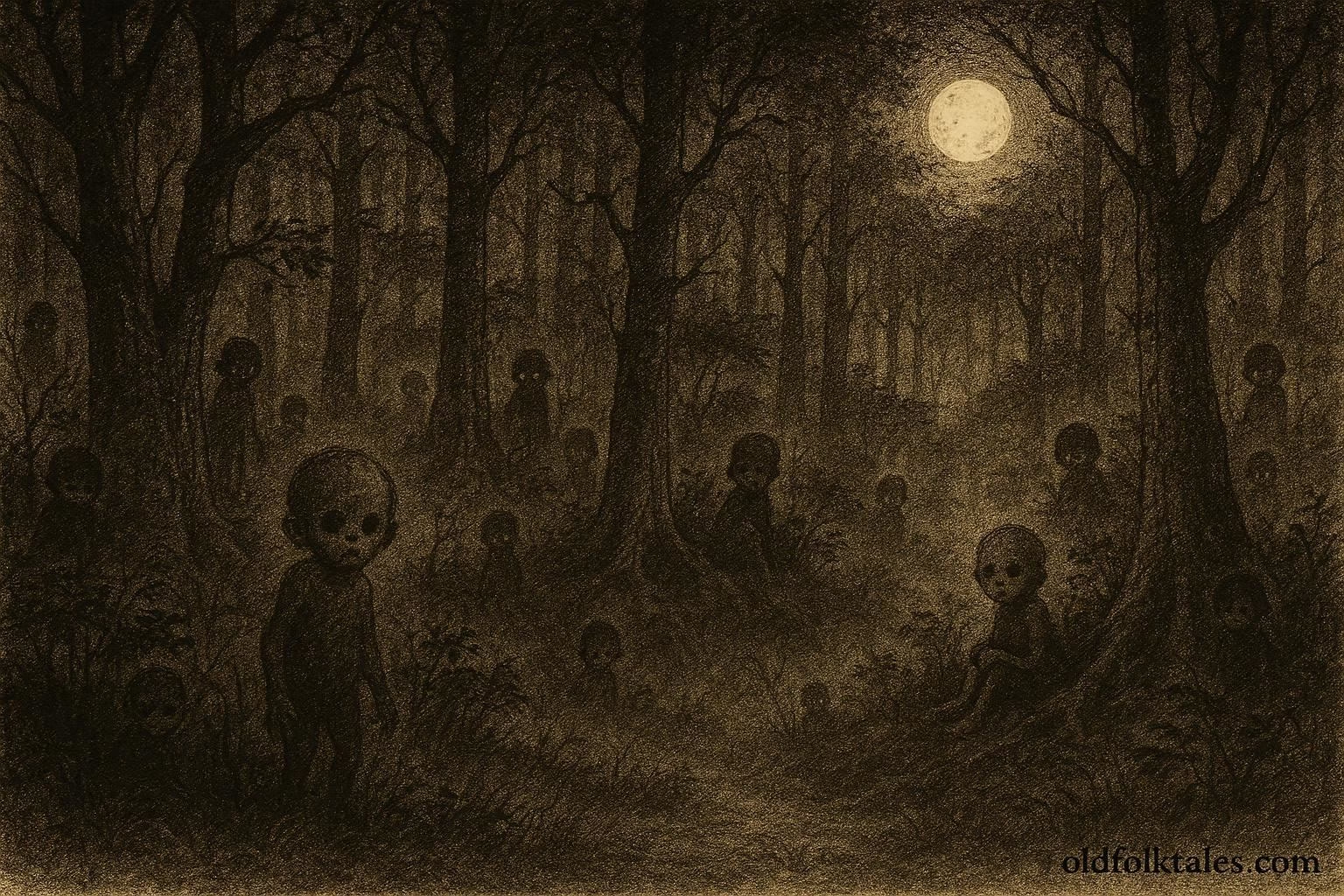
Descriptions of the Mamose vary by region and storyteller, but a consistent theme is their deceptive nature. They seldom reveal their physical form to humans. Most accounts agree that when seen, a Mamose appears small, roughly the size of a child, yet strangely proportioned. Their limbs may be elongated, their faces shadowed, their eyes too dark or hollow to read. Some say their skin resembles bark, mottled like old trees; others describe them as pale and smooth, like the underside of fungi that cling to fallen logs. Their hair is said to be tangled with leaves, moss, or soot, a reminder that their home is not among humans but deep within the umthombe (the heart of the forest).
Yet physical appearance matters little, because the Mamose do not rely on sight, they rely on sound. Their signature trait is their perfect imitation of a crying infant, a sound so natural and desperate that even the most experienced herder or woodcutter might feel compelled to investigate. The Mamose use this cry to draw humans toward places where dangers lurk: steep embankments, thorn-thick ravines, sudden drop-offs, or areas known for predator activity. In this way, they are not merely spirits of deception but guardians of boundaries, protecting certain parts of the forest by keeping humans away.
In some Xhosa cautionary tales collected by early missionaries, the Mamose were not inherently malevolent; instead, they were protective and territorial. Forests were dangerous places full of unseen hazards, and the Mamose existed to reinforce caution. Elders warned children and travelers not to follow strange sounds, especially cries of distress that appeared too sudden, too lonely, or too perfectly timed. Folklore emphasized that the forest has its own laws, and the careless wanderer risks violating them.
Other interpretations portray the Mamose as trickster spirits who enjoy misleading humans, sometimes for sport. When a traveler chases the sound of an infant deeper into the trees, they may suddenly find silence, the cry vanishing as though swallowed by the leaves. Some accounts describe travelers becoming disoriented, walking in circles, or losing their sense of distance. Only when the forest decides to release them does the path reveal itself again.
In a few darker tales, those who pursue the Mamose too far never return. Early missionary records note stories of hunters who vanished after chasing the cry, leading locals to warn that “the forest takes back what belongs to it.” These tales were often moralistic, reminding listeners of the dangers of curiosity and the importance of respecting the natural world.
The Mamose are also linked to ancestral geography, places where spirits dwell, where rituals are performed, or where intrusions are taboo. When a Mamose cry is heard near such a place, it may signal that the ancestors do not want that path traveled. In these contexts, the Mamose act less like monsters and more like intermediaries of ancestral will, redirecting or warning the living.
Their behaviors reflect both human psychology and environmental awareness. Forests distort sound, and cries of animals, especially baboons, bushbabies, or certain birds, can resemble human infants. Folklore transformed these eerie sounds into a lesson: if something appears vulnerable or in need within the deep forest, it is often a trap, a test, or a danger disguised as innocence.
Because the Mamose rely on mimicry, they represent one of the most important Xhosa moral concepts: not everything that sounds human is human, and wisdom requires discernment. Their legends urge listeners to think before acting, especially when emotions such as sympathy or fear cloud judgment.
Though rarely mentioned in modern popular culture, the Mamose remain a powerful symbol in Xhosa storytelling. Elders may reference them when warning children not to stray from footpaths or when emphasizing the importance of moving in groups through wooded land. The Mamose embodies the ancient belief that the natural world communicates with humans, sometimes kindly, sometimes through warnings disguised as cries.
Cultural Role & Symbolism
-
Moral Symbol: The Mamose represent the dangers of impulsive compassion and the need for discernment before acting on emotional cues.
-
Environmental Symbol: They personify the forest’s hidden hazards, steep cliffs, predators, deceptive sound, and disorienting terrain.
-
Cultural Symbol: Embody ancestral boundaries and the idea that certain places are spiritually significant and must not be disturbed.
-
Psychological Symbol: They reflect the fear and uncertainty of isolated environments, where the senses can be tricked.
Author’s Note
The Mamose are not universally documented in mainstream literature, but their presence in early missionary collections and oral histories shows how deeply rooted they are in Xhosa storytelling. They should not be mistaken for generic “forest monsters.” Instead, they reflect a cultural worldview in which humans must move respectfully through nature, recognizing that the forest has a spirit and intentions of its own.
Knowledge Check
-
Q: What is the distinctive ability of the Mamose?
A: They mimic the cry of a human infant to lure people. -
Q: Where are Mamose typically found?
A: Deep forests and wooded ravines in Xhosa regions. -
Q: What moral lesson is associated with Mamose tales?
A: Humans must be cautious and discerning, not acting impulsively. -
Q: Are the Mamose always malevolent?
A: No, some stories portray them as protective or territorial. -
Q: What do the Mamose symbolize in Xhosa culture?
A: Hidden natural dangers and the spiritual boundaries of the forest. -
Q: Why might a traveler become lost when following a Mamose cry?
A: The spirit’s cry draws them into disorienting or forbidden areas.
Source: Xhosa oral tradition; early 19th–20th-century missionary-collected tales
Origin: Xhosa communities of the Eastern Cape, South Africa