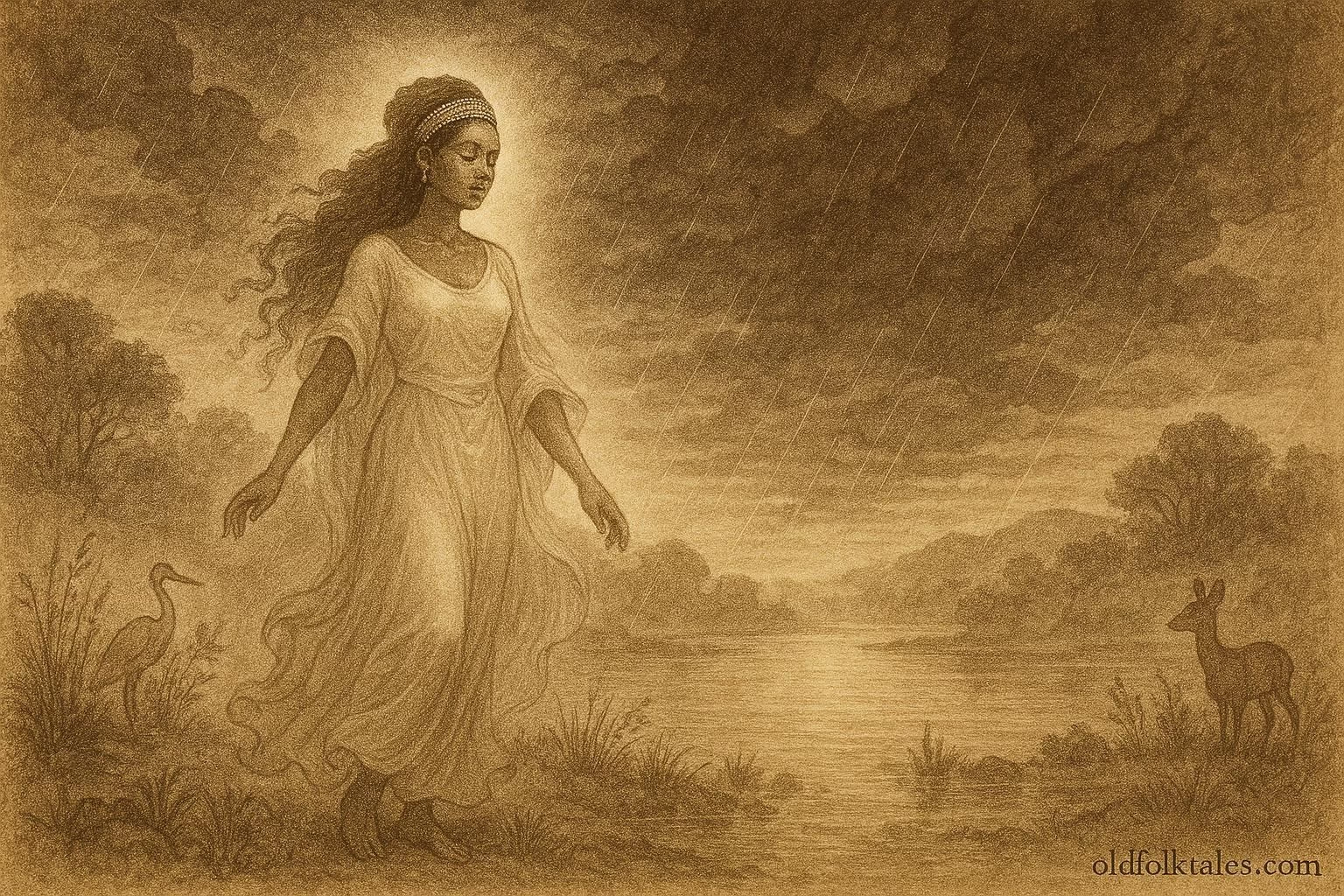
Among the rich tapestry of Zulu spiritual belief, Inkosazana, literally “Princess of Heaven”, occupies a revered place as a nature and rain spirit, often associated with fertility, seasonal change, and the well-being of both people and livestock. Unlike malevolent or vengeful spirits, Inkosazana is considered benevolent, yet her appearance is deeply symbolic: she can signal significant climatic and agricultural shifts, reminding the community of their intimate connection with the natural world.
Inkosazana is usually described as a beautiful maiden, often with luminous skin, flowing hair, and regal bearing. She may wear garments of cloud, mist, or morning dew, symbolizing her dominion over the sky and rainfall. Ethnographers note that she is sometimes imagined carrying a small vessel of water or a staff entwined with flowering reeds, representing her ability to nurture the earth. Her movement is graceful and deliberate, blending the elegance of human form with ethereal qualities that mark her as otherworldly.
Accounts emphasize that Inkosazana appears near water sources, riverbanks, or misty hills, usually during moments of seasonal transition, before the first heavy rains, at the end of the dry season, or during periods when crops need nurturing rainfall. Witnesses describe her presence as accompanied by subtle changes: the air becomes cooler, clouds gather gently, and wildlife stirs in unusual patterns. Her sightings are never merely aesthetic; they are omens or guides, advising humans to prepare for upcoming seasonal events.
In folklore, Inkosazana’s powers extend beyond rainfall. She is believed to:
-
Encourage fertility of crops and cattle
-
Guide herders to fertile pastures
-
Protect sacred groves and freshwater pools
-
Influence the growth and success of medicinal plants
Though she is generally benevolent, traditions caution that her appearance is not neutral. Ignoring her presence, disrespecting her associated waters, or failing to observe ritual obligations can result in drought, poor harvests, or sickness among livestock. She thus embodies both grace and the moral responsibility of humans to live harmoniously with nature.
Behaviorally, Inkosazana is gentle yet deliberate in her movements. She does not chase, attack, or punish directly; instead, she communicates through natural signs, cloud formations, sudden gusts of wind, or the timing of animal migrations. Some elders tell of her singing or calling with a voice like rainfall, which soothes listeners while subtly reminding them of impending seasonal change. It is said that those who respect her signs are rewarded with fertile fields, abundant water, and healthy livestock.
Zulu cosmology positions Inkosazana within a broader system of ancestral and elemental spirits. She is connected to the sky, rain, and fertility spirits, and interacts with humans primarily through omens and ritual guidance. She may be invoked during ceremonial rainmaking, a practice that combines spiritual knowledge, prayer, and observation of natural cycles. In some oral traditions, she is considered a spiritual daughter of uMvelinqangi (the Sky Father) or a close attendant to ancestral intermediaries who ensure life cycles continue uninterrupted.
Culturally, Inkosazana serves multiple symbolic roles:
-
Nature Guardian: She embodies the fertility and vitality of the natural world, teaching humans to respect ecological balance.
-
Rain Spirit: Her appearance is a harbinger of rainfall or drought, guiding herders and farmers in timing agricultural activities.
-
Moral Teacher: Her presence reinforces ethical and communal responsibility, emphasizing that care for the land, water, and livestock is a spiritual as well as practical duty.
-
Threshold Spirit: She mediates the liminal space between human society and the natural world, appearing at points of seasonal change to remind people of their dependence on forces beyond human control.
In some tales, Inkosazana also interacts with humans directly. A young girl may dream of her and awaken inspired to act respectfully toward water sources or sacred groves. Hunters or herders might glimpse her along a riverbank at dawn, interpreting her movements as advice on which pastures to use. These stories highlight the interactive and participatory nature of Zulu spiritual life, where humans observe, interpret, and respond to omens rather than confront spirits violently.
While largely benevolent, Inkosazana’s influence is subtle and must be understood contextually. Witnesses recount that misreading her signs, such as failing to prepare for seasonal rains or disturbing sacred waters, can result in practical misfortune: parched fields, failed crops, or cattle straying and succumbing to disease. Her mythology emphasizes that respect, observation, and ritual attentiveness are necessary for harmonious life.
Ultimately, Inkosazana is a bridge between the human and natural world, a figure whose beauty captivates but whose purpose instructs. She teaches that prosperity and survival depend on attentiveness to the environment and its spiritual currents. Her stories, passed down orally across generations, continue to shape cultural memory, environmental stewardship, and seasonal awareness.
Cultural Role & Symbolism
-
Spiritual Symbol: Guardian of rain, fertility, and ecological balance
-
Moral Symbol: Reinforces respect for nature and ritual responsibility
-
Environmental Symbol: Embodies seasonal cycles and agricultural guidance
-
Social Symbol: Connects community practices, such as herding and rainmaking, to spiritual observance
Encounter dragons, spirits, and beasts that roamed the myths of every civilization
Author’s Note
Inkosazana exemplifies the Zulu approach to understanding the environment: not as a passive backdrop, but as a spiritually responsive entity. Her legends reflect a worldview in which human success is inseparable from ethical and respectful interaction with nature. Though primarily benevolent, she is a reminder that harmony with the world requires attentiveness, reverence, and humility.
Knowledge Check
-
Q: What is Inkosazana primarily associated with?
A: Rain, fertility, and seasonal change. -
Q: How does she appear to humans?
A: As a beautiful maiden, often near rivers, pools, or misty hills. -
Q: What happens if her presence is ignored?
A: Disregarding her signs can lead to drought, poor harvests, or livestock issues. -
Q: Which animals or plants does she influence?
A: Cattle, crops, medicinal plants, and wildlife connected to water sources. -
Q: How do humans interpret her guidance?
A: Through observation of natural signs like cloud formations, wind, or animal behavior. -
Q: What moral lesson does Inkosazana teach?
A: Humans must respect nature and follow communal and spiritual responsibilities.
Source: Zulu oral tradition; early ethnographic accounts by H. T. Bryant and D. Hammond-Tooke
Origin: KwaZulu-Natal, South Africa