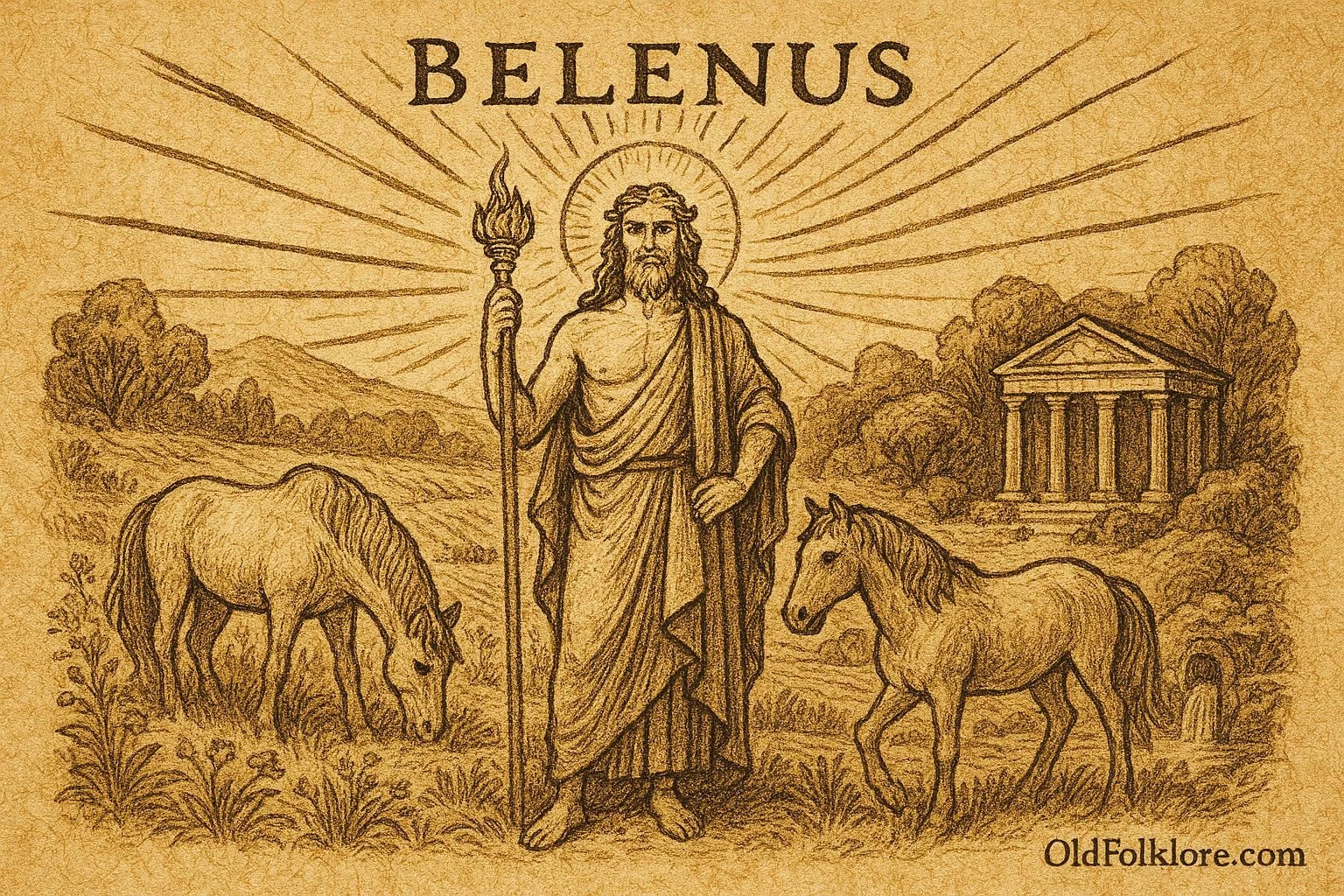
Belenus is a solar deity revered by the Gauls and other Continental Celtic peoples, embodying light, healing, and life-giving energy. His influence stretches across agriculture, livestock, and human health, marking him as both protector and benefactor. Temples and shrines were dedicated to Belenus, often located near springs or elevated sites where sunlight could be honored, symbolizing his radiant presence.
He is frequently depicted as a youthful and vigorous figure, radiant and golden, sometimes associated with horses, which were sacred to solar gods in Celtic tradition. In the Roman period, Belenus was syncretized with Apollo, reflecting his dual role as both solar deity and divine healer. Rituals in his honor involved offerings to ensure abundant crops, protection against disease, and the blessing of communities. Festivals connected to Belenus celebrated seasonal transitions, particularly the onset of spring and the height of summer, when sunlight nourishes life and growth.
Mythic Story: Belenus and the Healing Light
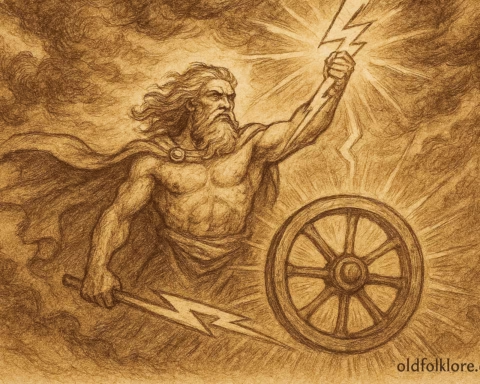
In the age before cities and roads, when the Gauls lived in forested lands and fertile valleys, Belenus shone across the heavens, a golden beacon of life and protection. He moved with a quiet majesty, riding across the sky in his chariot of fire, drawing the dawn and sustaining the rhythms of nature. His light was more than warmth; it was the pulse of health and prosperity, touching crops, animals, and humans alike.
The people revered him for his power to heal, to drive disease from body and livestock, and to renew the strength of the land after long winters. One legend tells of a village struck by a terrible illness, its people weakened and its livestock perishing. In despair, the villagers prayed to Belenus, lighting fires at the village edge to signal their plea.
Belenus appeared in the morning sun, his radiance spilling across the hills. He spoke with a voice that resonated like sunlight on water: “Your hearts are troubled, yet your courage and faith have called me. Take these gifts of light and life, and with them, heal your people and your land.”
At his touch, the spring water that flowed near the village became imbued with warmth and vitality. Those who drank from it recovered swiftly, and the fields, parched and bare, soon flourished with green shoots and golden grain. Animals regained their vigor, and the village rejoiced in the return of health and abundance.
Belenus’s guidance extended beyond immediate healing. He taught the people the rhythms of the sun and seasons, instructing them when to plant, when to harvest, and when to rest. His light was a teacher as much as a healer, revealing the patterns of life and the necessity of balance between human effort and natural forces. Farmers, shepherds, and healers alike honored him, offering small votive figures, coins, or crafted symbols at shrines dedicated to his name.
In another tale, Belenus was invoked during the spring equinox. The elders and children gathered at a sunlit hilltop, where they sang, danced, and recited prayers. As the sun reached its zenith, Belenus’s presence was felt as a gentle warmth that moved through each villager. Crops in nearby fields ripened swiftly, and new life appeared in the pastures. In these moments, the people recognized the inseparability of sunlight, health, and the vitality of the earth.
Over time, Belenus became associated with horses and chariots, symbolic of the sun’s daily journey and the swiftness of his healing. Some stories tell of his chariot pulled by fiery horses that could traverse the heavens in moments, carrying his life-giving energy across valleys, forests, and rivers. Farmers and warriors alike called upon his power, for health ensured survival, and prosperity required both strength and guidance.
Through festivals, offerings, and prayers, the worship of Belenus united communities, instilling gratitude for the sun’s steady presence and for the cycles of life that sustained them. Even when Roman influence spread across Gaul, Belenus’s identity remained resilient, often intertwined with Apollo but never losing his distinct Celtic vitality. The sun’s healing light continued to guide the people, a reminder that life, health, and prosperity are gifts to be honored and preserved.
Belenus thus embodies the sacred bond between the celestial and terrestrial, the divine light that sustains growth, protects against illness, and ensures harmony within human and natural realms. His stories are not merely of power, but of service: a god whose radiance is inseparable from the well-being of those who revere him.
Author’s Note
Belenus teaches that health, prosperity, and spiritual harmony are interconnected. His light reminds humans that growth requires attentiveness, gratitude, and respect for natural cycles. By honoring the sun and its rhythms, people can maintain balance in both their communities and the land, showing that divine power is expressed through care, wisdom, and protection.
Knowledge Check
Q1: What domains does Belenus oversee?
A: Sun, healing, light, fertility, and prosperity.
Q2: How did villagers appeal to Belenus for help?
A: Through prayers, fire offerings, and rituals at shrines, especially during illness or hardship.
Q3: Which animals are symbolically associated with Belenus?
A: Horses, often linked to the sun’s journey across the sky.
Q4: What role does Belenus play in agriculture?
A: He teaches seasonal rhythms, planting, and harvest timing to ensure fertile fields and abundant crops.
Q5: How was Belenus integrated into Roman-era worship?
A: He was often syncretized with Apollo, the Roman sun god, reflecting solar and healing aspects.
Q6: What moral or practical lesson does Belenus’s story convey?
A: That health, prosperity, and balance in life depend on attentiveness, gratitude, and harmony with nature.
Source: Gallo-Roman inscriptions and Celtic mythology, Continental Europe.
Source Origin: Gaulish / Continental Celtic (modern France, Austria, Switzerland)