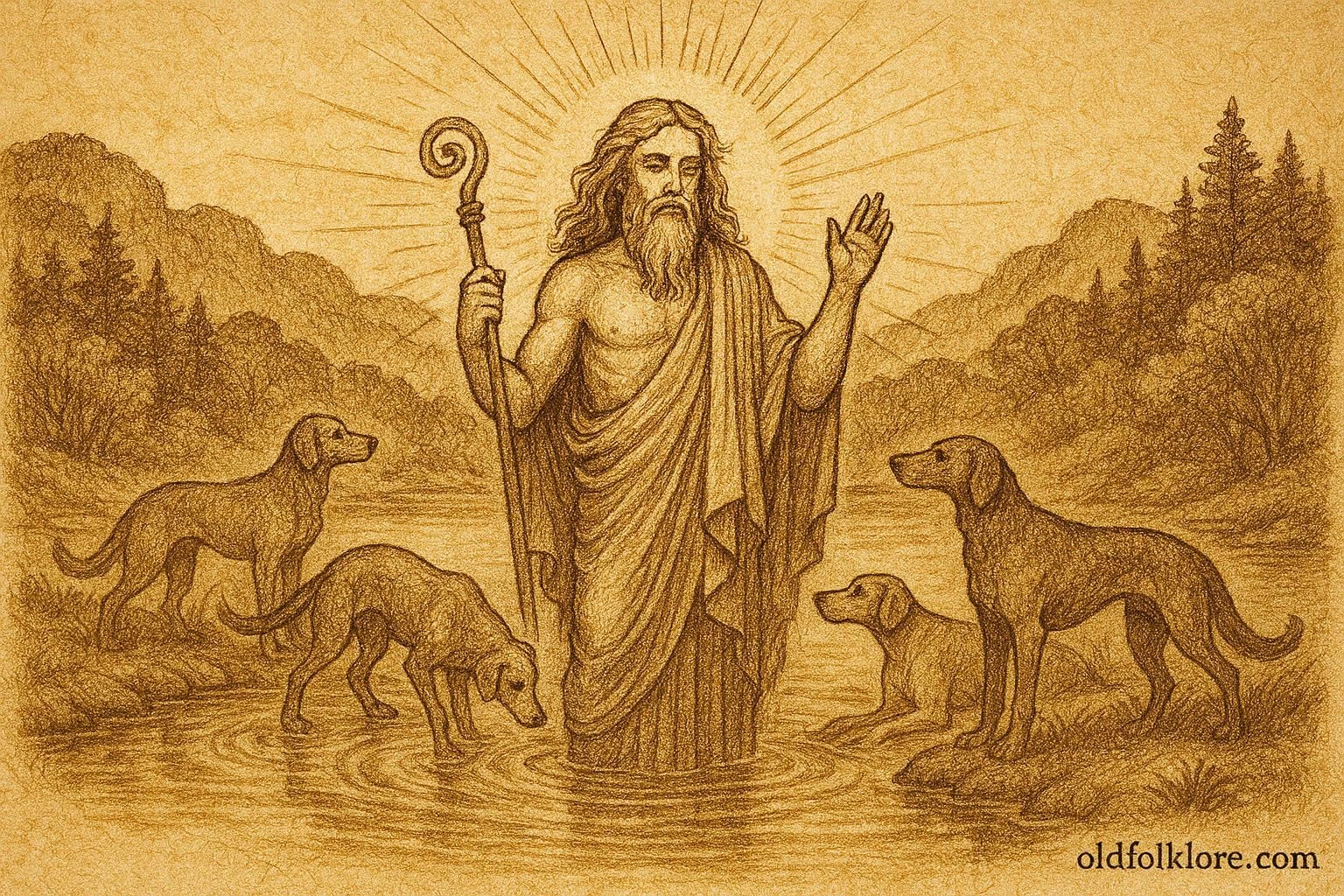
Nodens is a Brittonic Celtic deity whose domains include healing, hunting, and liminal waters such as springs and rivers. Often depicted with dogs, symbols of loyalty, vigilance, and protection, he served as a guardian of both human and animal health. Temples and shrines dedicated to Nodens, particularly the famed site at Lydney Park, Gloucestershire, reveal his importance in both Celtic and Romano-British religious life.
He embodies the delicate balance between wildness and care: a hunter who preserves life rather than destroys it, a healer who intervenes at liminal spaces where illness and injury dwell. In some inscriptions, he appears as Nodentius, reflecting the Roman influence that blended with Celtic traditions. Rituals included offerings at sacred springs, often accompanied by prayers or votive figures shaped like dogs, emphasizing his dual roles as healer and guide.
Mythic Story: Nodens and the Cursed Spring
Long ago, in the rolling hills of Britannia, there lay a spring whose waters shimmered like silver under the sun. The villagers knew it as a source of life, for its waters nourished their crops, quenched their animals, and healed minor wounds. Yet, over time, the spring became cursed. Livestock fell ill, children weakened, and hunters returning from the woods found themselves afflicted by mysterious ailments.
The elders, perplexed and desperate, gathered at the edge of the forest and spoke prayers to Nodens, invoking his name in the ancient tongue: the protector of health, the watcher over water, the master of the hunt. That night, as stars gleamed like scattered lanterns, a presence stirred near the spring. A golden light glimmered among the reeds, and from it emerged Nodens, tall and serene, flanked by two black and white dogs whose eyes shone with uncanny intelligence.
He spoke in a voice like wind over the hills: “This spring, once pure, has been tainted by negligence and the shadows of greed. The illness comes not from malice alone, but from the disregard for the natural order. Restore balance, and health shall return.”
Nodens guided the villagers to the spring, instructing them to clean the water’s edge, plant protective herbs, and offer gifts of thanks: carved figures of dogs, small bowls of grain, and tokens of the hunt. As the villagers obeyed, the spring’s waters began to clear. A warm current flowed through the brook, carrying vitality to the fields and into the bodies of humans and animals alike. Those who drank from it felt strength return like the rising sun.
But Nodens’s lesson extended beyond the spring itself. He led the hunters deep into the forest, where the prey was abundant yet delicate. He instructed them: “The hunt is not merely to satisfy hunger, but to honor life. Take only what is needed, and respect the creatures that roam these lands, for their well-being is intertwined with your own.” Guided by his wisdom, the hunters returned with plentiful game, but also with reverence for the balance of nature.
Stories tell that Nodens would occasionally appear to those near waters at the threshold of night and dawn, liminal moments when magic and mortality intertwine. His dogs, ever watchful, would circle the sick, signaling protection, while the god’s presence imbued the surrounding air with warmth and vitality. People came to him not only for cures, but for guidance in times of uncertainty, especially when illness or injury threatened both body and spirit.
The healing rituals dedicated to Nodens became central to the community’s life. Pilgrims traveled to Lydney and other sacred sites, bringing offerings, naming their ailments, and seeking the god’s intercession. Dogs were often present in these rites, either accompanying devotees or represented in small votive carvings, reinforcing the symbolic connection between the animal world, health, and divine protection.
Even when Roman influence spread across Britannia, the worship of Nodens persisted, often syncretized with healing gods like Mars Nodens or Apollo Nodens. Yet the Celtic essence endured: the god of the liminal spaces, of water, health, and hunting remained a guardian of life’s balance. His stories emphasize respect, vigilance, and careful stewardship of natural resources. Those who honored him were rewarded not only with cure from ailments but with insight into the cycles of life and death, the interplay of wildness and care, and the sacred bonds connecting humans, animals, and the land.
Nodens, the healing hunter, embodies the harmony between action and reflection, vigilance and mercy. Through his presence, the Brittonic Celts learned that divine guidance often comes at thresholds, by the water’s edge, at the forest’s border, and in moments when humans must navigate the delicate line between taking and giving, between survival and stewardship.
Learn the ancient stories behind deities of light, storm, and shadow from cultures across the world
Author’s Note
Nodens teaches the importance of balance: respecting nature, honoring life, and acknowledging the liminal spaces where vulnerability and vitality meet. His myths remind us that healing extends beyond the body to the community, the land, and the moral choices humans make in relation to the world around them.
Knowledge Check
Q1: What are the primary domains of Nodens?
A: Healing, hunting, water, and protection.
Q2: How are dogs significant in Nodens’s worship?
A: They symbolize loyalty, protection, and are central to healing rituals.
Q3: Where is the most famous temple dedicated to Nodens?
A: Lydney Park, Gloucestershire, England.
Q4: What lesson did Nodens teach hunters in the myth?
A: To take only what is needed and respect the balance of life.
Q5: How did Roman influence affect Nodens’s cult?
A: He was sometimes syncretized as Nodentius or associated with Roman healing gods.
Q6: What broader moral does Nodens’s story convey?
A: That health, survival, and prosperity require vigilance, respect for nature, and moral responsibility.
Source: Brittonic Celtic inscriptions and Romano-British mythology, England.
Source Origin: Brittonic Celtic / Romano-British (modern England, primarily Gloucestershire)